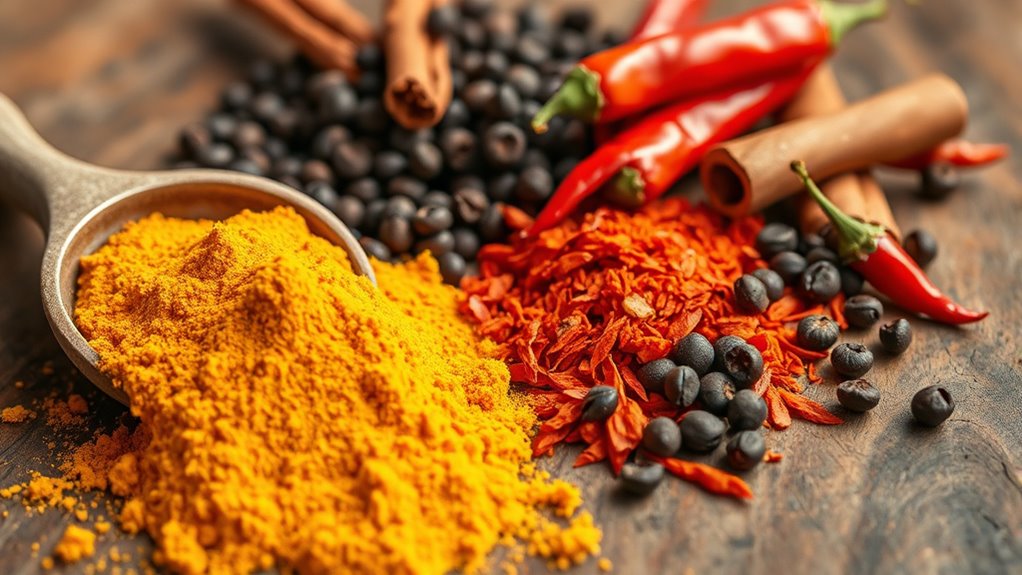

Many spices have powerful anti-inflammatory properties that can help you reduce swelling and joint pain naturally. Turmeric contains curcumin, which is known for its anti-inflammatory and antioxidant effects. Ginger, with compounds like gingerol, inhibits pathways involved in inflammation. Incorporating these spices into your diet—through meals, teas, or supplements—can support overall health and ease chronic inflammation. If you keep exploring, you’ll discover more about how these natural remedies can benefit your well-being.

Get the latest gadgets delivered free with Prime
- Fast, free delivery on millions of items
- Prime Video, Amazon Music and more included
- Member-only deals all year
Key Takeaways
- Turmeric contains curcumin, a potent compound with strong anti-inflammatory and antioxidant effects.
- Ginger’s bioactive compounds like gingerol inhibit inflammatory pathways, reducing swelling and pain.
- Both spices support the body’s natural defenses and help alleviate chronic inflammation conditions such as arthritis.
- Incorporating turmeric and ginger into meals or as supplements can enhance overall joint and immune health.
- Their natural anti-inflammatory properties offer a gentle, effective alternative to traditional medications.

Many spices contain potent anti-inflammatory compounds that can help reduce swelling and discomfort in your body. Among these, turmeric stands out for its well-documented benefits. The active compound in turmeric, curcumin, is known for its powerful anti-inflammatory and antioxidant properties. When you incorporate turmeric into your diet, you may notice a decrease in joint pain and stiffness, especially if you suffer from chronic inflammation conditions like arthritis. Turmeric benefits extend beyond just alleviating pain; it can also improve your overall immune response and support healthy cellular function. To maximize these benefits, pairing turmeric with black pepper enhances absorption, making it more effective in fighting inflammation. You can add turmeric to your meals, smoothies, or take supplements if you prefer a more concentrated dose.
Ginger is another spice with impressive health effects, particularly its ability to combat inflammation. Ginger health effects are well-researched, and many studies indicate that consuming ginger regularly may help reduce muscle soreness, joint pain, and even symptoms of osteoarthritis. The bioactive compounds in ginger, such as gingerol, have anti-inflammatory properties that inhibit pathways involved in inflammation. This makes ginger a natural remedy for easing discomfort and supporting overall joint health. You might start your mornings with a fresh ginger tea or sprinkle grated ginger over salads and cooked dishes. Its versatility makes it easy to include in your daily routine, helping you harness its natural anti-inflammatory powers.
Both turmeric and ginger are celebrated for their ability to support your body’s natural defenses against inflammation. Incorporating these spices into your diet can be a simple and delicious way to help manage chronic inflammation and promote better health. Unlike some medications, they offer a gentle, natural approach with fewer side effects. However, it’s essential to consume them consistently and in appropriate amounts for the best results. If you’re considering taking supplements, consult with a healthcare professional to determine the right dosage and ensure they won’t interfere with any medications you might be taking. Together, turmeric benefits and ginger health effects make these spices powerful allies in your quest for a healthier, less inflamed body. Whether used in cooking or as part of a supplement regimen, these spices can contribute markedly to your overall wellness.
turmeric curcumin supplements for inflammation
As an affiliate, we earn on qualifying purchases.
As an affiliate, we earn on qualifying purchases.
Frequently Asked Questions
Can Spices Replace Anti-Inflammatory Medications?
You might wonder if spices can replace anti-inflammatory medications. While spices like turmeric and ginger have notable spice potency and can help reduce inflammation, they shouldn’t replace your prescribed treatments without consulting your doctor. Follow appropriate dosage guidelines to avoid side effects. Incorporate these spices as a complementary approach, but always prioritize professional medical advice for managing inflammation effectively.
Are There Any Side Effects From Consuming These Spices Regularly?
You might wonder if consuming these spices regularly causes side effects. While they’re generally safe, you should watch out for spice allergies, which can cause reactions. Also, some spices may interact with medications, leading to drug interactions. If you’re on medication or have allergies, it’s best to consult your healthcare provider before adding large amounts of spices to your diet regularly.
How Much of Each Spice Is Needed for Health Benefits?
You’re wondering about spice dosage and effective amounts for health benefits. Generally, small amounts like ½ to 1 teaspoon daily of turmeric, ginger, or cinnamon can provide anti-inflammatory effects. While these spices are safe in typical culinary amounts, it’s best to consult with a healthcare professional for personalized advice, especially if you’re taking medication or have health conditions. Consistency is key for seeing anti-inflammatory benefits over time.
Do Spice Benefits Vary Between Individuals?
You might wonder if spice benefits vary between individuals. Yes, genetic differences can influence how your body responds to certain spices, affecting their anti-inflammatory effects. Cultural preferences also shape your spice choices and consumption patterns, which can impact the benefits you get. So, while spices generally offer health advantages, your unique genetics and cultural habits determine how much you benefit from them.
Can Cooking Methods Affect the Anti-Inflammatory Properties?
Coincidentally, your choice of cooking techniques can markedly impact spice retention and their anti-inflammatory benefits. If you boil or overheat spices, you might diminish their active compounds, reducing their effectiveness. To maximize benefits, opt for gentle cooking methods like sautéing or adding spices at the end of preparation. By doing so, you preserve their anti-inflammatory properties and enjoy their full health potential, enhancing your meal’s nutritional value.
Conclusion
Incorporating these powerful spices into your daily routine can transform your health like nothing else. Imagine banishing inflammation so effectively that pain and swelling become distant memories—your body’s ultimate shield against chronic issues. Don’t underestimate their magic; these tiny wonders hold the secret to a vibrant, pain-free life. Start today, and watch inflammation crumble before your very eyes. Your journey to unstoppable health begins now—embrace these spices and reclaim your vitality!
Columbus Day / Indigenous Peoples' Day Picks
long weekend sales
As an affiliate, we earn on qualifying purchases.