
📊 Full opportunity report: Anonymous daily check-ins for 12-step sponsors on IdeaNavigator AI — validation score, market gap, and execution plan.
TL;DR
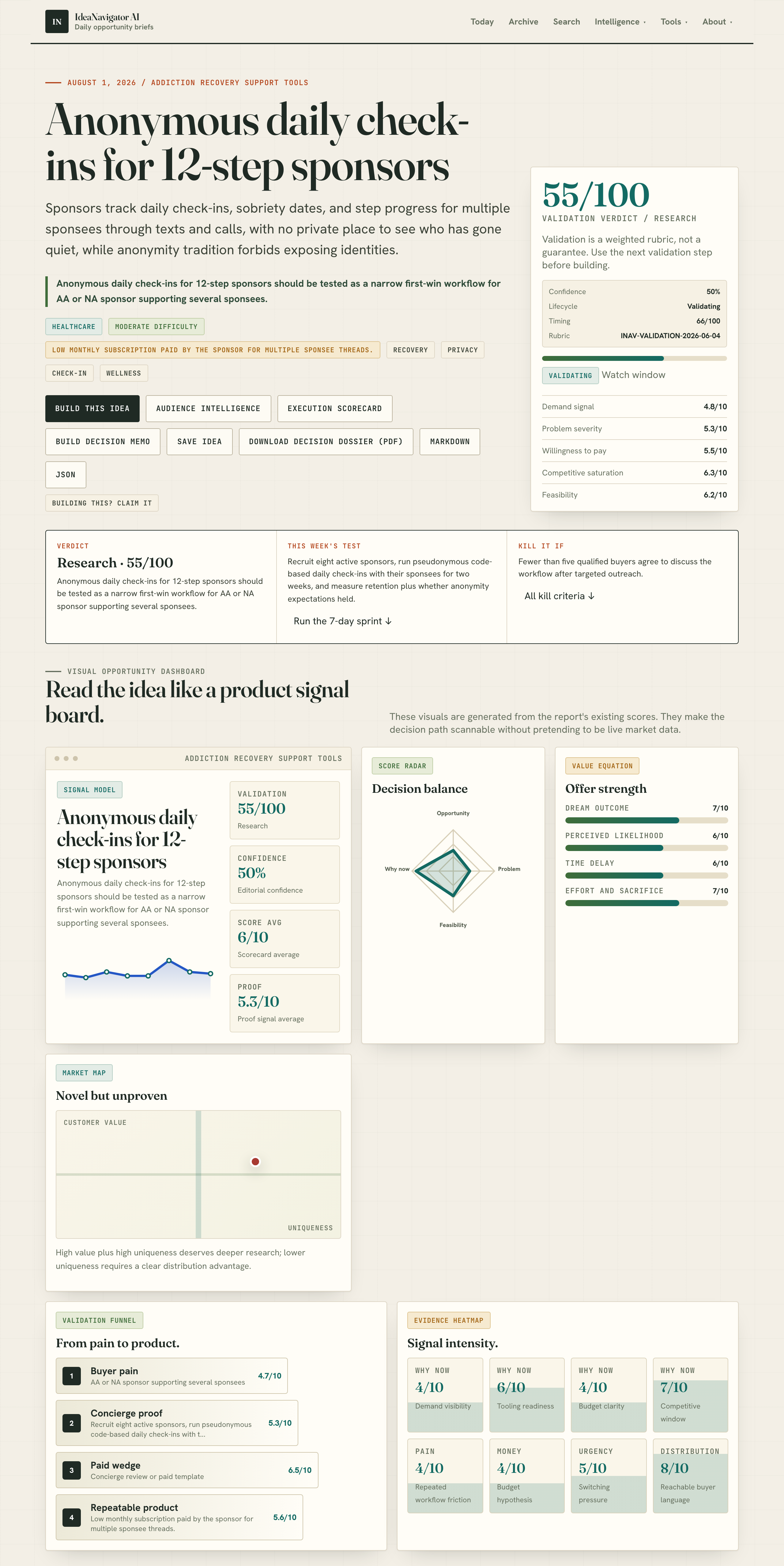
Researchers are testing a new system allowing 12-step sponsors to conduct anonymous daily check-ins with multiple sponsees. The approach aims to enhance privacy while maintaining effective support, with initial trials involving eight sponsors over two weeks.
Researchers are testing a new workflow that enables 12-step sponsors to conduct anonymous daily check-ins with multiple sponsees using a pseudonymous, code-based system. This development aims to address privacy concerns and improve tracking within the traditions of anonymity in recovery programs. The initiative is currently in a pilot phase involving eight active sponsors and their sponsees.
The proposed system involves sponsors inviting sponsees through a one-time code, creating a pseudonymous thread where daily check-ins are recorded with a simple green or red indicator and optional notes. Importantly, no real names or phone numbers are stored, aligning with the anonymity principles of AA and NA.
The pilot was launched by researchers aiming to validate whether this approach can reliably support multiple sponsees while maintaining privacy. Over a two-week period, the eight participating sponsors will track retention rates and verify if anonymity expectations are upheld. The system is designed to be subscription-based, with sponsors paying a low monthly fee for access to multiple sponsee threads.
Potential Impact on Privacy and Support in Recovery
This initiative could represent a significant shift in how recovery support is managed digitally, balancing the need for effective tracking with the core value of anonymity. If successful, it may lead to broader adoption of privacy-preserving tools that facilitate accountability without exposing identities, potentially improving engagement and trust among sponsees and sponsors.
As an affiliate, we earn on qualifying purchases.
Shift Toward Phone-Based Recovery Support and Privacy Challenges
Recovery programs like AA and NA have traditionally relied on in-person meetings and anonymous contacts. However, the rise of digital communication has prompted efforts to adapt support tools to phone-based environments. Existing messaging and habit apps often leak personal contact information, conflicting with the fundamental tradition of anonymity. This has created a need for secure, private solutions tailored specifically for recovery support, prompting the current pilot testing of pseudonymous check-ins.
“This system aims to provide a private, code-based way for sponsors to support multiple sponsees without risking their identities or breaking anonymity traditions.”
— an anonymous researcher
Uncertainties Around Adoption and Effectiveness
It is not yet clear whether sponsors and sponsees will adopt this system widely or if it will prove effective over longer periods. The pilot is limited to eight sponsors and two weeks of testing, so broader validation and user feedback are still pending. Additionally, questions remain about the platform’s security and how well it can prevent leaks or breaches.
Next Steps Include Extended Testing and Feedback Collection
Following the initial two-week trial, researchers plan to analyze retention rates, user satisfaction, and privacy compliance. If results are positive, they may expand testing to more sponsors and sponsees, potentially integrating the system into mainstream recovery tools. Further development will focus on refining usability and security features based on participant feedback.
Key Questions
How does the pseudonymous check-in system work?
Sponsors invite sponsees via a one-time code, creating a private thread where daily check-ins are marked with a simple green or red indicator and optional notes. No personal contact info is stored, maintaining anonymity.
Will this system replace in-person meetings?
No, it is designed as a supplementary tool to support remote check-ins while respecting traditional anonymity principles.
Is this approach secure and private?
The system aims to minimize data storage and avoid storing real names or phone numbers, but full security effectiveness will be assessed during the pilot phase.
When will more results from the pilot be available?
Initial results are expected after the two-week testing period, with further development and validation planned based on feedback.
Could this system be adopted widely?
If proven effective and secure, it could become a standard tool for digital recovery support, especially for maintaining anonymity.
Source: IdeaNavigator AI