📊 Full opportunity report: AI output review queue for customer support macros on IdeaNavigator AI — validation score, market gap, and execution plan.

Get the latest gadgets delivered free with Prime
- Fast, free delivery on millions of items
- Prime Video, Amazon Music and more included
- Member-only deals all year
TL;DR
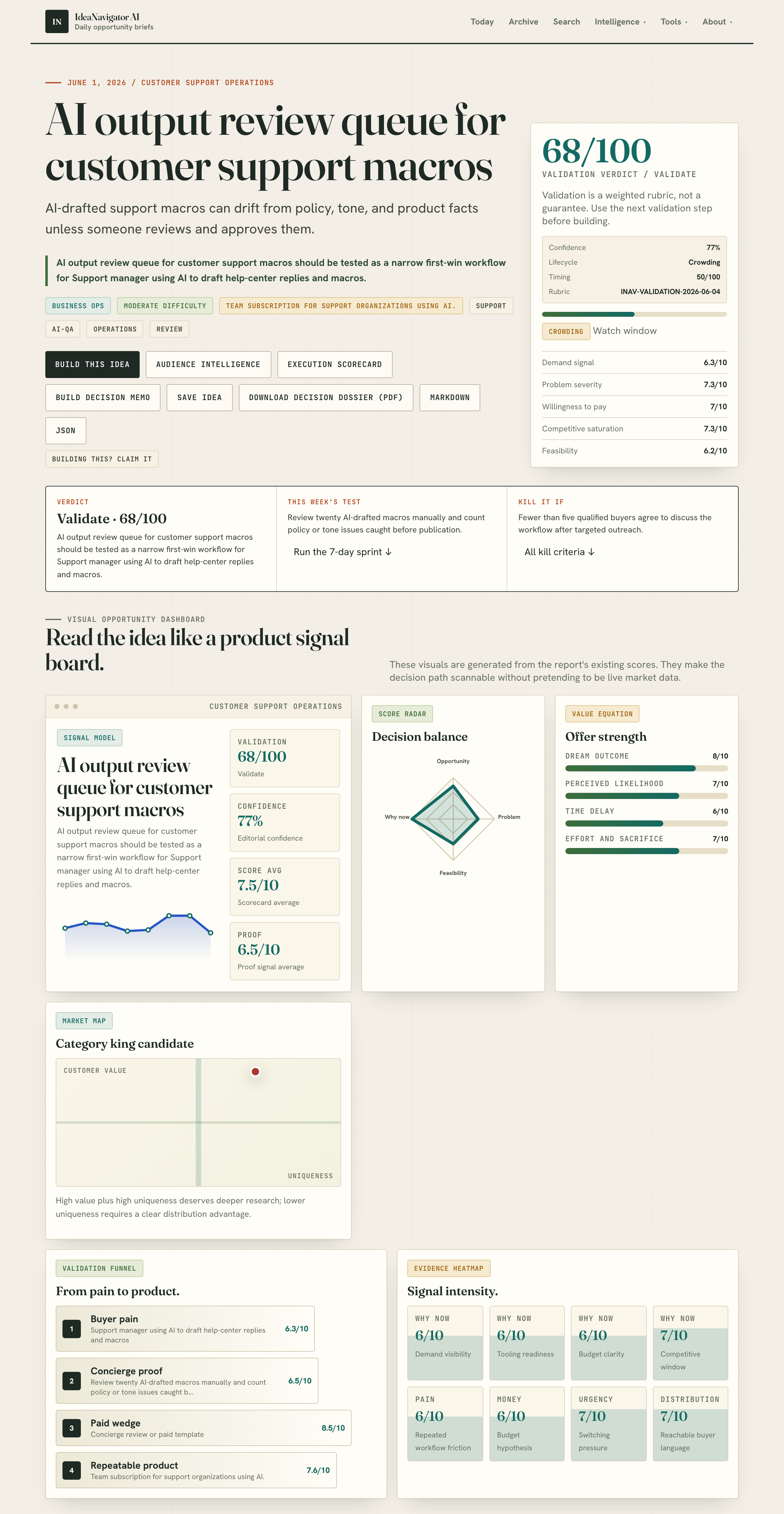
Support managers are piloting an AI output review queue for customer support macros. The system scores drafts for policy, tone, and accuracy, aiming to improve quality control amid rapid AI adoption.
Support teams are trialing a new AI output review queue for customer support macros, designed to automatically evaluate drafts for policy adherence, tone, and accuracy before approval. This development aims to address the challenge of maintaining quality in AI-generated support content as adoption accelerates without formalized review processes.
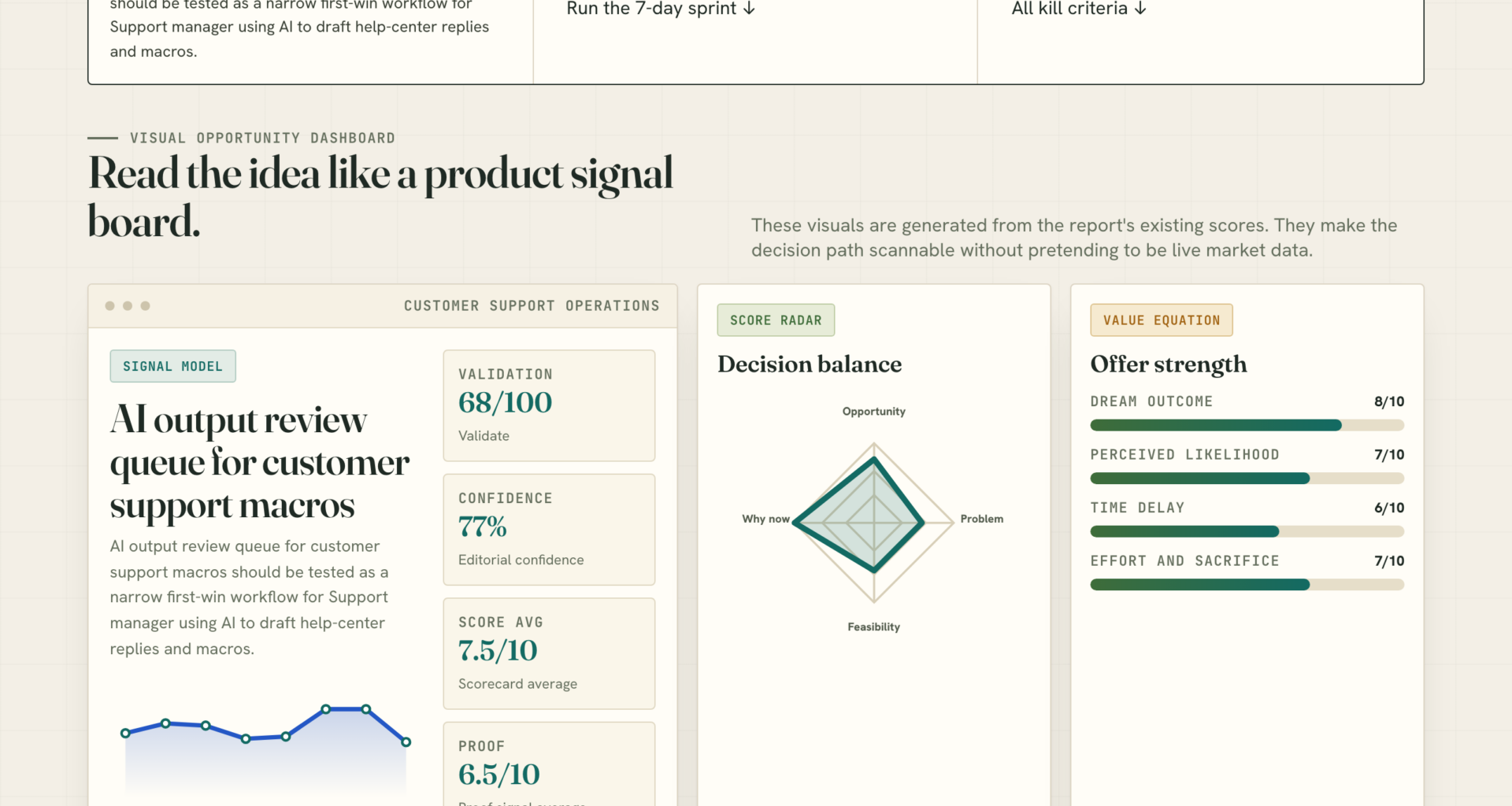
The review queue is intended for support managers using AI to generate help-center replies and macros. It will score drafts based on criteria such as policy compliance, tone appropriateness, source support, risky promises, and approval status, helping teams identify issues before macros go live.
According to an anonymous researcher involved in the project, the initial validation involves manually reviewing twenty AI-drafted macros to measure how many policy or tone issues are caught by the system prior to publication. This process aims to improve quality control as AI adoption in support operations continues to grow rapidly.
Impact on Customer Support Quality Assurance
The introduction of an AI output review queue could significantly improve the consistency and reliability of automated support responses. As support teams increasingly rely on AI, ensuring that macros align with company policies and maintain appropriate tone is critical to prevent misinformation and customer dissatisfaction. This system offers a scalable way to embed quality checks into AI workflows, reducing risks associated with unreviewed AI content.
Products Worth Considering

Sonos One Two-Room Smart Speaker Set with Alexa, Black

Samsung Galaxy Tab A11+ 11-Inch Tablet, 6GB RAM, 128GB Storage, Expandable Storage, Gray

LG UltraGear 32-inch QHD Curved Gaming Monitor, 180Hz, 1ms, FreeSync
As an affiliate, we earn on qualifying purchases.
Rapid AI Adoption in Customer Support
Many customer support organizations are integrating AI tools to draft responses and automate routine tasks. However, the lack of formal approval workflows has led to concerns about the drift of AI-generated content from company policies and tone standards. Currently, most organizations manually review AI drafts, which can be time-consuming and inconsistent, prompting the need for automated solutions like the new review queue.
This initiative by IdeaNavigator AI responds to the growing demand for scalable quality assurance in AI-supported customer service, marking a step toward more structured AI governance in support operations.
“The review queue is designed to catch policy and tone issues early, reducing the risk of unapproved content reaching customers.”
— an anonymous researcher
Uncertainties About Implementation and Effectiveness
It is not yet clear how accurately the review queue will score drafts or how it will perform across different support contexts. The system is still in testing, and results from the initial validation are not publicly available. Additionally, the long-term impact on support team workflows and macro approval times remains to be seen.
Next Steps for Validation and Deployment
The support teams will continue to refine the review queue based on initial testing results, aiming to automate more aspects of macro approval. Further validation involving larger sample sizes and real-world deployment is planned to assess its effectiveness. If successful, the system could be rolled out more broadly, setting a precedent for quality assurance in AI-driven support.
Key Questions
What is the purpose of the AI output review queue?
The review queue is designed to automatically evaluate AI-drafted customer support macros for policy compliance, tone, and accuracy before they are published.
How will the review queue improve support quality?
It will help identify and prevent problematic macros from reaching customers, ensuring responses adhere to company policies and maintain appropriate tone, thereby reducing errors and misinformation.
Is this system already in production?
No, it is currently in a testing phase, with initial validation underway to assess its effectiveness before broader deployment.
What challenges might arise with this system?
The main uncertainties involve how accurately the system scores drafts and whether it can adapt to different support scenarios without false positives or negatives.
When can support teams expect wider rollout?
If validation results are positive, a broader rollout could occur within the next few months, but specific timelines are not yet confirmed.
Source: IdeaNavigator AI