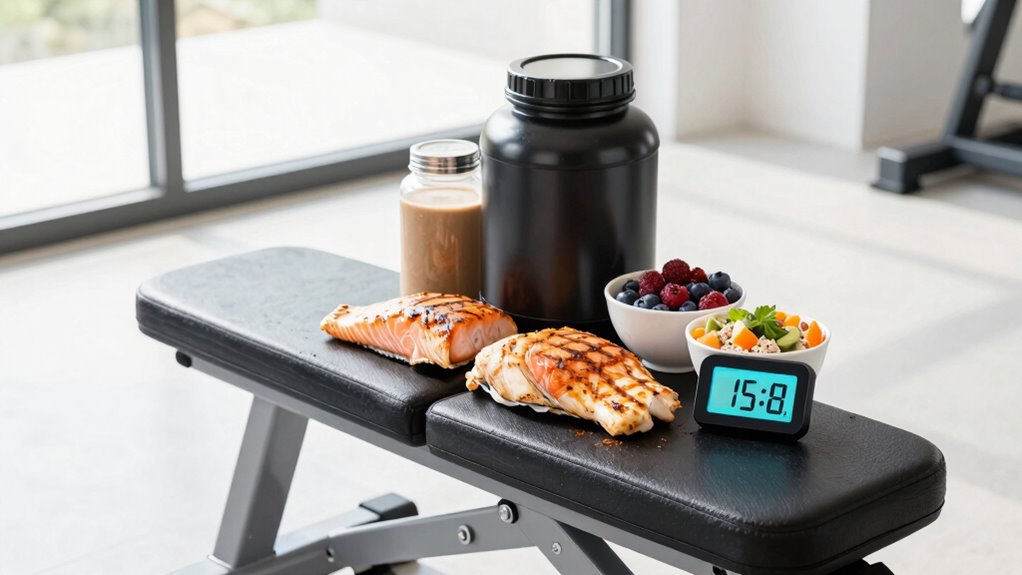

Protein timing is less essential than making sure you get enough total daily protein to support muscle repair and growth. While spreading your intake across multiple meals can aid in recovery, focusing on meeting your overall protein goals is more important than stressing over exact timing around workouts. You don’t need to panic if you miss a post-workout shake—total intake matters most. Keep going, and you’ll discover simple ways to optimize your muscle gains without overcomplicating your routine.
Key Takeaways
- Total daily protein intake is more crucial for muscle growth than precise timing.
- Optimizing protein intake around workouts can enhance muscle protein synthesis but isn’t essential.
- Spreading protein evenly across meals supports consistent amino acid supply and recovery.
- Missing a post-workout protein shake is not detrimental if overall daily intake is sufficient.
- Prioritizing consistent, adequate protein consumption outweighs strict adherence to timing strategies.
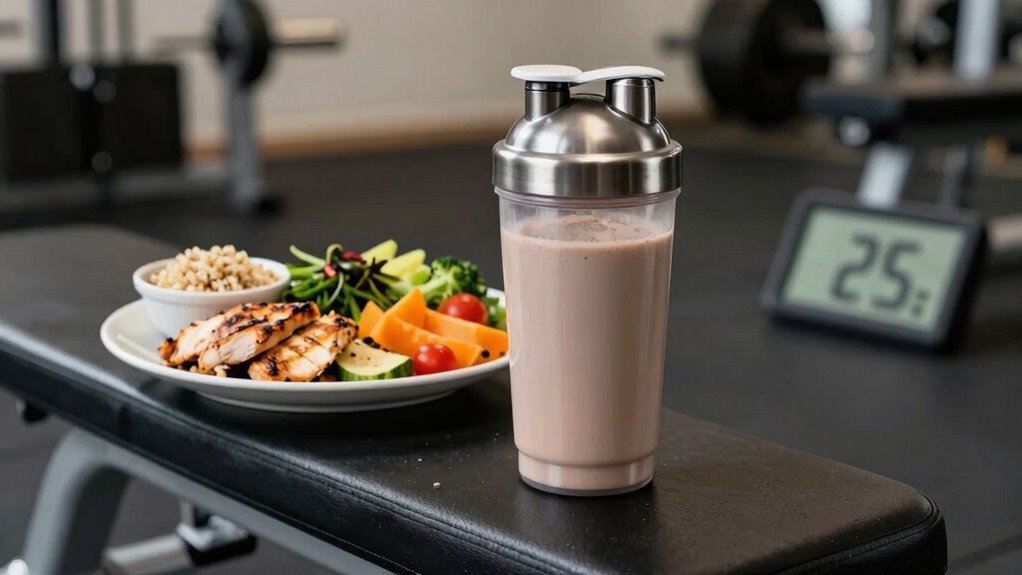
Have you ever wondered if when you consume protein matters as much as how much you take in? It’s a common question, especially when you’re trying to optimize your workouts and muscle growth. The truth is, while total daily protein intake is essential, the timing of your protein consumption can also influence your results. Many people focus on meal frequency, spreading their protein intake throughout the day to maximize muscle repair and growth. If you’re eating multiple protein-rich meals, you’re likely providing your muscles with a steady supply of amino acids, which can be beneficial for recovery and hypertrophy. However, it’s important to remember that the overall amount you consume matters more than obsessing over the exact timing. Additionally, some studies suggest that protein timing can enhance muscle protein synthesis when optimized around workouts. Understanding amino acid availability further supports the importance of meal timing in muscle growth.
When it comes to supplement timing, the same principle applies. Taking protein supplements, like shakes, immediately after a workout can help jump-start muscle repair, but it’s not the only window of opportunity. Consuming protein within a few hours of exercising is generally effective, but if your total daily intake is sufficient, the specific timing becomes less critical. Some research suggests that the anabolic window may be longer than initially thought, so you don’t have to panic if you miss the immediate post-workout shake. Instead, focus on distributing your protein intake evenly across your meals, aligning with your schedule and preferences.
best protein powder for muscle growth
As an affiliate, we earn on qualifying purchases.
As an affiliate, we earn on qualifying purchases.
Frequently Asked Questions
Does Protein Timing Affect Muscle Growth More Than Overall Intake?
Yes, protein timing affects muscle growth more than just overall intake. When you space your meals to optimize meal frequency, you enhance protein absorption, which supports muscle repair and growth. Consuming protein shortly after workouts ensures your muscles get the nutrients they need when they’re most receptive. So, focusing on when you eat protein can be just as important, if not more, than simply increasing your total daily intake.
Is There a Best Time of Day to Consume Protein?
You don’t need to stress about the perfect time to consume protein. Focus on regular meal frequency to guarantee steady protein absorption throughout the day. Eating protein around your workouts can help optimize muscle repair, but overall daily intake is more important. Aim for consistent, balanced meals, and your body will absorb protein efficiently, regardless of specific timing. Prioritize your total intake and meal patterns for best results.
How Does Protein Timing Impact Weight Loss Efforts?
You might be surprised to learn that timing your protein intake can boost weight loss by up to 25%, according to recent studies. When you focus on meal frequency and dietary timing, spreading protein evenly across meals helps control hunger and preserves muscle. This approach guarantees your body efficiently uses nutrients for fat burning and recovery, making your weight loss efforts more effective. Proper timing can give you a real advantage in reaching your goals.
Can Timing Influence Recovery After Workouts?
Yes, timing can influence your recovery after workouts. Consuming protein soon after exercise helps repair muscles, especially if you practice intermittent fasting or have irregular meal frequency. Eating within a window supports muscle synthesis and reduces soreness. By aligning your protein intake with your workout schedule, you optimize recovery, ensuring your body gets the nutrients it needs when it’s most receptive, regardless of your meal timing or fasting patterns.
Does Supplement Type Matter for Optimal Protein Timing?
Sure, because your protein supplement’s magic depends on the label, right? The truth is, supplement quality matters more than whether you chug it right after your workout or an hour later. Timing flexibility exists, so don’t stress over exact moments. Focus on consistently getting high-quality protein throughout the day. Your muscles will thank you, even if your supplement isn’t the fanciest on the shelf.
Conclusion
While timing your protein intake can feel like catching the perfect wave, remember that consistency is your surfboard. Focus on fueling your body with quality protein throughout the day, like tending to a garden that blooms over time. The true power lies in your ongoing effort, not just the fleeting moment. So, stay steady on your journey—each meal is a stepping stone, shaping a resilient foundation where your strength can flourish like a mighty oak.