Indoor hydroponic gardens demand more care and attention than ads often show. You need to manage lighting, monitor pH and nutrient levels, guarantee good airflow, and control environmental conditions like humidity and temperature. These systems aren’t “set and forget”—they require regular adjustments and vigilance to prevent issues like mold, pests, or nutrient imbalances. If you stay aware of these key factors, you’ll be better prepared for success and healthier plants; keep going to get the full picture.
Key Takeaways
- Successful indoor hydroponics require consistent monitoring of pH, EC, and environmental conditions, not just installing equipment.
- Proper lighting involves more than buying grow lights; placement and spectrum are critical for plant health.
- Regular nutrient solution adjustments are essential; neglecting this leads to deficiencies and poor yields.
- Airflow and humidity control are vital for preventing mold and pests, often overlooked in ads.
- Growing healthy plants demands ongoing attention and maintenance, challenging the “set and forget” expectation.
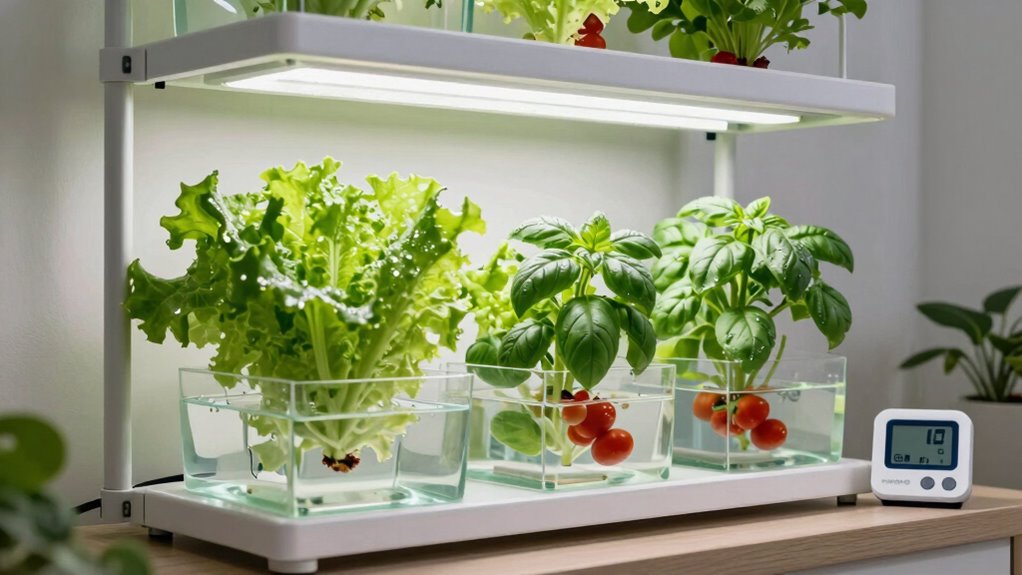
First, your lighting setup plays a pivotal role. While it’s tempting to rely on standard household lights or cheap grow lights, these often don’t provide the right spectrum or intensity for healthy plant growth. You need to invest in proper grow lights that deliver full-spectrum light, mimicking sunlight as closely as possible. Position your lights at the correct distance from your plants—too close, and you risk burning them; too far, and they won’t receive enough light to thrive. Expect to experiment a bit, especially if you’re growing different types of herbs or vegetables, as their lighting needs can vary. Proper lighting management is crucial for maximizing plant health and yield. Additionally, understanding light spectrum can help you select the best grow lights for your specific plants.
Monitoring your environmental conditions such as humidity and airflow is also critical, as these factors can significantly influence plant health in a hydroponic setup. Maintaining consistent air circulation can prevent issues like mold and pest infestations. Regularly checking your water quality and ensuring your system’s temperature stays within optimal ranges can also greatly improve your success rate. Nutrient management is equally essential. Hydroponic systems don’t rely on soil to supply nutrients; instead, you provide a carefully balanced solution of water and nutrients. Relying solely on store-bought fertilizers or neglecting regular adjustments can lead to deficiencies or toxic buildup, stunting your plant growth. You’ll need to monitor your nutrient solution regularly, checking pH levels and electrical conductivity (EC). Proper pH generally falls between 5.5 and 6.5, depending on what you’re growing. Regularly replacing or replenishing your nutrient solution prevents imbalances, which can be a common pitfall for beginners.
Many new hydroponic growers underestimate the amount of attention and maintenance required. It’s not a “set it and forget it” system. You’ll need to keep a close eye on your plants, adjusting your lighting schedule and nutrient concentrations as they grow. Expect fluctuations in plant health if these factors aren’t carefully managed. Consistent monitoring and tweaking might seem tedious at first, but they’re essential to achieving healthy, productive plants.
full spectrum LED grow lights for indoor hydroponics
As an affiliate, we earn on qualifying purchases.
As an affiliate, we earn on qualifying purchases.
Frequently Asked Questions
How Much Initial Investment Is Required for a Hydroponic Garden?
You should expect to spend around $200 to $1,000 on a hydroponic garden, depending on size and sophistication. Conduct a cost analysis to determine what fits your budget. Keep in mind, the setup complexity varies; beginner models are simpler and cheaper, while advanced systems require more investment. Factor in lighting, nutrients, and containers to get an accurate estimate of your initial investment.
What Are Common Pests or Diseases in Indoor Hydroponic Systems?
You might worry about pests or diseases in your hydroponic system, but with proactive pest control and disease prevention, you can keep your plants healthy. Common pests include aphids and spider mites, while root rot and mold are typical diseases. Regularly inspecting your setup, maintaining cleanliness, and using organic pest deterrents help prevent problems. Staying vigilant guarantees your indoor garden thrives without unexpected setbacks.
How Long Does It Take for Plants to Mature Indoors?
Plant growth in indoor hydroponic systems varies depending on the plant type, but most vegetables mature within 4 to 8 weeks. Proper nutrient management is key, ensuring your plants get the right balance of nutrients to promote healthy growth. Regular monitoring and adjustments help prevent deficiencies and diseases, speeding up maturation. With consistent care and ideal conditions, you’ll see quicker plant development and a better harvest.
Can Hydroponic Gardens Be Set up in Small Apartments?
Like a secret garden tucked away in a city corner, your small apartment can host a thriving hydroponic setup. Urban farming thrives on space optimization, making it ideal for compact areas. With vertical racks or countertop systems, you can grow herbs, greens, or even small veggies. Set up your indoor hydroponic garden, and transform your apartment into a lush, productive oasis, proving that big harvests don’t need big spaces.
What Are the Ongoing Maintenance Requirements for Indoor Hydroponics?
You need to regularly check your lighting schedules to make certain your plants get enough light without overexposure. Nutrient balancing is essential; you’ll add and adjust nutrient solutions based on plant growth and water quality. Keep an eye on pH levels and water levels, and clean your system to prevent algae and pests. Consistent maintenance helps your indoor hydroponic garden thrive, giving you fresh produce and a rewarding gardening experience.
Conclusion
Remember, indoor hydroponic gardens aren’t magic; they’re like delicate plants needing real care. I once watched a friend’s garden wilt because she expected instant results from a flashy ad. Think of it like training a puppy—you get out what you put in. By setting realistic expectations and committing to consistent effort, you’ll nurture a thriving garden. Patience and proper care turn modest beginnings into lush, fruitful results, proving good things truly do take time.