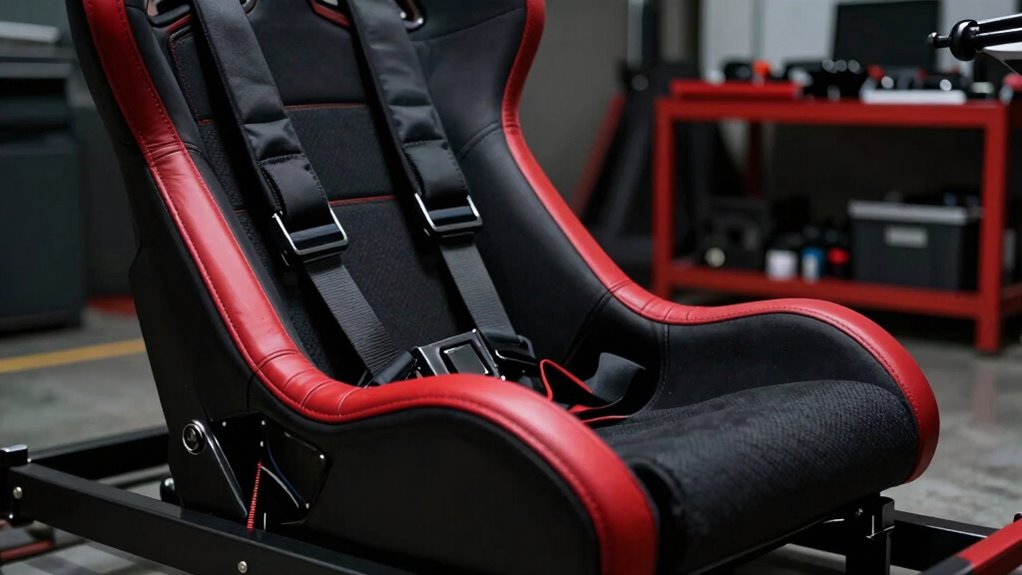

Your racing seat position directly influences your braking confidence by affecting comfort, visibility, and control. When your seat is properly adjusted, you maintain a natural, relaxed posture, which helps you feel more connected to the pedals and improves your reaction times. Correct positioning also guarantees clear visibility of the track and dashboard info, reducing distractions. If you keep experimenting with your seat setup, you’ll discover how small adjustments can boost your confidence and overall performance.
Key Takeaways
- Proper seat position ensures quick, consistent pedal access, improving braking response and confidence.
- Correct ergonomics maintain comfort, reducing fatigue and enhancing focus during intense braking maneuvers.
- Optimal seat height and angle improve visibility, allowing better anticipation and reaction to track conditions.
- Stable seating supports precise pedal feel, leading to more accurate and confident braking inputs.
- A well-aligned seat fosters a natural posture, boosting psychological confidence and overall braking control.
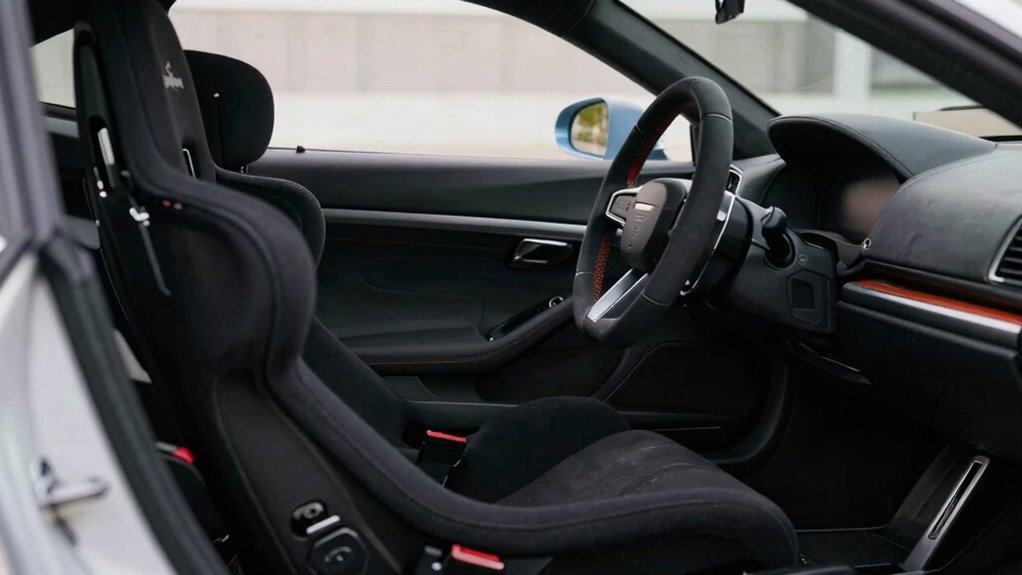
Have you ever wondered how your racing seat position influences your braking confidence? The way you position yourself in your seat directly affects how well you can control your vehicle, especially when approaching tight corners or sudden stops. One of the most critical factors is seat ergonomics—how comfortably and supportively your seat fits your body. When your seat is properly aligned, your posture remains stable, reducing fatigue and allowing you to focus entirely on your braking inputs. Poor seat ergonomics can cause you to adopt awkward postures, which not only hampers your control but also makes it harder to gauge your braking force accurately.
Proper seat ergonomics enhance control, reduce fatigue, and improve your braking accuracy and confidence on the track.
Another essential aspect tied closely to seat ergonomics is pedal accessibility. When your seat height, tilt, and distance from the pedals are optimized, you gain quicker, more precise access to the brake pedal. If you’re sitting too far from the pedals, you might find yourself overextending your leg, leading to delayed or uneven braking responses. Conversely, sitting too close can restrict movement and cause fatigue over longer sessions. The goal is to find that sweet spot where your foot comfortably rests on the brake pedal, with enough leverage and control to modulate braking force smoothly.
Your seat position also influences your line of sight and overall awareness. Sitting too low might obscure critical dashboard information or track visibility, while sitting too high could cause strain on your neck and shoulders. Proper seat positioning ensures you maintain a natural, relaxed posture, which boosts confidence and responsiveness when braking. When you’re comfortable and your body is correctly aligned, your brain can better anticipate and react to changes in track conditions, giving you a psychological edge. Additionally, understanding the importance of seat ergonomics can help you develop a more consistent and intuitive driving technique. Adjusting your seat for optimal driver comfort can lead to improved focus and reaction times during high-pressure situations.
Furthermore, an ideal seat position promotes consistent pedal feel. When your foot’s position is steady and predictable, you develop a better “feel” for how much pressure to apply during braking. This consistency translates into more controlled, confident braking, especially under high-stress situations. If your seat isn’t properly adjusted, you might experience variability in pedal response or unintentionally apply too much or too little pressure, undermining your confidence. In addition, maintaining proper seat support helps prevent fatigue and discomfort over extended periods, ensuring that your focus remains sharp. Ensuring your seat setup is adjustable and tailored to your body can make a significant difference in maintaining consistent pedal feel.
In essence, your racing seat position isn’t just about comfort; it’s about creating an environment where your body and vehicle work in harmony. Proper seat ergonomics and pedal accessibility ensure that your braking inputs are precise, confident, and controlled. When you take the time to fine-tune your seat position, you’re setting yourself up for better performance and greater confidence on the track.

Universal Super Low Down Side Adjustable Mount Brackets Compatible with RNG Recaro Racing Bride Seat
- Universal Fitment: Compatible with most sliders and rails
- Durable Material: Powder-coated black finish for longevity
- Adjustable Design: Ensures proper adaptation and fit
As an affiliate, we earn on qualifying purchases.
As an affiliate, we earn on qualifying purchases.
Frequently Asked Questions
How Does Seat Height Affect Braking Control?
Your seat height impacts braking control by affecting seat ergonomics and pedal feedback. When your seat is positioned correctly, you get better leverage and can feel the pedals more precisely, improving your braking accuracy. A higher seat might reduce your ability to control pedal pressure, while a lower seat offers better feedback. Adjusting seat height guarantees ideal ergonomics, giving you a more confident and controlled braking experience during races.
Can Seat Angle Influence Brake Pedal Feel?
Yes, seat angle can influence your brake pedal feel. If your seat is angled properly, it enhances seat comfort, allowing you to maintain better control and feel for pedal feedback. When your seat is too reclined or too upright, it can decrease your sensitivity to pedal pressure, making braking less precise. Adjusting the seat angle guarantees you get accurate pedal feedback, boosting your confidence and braking performance on the track.
What Is the Ideal Seat Position for Different Vehicle Types?
The ideal seat position varies by vehicle type, but focus on maintaining an ergonomic posture that keeps your back straight and arms slightly bent. Adjust the seat to guarantee you can comfortably reach the brake pedal without stretching. Consider seat material for comfort and support, especially during long drives. For racing cars, a lower, more reclined position improves control, while for daily drivers, an upright posture promotes better visibility and comfort.
How Often Should a Racing Seat Be Adjusted?
You should adjust your racing seat whenever you notice discomfort or changes in your driving feel, typically every few sessions. Keep an eye on your seat material for wear and ensure the lumbar support remains snug, as both influence your posture and confidence. Frequent adjustments help maintain ideal comfort and control, especially if you switch between different tracks or driving conditions. Staying attentive to these factors ensures your seat supports your performance effectively.
Does Seat Padding Impact Braking Performance?
Seat padding considerably impacts your braking performance. If the seat material and padding firmness are too soft, you might feel less control and stability, making braking less precise. Conversely, firmer padding provides better feedback and support, helping you brake confidently. Adjusting the seat padding to suit your comfort and control needs enhances overall braking performance, ensuring you can respond quickly and accurately during high-speed maneuvers.
Conclusion
Getting your racing seat position just right can truly boost your braking confidence, transforming hesitation into control. When you’re seated properly, you’ll feel more connected to your car, allowing you to react swiftly and confidently. Think of it as finding your sweet spot—once you do, everything else falls into place. Remember, it’s not just about speed, but knowing you’re in the driver’s seat of your own safety. Trust the process, and watch your confidence grow.