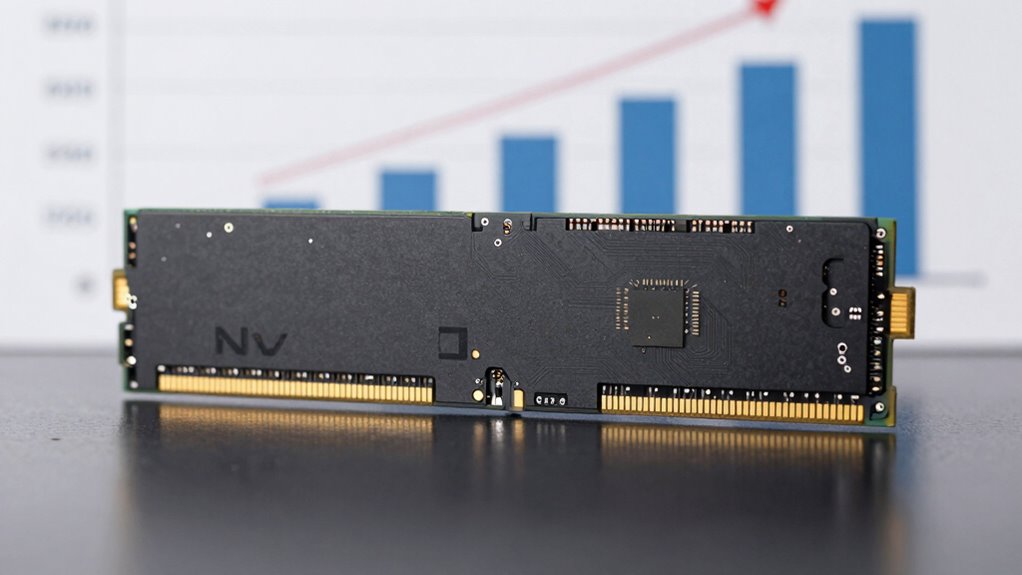

Your NVMe drive’s TBW (Terabytes Written) rating tells you how much data you can write before it might start to wear out or risk losing stability. A higher TBW means better endurance, especially for intensive tasks like video editing or backups. It helps you understand how long your drive can handle heavy workloads and when to backup important data. If you want to know how to maximize your drive’s lifespan, keep exploring the details.

Get the latest gadgets delivered free with Prime
- Fast, free delivery on millions of items
- Prime Video, Amazon Music and more included
- Member-only deals all year
Key Takeaways
- TBW indicates the total amount of data an NVMe SSD can reliably write before potential failure.
- Higher TBW values suggest greater endurance, suitable for intensive workloads like video editing or backups.
- TBW helps estimate how long data remains stable and reliable on the drive over its lifespan.
- Wear leveling distributes writes evenly, helping the drive stay within its endurance limits for longer.
- Monitoring TBW and drive health ensures optimal data retention and prevents unexpected drive failures.
When choosing an NVMe SSD, understanding endurance ratings is essential because they indicate how long the drive can reliably operate under typical usage. These ratings, usually expressed as TBW (Terabytes Written), reveal the total amount of data you can write to the drive before it’s likely to start experiencing failures. These ratings also influence data retention, which is how long your data remains stable on the drive over time. It’s tempting to focus solely on capacity or speed, but endurance ratings give you a clearer picture of the drive’s longevity and reliability over time. Knowing this helps you avoid unexpected data loss or drive failure, especially if you’re planning to use the SSD for intensive tasks like video editing or large backups. Proper understanding of endurance management can help you choose the right SSD for your specific needs, balancing performance and longevity. Additionally, drive manufacturers often provide tools or software to track drive health and endurance status, making it easier to stay informed about your SSD’s condition.
TBW isn’t just about how much data you can write; it also impacts data retention. As an SSD ages and approaches its endurance limit, there’s a slight risk that stored data could become less stable over long periods, especially if the drive is near or beyond its rated TBW. That’s why understanding the endurance rating helps you plan for proper data management, including regular backups and data integrity checks. It also emphasizes the importance of features like wear leveling, which evenly distributes write and erase cycles across the NAND memory. Wear leveling prevents certain memory cells from wearing out prematurely, *consequently* prolonging the drive’s lifespan and maintaining data retention capabilities. Without proper wear leveling, some parts of the drive could degrade faster, risking data loss and reducing the overall endurance of the SSD. To maximize your drive’s lifespan, keeping track of its endurance ratings and usage patterns is recommended. Additionally, monitoring your drive’s write workload can help ensure it stays within safe operational limits over time.
Products Worth Considering

Apple MacBook Air 13-inch with M5 Chip, 16GB Memory, 512GB SSD, Sky Blue

Samsung 49-Inch Odyssey G93SC QD-OLED Curved Gaming Monitor

LG UltraGear 32-inch 4K UHD OLED Gaming Monitor, 165Hz
As an affiliate, we earn on qualifying purchases.
Frequently Asked Questions
How Does TBW Impact Everyday SSD Performance?
TBW impacts your SSD’s everyday performance by influencing how well wear leveling manages the drive’s lifespan. Higher TBW means the SSD can handle more data writes before performance might decline due to wear. Proper wear leveling guarantees even data distribution, maintaining speed. Additionally, TBW affects data retention; exceeding limits could lead to data loss or degraded performance over time, so staying within rated endurance helps keep your SSD running smoothly.
Can TBW Ratings Predict SSD Lifespan Accurately?
Think of TBW ratings as a weather forecast for your SSD’s lifespan, but they’re not crystal balls. While higher TBW suggests longer durability, factors like wear leveling and firmware updates can extend or shorten this forecast. You won’t get a perfect prediction, but TBW offers a useful horizon. Keep your firmware updated and trust wear leveling to evenly distribute the workload, helping your SSD sail smoothly for years.
Do Different Brands Have Comparable Endurance Ratings?
Different brands often have varying endurance ratings, so they aren’t entirely comparable. Brand reliability influences these ratings, with reputable manufacturers typically providing more accurate and consistent TBW figures. When choosing an SSD, consider warranty implications, as higher endurance ratings usually come with longer warranties, offering better protection. Ultimately, understanding each brand’s reliability and warranty terms helps you select a durable SSD suited to your needs.
How Is TBW Calculated for Consumer Versus Enterprise SSDS?
You can expect TBW for consumer SSDs to be lower than enterprise ones because their firmware updates and wear leveling optimize lifespan differently. Manufacturers base TBW calculations on the drive’s expected workload, factoring in firmware updates that improve efficiency, and wear leveling to distribute data evenly. Enterprise SSDs undergo more rigorous testing, resulting in higher TBW ratings, which reflect their ability to handle heavier, continuous workloads.
What Factors Beyond TBW Affect SSD Longevity?
Beyond TBW, your SSD’s longevity depends on factors like wear leveling, which evenly distributes data writes to prevent early failure of specific cells, and data retention, which impacts how long data stays intact without power. Proper wear leveling reduces localized stress, while good data retention ensures your stored information remains safe over time. These elements work together to extend your SSD’s lifespan, complementing the TBW rating.
Conclusion
Understanding NVMe endurance ratings is like reading a speedometer—you get a sense of how much your drive can handle, but not the full story of its lifespan. While TBW numbers may seem like a clear limit, they’re just part of the picture. Just as a car’s mileage doesn’t tell you everything about its condition, TBW alone can’t predict how long your SSD will truly last. Keep this in mind, and you’ll make smarter storage choices.