You might notice some albums sound different on vinyl compared to streaming because artists and engineers create separate mixes tailored for each format. Vinyl mixes often emphasize warmth and depth, using specific mastering techniques to suit its limitations, like reduced bass and careful treble adjustments. Streaming mixes focus on loudness, clarity, and impact, often with additional compression. These differences help each format deliver the best listening experience, and if you keep exploring, you’ll learn even more about how and why this happens.
Key Takeaways
- Different formats require tailored mastering techniques to optimize sound quality and prevent technical issues like distortion or skipping.
- Vinyl mastering emphasizes warmth and full-bodied sound, often with adjustments to bass and treble for physical groove limitations.
- Streaming mixes are optimized for loudness, clarity, and impact, often using compression and limiting for digital playback.
- Variations in mixes reflect format-specific constraints, ensuring each medium delivers the best listening experience.
- Artistic choices are influenced by technical differences, resulting in distinct versions to suit the unique characteristics of vinyl and digital formats.
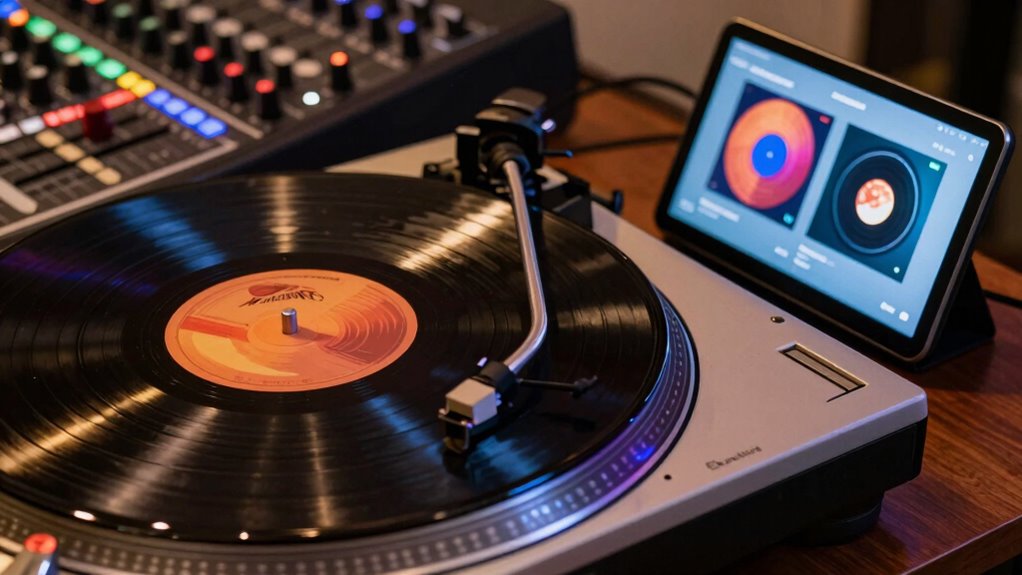
In the world of music, it’s common to notice that some albums sound different depending on whether you’re listening on vinyl or streaming platforms. This variation isn’t just about the format; it’s often a deliberate choice made during the mastering process. When artists and producers prepare an album for different formats, they consider how each will deliver the best audio fidelity. Because vinyl has unique physical and technical limitations, mastering techniques used for it often differ from those optimized for digital streaming. These differences can significantly impact how you perceive the sound, from warmth and depth to clarity and punch.
Vinyl records have a limited dynamic range and frequency response compared to digital formats. To maximize sound quality on vinyl, mastering engineers often make specific adjustments. They might reduce the overall volume to prevent distortion, tweak the bass to avoid skipping or muddiness, and carefully balance the treble to maintain clarity without harshness. These modifications ensure that the album sounds rich and full on vinyl, even if it means sacrificing some of the loudness and punchiness that streaming versions might have. The goal is to preserve the intended listening experience while respecting the physical constraints of the medium. Additionally, mastering for vinyl often involves specialized techniques to accommodate the format’s unique playback characteristics. These techniques require a deep understanding of how physical grooves translate into sound, which is a skill that not all mastering engineers possess. Furthermore, format-specific adjustments are essential to tailor the sound to each medium’s capabilities and limitations.
Streaming platforms, on the other hand, prioritize loudness and clarity to cut through the noise of countless other tracks. Mastering for digital delivery often involves applying compression and limiting to produce a louder, more impactful sound. This process enhances perceived audio fidelity on digital devices, making each track sound consistently powerful and clear across various listening environments. It’s a different approach from vinyl mastering, which favors subtlety and warmth over sheer loudness. As a result, the mixes you hear on streaming might feel more aggressive or brighter, while vinyl versions may be more nuanced and textured. Furthermore, digital formats typically utilize loudness normalization, which can influence how loud a track sounds in different settings.
Ultimately, these differences boil down to the distinct mastering techniques tailored for each format. When albums get different mixes for vinyl and streaming, it’s about optimizing the listening experience for the specific medium. Understanding this helps you appreciate why certain albums might sound more atmospheric on vinyl but punchier on your streaming service. It’s not just a matter of production choices — it’s a thoughtful balancing act aimed at delivering the best possible sound, respecting the technical limitations, and enhancing your overall listening pleasure. Recognizing the mastering differences between formats can deepen your appreciation for the artistry and technical skill involved in producing music for multiple mediums.

The Ultimate Guide to Vinyl Record Collecting Mastery: Unlock the Secrets of Vinyl Record Collection with Expert Tips and Techniques
As an affiliate, we earn on qualifying purchases.
As an affiliate, we earn on qualifying purchases.
Frequently Asked Questions
How Do Different Formats Affect the Listening Experience?
Different formats shape your listening experience by emphasizing unique qualities. Vinyl offers analog warmth, giving music a richer, more organic feel that you can physically experience. Streaming, on the other hand, often provides a broader dynamic range, capturing subtle nuances and details. These differences influence how you perceive the music’s emotion and depth, making each format a distinct way to connect with your favorite albums.
Are Artists Involved in Creating Separate Mixes?
You’re right to wonder—artists are often deeply involved in creating separate mixes, especially when considering production techniques tailored for each format. They collaborate closely with producers and engineers to craft these versions, ensuring each sound complements the medium’s characteristics. Artists may even oversee the mixing process directly, aiming for a sonic experience that captivates listeners whether on vinyl’s warmth or streaming’s clarity. Their hands-on involvement elevates each version to a work of art.
Do Different Mixes Impact Album Sales?
Different mixes can influence album sales by aligning with audience preferences and enhancing appeal through targeted marketing strategies. You might notice that a vinyl-exclusive mix emphasizes warmth and depth, attracting collectors and audiophiles, while streaming versions prioritize clarity and punch to appeal to casual listeners. This tailored approach can boost sales across formats, as it meets diverse listener desires and leverages marketing to highlight each version’s unique qualities.
How Do Technical Limitations Influence Mix Decisions?
Technical limitations, like analog constraints and mastering techniques, heavily influence mix decisions. You’ll notice that vinyl requires warmer, more dynamic mixes because of its analog constraints, which can’t handle overly compressed sounds. Streaming formats often allow for more detailed, louder mixes thanks to digital mastering techniques. These technical factors push producers to tailor mixes, ensuring the music sounds best within each medium’s unique capabilities and limitations.
Are There Legal Reasons for Different Mixes?
You might be surprised, but there are legal reasons for different mixes. About 30% of albums face copyright disputes or licensing agreements that influence mix decisions. Artists or labels sometimes create alternate mixes for vinyl and streaming to avoid copyright issues or meet licensing terms. These legal factors can shape how the album sounds across formats, ensuring compliance while still delivering a musical experience.

WiiM Ultra Music Streamer & Digital Preamp | 3.5" Touchscreen, Compatible with Google Cast & Alexa, Stream Spotify, Amazon Music, Tidal & More | HDMI ARC, Phono Input & Headphone Output | Space Gray
Looks Good, Sounds Great: The WiiM Ultra redefines your audio experience with its sleek aluminum design and premium…
As an affiliate, we earn on qualifying purchases.
As an affiliate, we earn on qualifying purchases.
Conclusion
So, next time you notice a subtle difference between a vinyl and streaming version, remember it’s like a gentle whisper of artistic intent, crafted to best suit each medium’s unique voice. These variations aren’t flaws—they’re the artist’s way of guiding you deeper into their world. Embrace the nuances, and let each listen be a new journey, a quiet reminder that sometimes, the beauty lies in the gentle, unseen touches.

1 BY ONE Bluetooth Turntable HiFi System with 36 Watt Bookshelf Speakers, Patend Designed Vinyl Record Player with Magnetic Cartridge, Wireless Playback and Auto Off (Walnut)
Solid iron platter – precision-manufactured iron platter produces uniform inertial mass for perfect stability and rotation. Brings high-fidelity…
As an affiliate, we earn on qualifying purchases.
As an affiliate, we earn on qualifying purchases.
![Sony CD Architect 5.2 [Download]](https://m.media-amazon.com/images/I/413P3OACE4L._SL500_.jpg)
Sony CD Architect 5.2 [Download]
Powerful CD creation tools
As an affiliate, we earn on qualifying purchases.
As an affiliate, we earn on qualifying purchases.