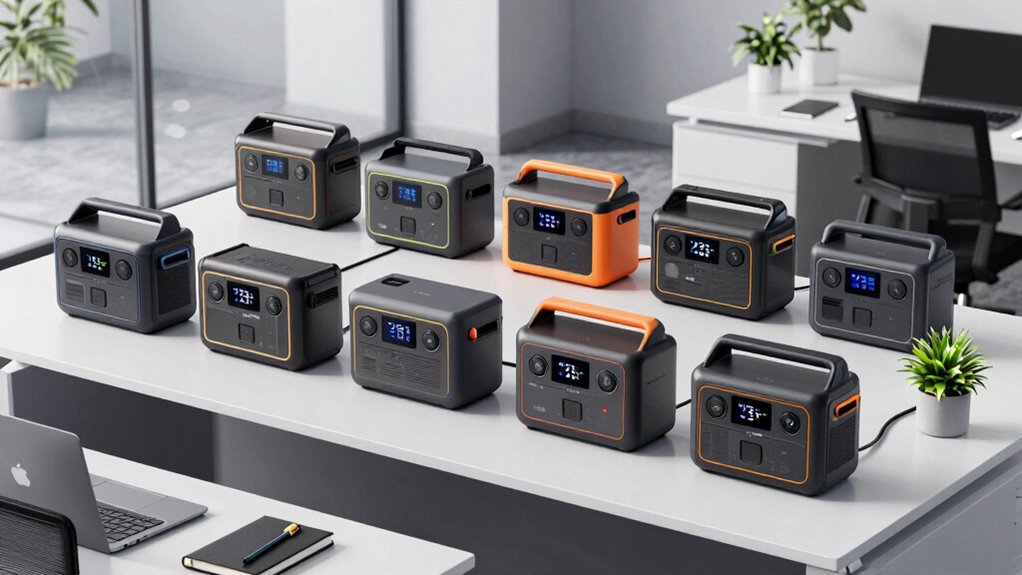
When the power cuts out mid-workday, the right portable power station for office backup keeps your laptop, monitor, router, and internet running without interruption. My top pick is the Anker SOLIX S2000, because its 2,010Wh capacity and 1,500W output can run a full home-office setup for most of a workday. The EF ECOFLOW Delta 3 Classic is the strongest runner-up thanks to true UPS pass-through, which switches to battery so fast your computer never reboots, while the budget-friendly UDPOWER S1200 offers surprising capacity for the price. The main tradeoff you’ll face in this category is capacity versus portability and cost: large stations can run everything but cost more and weigh a lot, while compact units under 300Wh only cover laptops and networking gear. Continue reading for the full breakdown, including who each model suits and who should skip it.

Get the latest gadgets delivered free with Prime
- Fast, free delivery on millions of items
- Prime Video, Amazon Music and more included
- Member-only deals all year
Complete the kit


Key Takeaways
- True UPS pass-through was rare in this lineup — only the UDPOWER S1200 and ECOFLOW Delta 3 Classic advertise it explicitly, which matters if you can’t afford even a split-second reboot during outages.
- Capacity sorted the lineup into three clear tiers: sub-300Wh units (Daran, MARBERO, BLUETTI Elite 10 Mini, DaranEner) cover laptops and routers only; 500–650Wh mid-rangers (GRECELL, LIBRIDS, EnginStar, Jackery 300) handle monitors too; and 1000Wh+ models (Anker S2000, Delta 3, C1000, UDPOWER) run a complete workstation.
- LiFePO4 chemistry appeared in both the cheapest and most expensive picks, so battery longevity is no longer a premium-only feature — but several mid-tier units still use older cell chemistry, which shortens lifespan.
- Surge ratings decided usability more than continuous output: a 300W printer or a monitor waking from sleep can trip low-surge stations like the MARBERO (120W) even when average loads seem fine.
- The 1024Wh ‘generic’ class (Anker C1000, ECOFLOW Delta 3, the unnamed 1000W LiFePO4 unit) delivered near-identical capacity, so the differentiators came down to solar input limits, charging speed, and app support rather than raw watt-hours.
| Anker SOLIX C1000 Portable Power Station with Car Charging Cable, 1056Wh |  | Best Overall for Longer Office Outages | Battery capacity: 1,056Wh | Battery type: LiFePO4 | Battery cycles: 3,000 | VIEW ON AMAZON | See Our Full Breakdown |
| Daran Portable Power Station 89.6Wh, LiFePO4 Battery, 100W (200W Peak) Solar Power Bank with AC Outlets & PD Fast Charging |  | Best Compact Backup for a Single Desk | Capacity: 89.6Wh | Battery type: LiFePO4 | Output: 100W; 200W peak | VIEW ON AMAZON | See Our Full Breakdown |
| LIBRIDS Portable Power Station 640Wh, 1200W Surge, Solar Generator with 4 AC Outlets |  | Best for Automatic Network Backup | Capacity: 640Wh | Continuous output: 600W | Surge power: 1,200W | VIEW ON AMAZON | See Our Full Breakdown |
| EnginStar Portable Power Station 300W 296Wh Solar Generator |  | Best Lightweight Midrange Backup | Capacity: 296Wh | AC output: 300W | AC outlets: 2 pure sine wave outlets | VIEW ON AMAZON | See Our Full Breakdown |
| GRECELL 500W Portable Power Station, 519Wh Solar Generator with 2 AC Outlets and 60W USB-C PD |  | Best for Multiple Small Office Devices | Battery capacity: 519Wh | AC output: 500W | AC outlets: 2 pure sine wave outlets | VIEW ON AMAZON | See Our Full Breakdown |
| BLUETTI Elite 10 Mini Portable Power Station |  | Best for Laptop UPS Backup | Capacity: 128Wh | AC output: 200W | USB-C output: 100W | VIEW ON AMAZON | See Our Full Breakdown |
| UDPOWER S1200 Portable Power Station |  | Best for Multiple AC Devices | AC output: 1200W continuous, 1800W surge | AC outlets: 5 | USB-C ports: 2 x 100W USB-C PD | VIEW ON AMAZON | See Our Full Breakdown |
| HOWEASY Portable Power Station, 120W |  | Best Lightweight Backup for Small Accessories | Battery capacity: 88Wh | AC output: 120W continuous, 240W peak | USB-C output: 18W | VIEW ON AMAZON | See Our Full Breakdown |
| 1000W Portable Power Station 1024Wh LiFePO4 Battery |  | Best for Longer Office Outages | Battery capacity: 1024Wh | Continuous output: 1000W | Battery type: LiFePO4 | VIEW ON AMAZON | See Our Full Breakdown |
| MARBERO Portable Power Station M82 |  | Best for Compact Emergency Essentials | Capacity: 88Wh | Running output: 80W | Surge power: 120W | VIEW ON AMAZON | See Our Full Breakdown |
| EF ECOFLOW Delta 3 Classic Portable Power Station, 1024Wh, 1800W AC Output |  | Best Overall for Full Home Office Backup | Battery Capacity: 1024 Wh | AC Output: 1800 W (3600 W surge) | X-Boost Output: Up to 2600 W | VIEW ON AMAZON | See Our Full Breakdown |
| Anker SOLIX S2000 Portable Power Station, 2,010Wh, 1,500W |  | Best for Long Outages | Battery Capacity: 2,010 Wh | Battery Type: LFP (10,000 cycles) | Continuous Output: 1,500 W (3,000 W peak) | VIEW ON AMAZON | See Our Full Breakdown |
| BLUETTI Elite 30 V2 Portable Power Station, 288Wh, 600W, LFP Solar Generator |  | Best Small-Office Value | Capacity: 288 Wh | Continuous Output: 600 W (1500 W Power Lifting) | Battery Type: LFP | VIEW ON AMAZON | See Our Full Breakdown |
| DaranEner Portable Power Station, 192Wh LiFePO4 Battery Backup |  | Best Ultra-Light Emergency Kit | Capacity: 192 Wh | Battery Type: LiFePO4 (3500+ cycles) | Output: 300W pure sine wave, 600W peak | VIEW ON AMAZON | See Our Full Breakdown |
| Jackery Explorer 300 Portable Power Station, 292Wh |  | Best for Laptop-Only Workspaces | Capacity: 292 Wh | Output: 300W rated, 600W peak | Battery Type: LiFePO4 (4,000+ cycles) | VIEW ON AMAZON | See Our Full Breakdown |
| portable power stations for office backup | Battery type | Weight | Capacity |
|---|---|---|---|
| Anker SOLIX C1000 Portable Pow | LiFePO4 | — | — |
| Daran Portable Power Station 8 | LiFePO4 | 2.54 lbs | 89.6Wh |
| LIBRIDS Portable Power Station | LiFePO4 | — | 640Wh |
| EnginStar Portable Power Stati | Lithium-ion | 6.5 lbs | 296Wh |
| GRECELL 500W Portable Power St | — | — | — |
| BLUETTI Elite 10 Mini Portable | LiFePO4 | 3.97 lbs | 128Wh |
| UDPOWER S1200 Portable Power S | LiFePO4 | — | — |
| HOWEASY Portable Power Station | — | 2.3 lbs | — |
| 1000W Portable Power Station 1 | LiFePO4 | 27.73 lbs | — |
| MARBERO Portable Power Station | — | 3.2 lbs | 88Wh |
| EF ECOFLOW Delta 3 Classic Por | LiFePO4 | 26.7 lbs | — |
| Anker SOLIX S2000 Portable Pow | LFP (10,000 cycles) | 35.7 lbs | — |
| BLUETTI Elite 30 V2 Portable P | LFP | 9.4 lbs | 288 Wh |
| DaranEner Portable Power Stati | LiFePO4 (3500+ cycles) | 5.73 lbs | 192 Wh |
| Jackery Explorer 300 Portable | LiFePO4 (4,000+ cycles) | 7.5 lbs | 292 Wh |
More Details on Our Top Picks
Anker SOLIX C1000 Portable Power Station with Car Charging Cable, 1056Wh
For an office that needs more than router-only backup, the Anker SOLIX C1000 combines a 1,056Wh battery with 1,800W continuous output. That gives it more room to run a mix of work essentials than the smaller LIBRIDS 640Wh, while its 2,400W surge rating accommodates brief startup loads. Its 80% charge in 43 minutes can help shorten downtime between outages, though reaching that speed requires AC power and app setup. Solar input offers another way to recharge, but depends on compatible panels and sunlight. The tradeoff is that this unit’s capacity still has limits: long outages or high-draw equipment can use it up quickly. I’d choose it for a small office that wants a strong blend of output and recharge speed, rather than the smallest or simplest backup.
Pros:- 1,800W continuous output supports a broader mix of office devices than the 600W LIBRIDS
- 1,056Wh capacity provides more runtime headroom than the LIBRIDS 640Wh
- AC charging reaches 80% in 43 minutes
- LiFePO4 battery is rated for 3,000 cycles
Cons:- Capacity may not last through a prolonged outage with multiple devices running
- Fast AC charging requires AC input and smartphone app setup
- Solar charging requires compatible panels and suitable sunlight
Best for: Small offices that need to back up computers, networking gear, and other moderate loads during outages.
Not ideal for: Buyers seeking a light, low-capacity unit for just a laptop, or offices expecting to run high-draw equipment for extended outages.
- Battery capacity:1,056Wh
- Battery type:LiFePO4
- Battery cycles:3,000
- Continuous output:1,800W
- Peak output:2,400W
- Ports:11
- Solar input:Up to 600W
- AC recharge:80% in 43 minutes; full charge in under 60 minutes
Our verdict“Choose the Anker SOLIX C1000 if your small office needs substantial output and quick AC recharging in one unit.”
Daran Portable Power Station 89.6Wh, LiFePO4 Battery, 100W (200W Peak) Solar Power Bank with AC Outlets & PD Fast Charging
For a single desk’s light-duty backup, this 2.54-pound Daran is easy to keep close at hand and has fanless operation, which avoids adding noise to a quiet workspace. Its 89.6Wh capacity and 100W output suit small electronics, but sharply limit what it can sustain compared with the EnginStar 296Wh or GRECELL 519Wh. The two AC sockets and USB-C ports offer flexibility for a laptop and accessories, provided their combined demands stay within the unit’s limits. Multiple charging methods can be useful when wall power is unavailable, but solar requires an optional panel. I’d pick this for a portable reserve for low-power devices, not as the main backup for an office network or several workstations.
Pros:- Lightweight at 2.54 pounds with a carry handle
- Fanless operation stays quiet at a desk
- LiFePO4 battery is rated for 3,500+ cycles
- Can charge through AC, USB-C PD, car, or optional solar
Cons:- 89.6Wh capacity provides little runtime for office backup
- Output is limited to devices under 100W
- Solar panel and cable are not included
Best for: Remote workers who want a lightweight backup for a phone, small laptop accessories, or other devices below 100W.
Not ideal for: Office users who need extended runtime, support for several larger devices, or a backup for networking equipment and workstations.
- Capacity:89.6Wh
- Battery type:LiFePO4
- Output:100W; 200W peak
- Ports:2 AC, 2 USB-C, 2 USB-A, 1 DC5521
- Weight:2.54 lbs
- Dimensions:6.5 x 3.3 x 4 inches
- Battery cycles:3,500+
- Recharge time:0–80% in 1.5 hours
Our verdict“Choose the Daran when portability and quiet operation matter more than powering several office devices or lasting through a long outage.”
LIBRIDS Portable Power Station 640Wh, 1200W Surge, Solar Generator with 4 AC Outlets
The built-in 10ms UPS function gives the LIBRIDS a specific office advantage: it is designed to keep connected essentials such as a Wi-Fi router running through a brief interruption. Its 640Wh capacity and 600W continuous output fit a focused setup better than a whole office, while four AC outlets make it easier to connect several devices. Compared with the Anker SOLIX C1000, it offers less capacity and output, but adds UPS switching and a stated five-year warranty. Pure sine wave output suits sensitive electronics; still, 600W can rule out higher-draw equipment, and this unit is not weatherproof. I’d favor it for a router, modem, and modest desk setup where continuity matters more than maximum runtime or appliance-level power.
Pros:- 10ms UPS switching is designed to keep connected essentials running during outages
- Four AC outlets and eight total output ports support several devices
- Pure sine wave inverter suits sensitive electronics
- LiFePO4 battery is rated for 4,000+ cycles and includes a five-year warranty
Cons:- 600W continuous output limits the connected load
- 640Wh capacity is below the Anker SOLIX C1000’s 1,056Wh
- Not weatherproof; rain, moisture, and humid conditions should be avoided
Best for: Home-office workers who need a router, modem, and a few low-draw desk devices to stay on through short outages.
Not ideal for: Teams that need to power multiple workstations or high-draw equipment, or users who need an outdoor-weatherproof unit.
- Capacity:640Wh
- Continuous output:600W
- Surge power:1,200W
- Battery type:LiFePO4
- Battery cycles:4,000+
- AC outlets:4
- UPS switch time:10ms
- Full AC charge time:1.5 hours
- Warranty:5 years
Our verdict“Choose the LIBRIDS for a focused home-office setup where UPS switching for networking gear matters more than higher output.”
EnginStar Portable Power Station 300W 296Wh Solar Generator
At 6.5 pounds with 296Wh of capacity, the EnginStar falls between the tiny Daran and larger GRECELL: it is easier to move than the GRECELL, while offering much more capacity than the Daran. Its 300W AC output can suit a laptop, monitor, and networking gear if their combined draw stays within the limit. Two pure sine wave outlets are useful for sensitive electronics, and AC, car, or solar charging gives it several replenishment options. The 65W maximum charging speed means refilling is not especially quick, and a compatible solar panel is not included. I’d see it as a portable reserve for one person’s essential desk devices, rather than a unit for running a busy office or bridging a long outage.
Pros:- 6.5-pound design is easier to move than the 519Wh GRECELL
- 296Wh capacity is substantially greater than the 89.6Wh Daran
- Two pure sine wave AC outlets suit sensitive electronics
- Supports wall, car, and compatible solar charging
Cons:- 300W AC output restricts the size and number of devices it can support
- Maximum charging speed is 65W
- Solar panel is not included and the battery needs periodic recharging every 2–3 months
Best for: Workers who need a portable unit for a laptop, small monitor, and networking equipment with modest combined power needs.
Not ideal for: Offices seeking long runtime, quick recharging, or enough output to support high-draw devices and multiple desks.
- Capacity:296Wh
- AC output:300W
- AC outlets:2 pure sine wave outlets
- Battery type:Lithium-ion
- Weight:6.5 lbs
- Dimensions:9 x 5.5 x 7.5 inches
- Maximum charging speed:65W
- Charge cycles:More than 1,000
Our verdict“Choose the EnginStar for a portable, modest-capacity reserve that can cover one desk’s essential devices.”
GRECELL 500W Portable Power Station, 519Wh Solar Generator with 2 AC Outlets and 60W USB-C PD
The GRECELL’s 519Wh capacity and 500W AC output give it more room for a collection of small office essentials than the EnginStar 296Wh, while staying below the Anker SOLIX C1000 in both capacity and output. It can feed up to 10 devices across its mix of AC, USB, DC, car, and wireless charging connections, making it a practical fit for phones, a laptop, lights, and networking gear within its power limits. The 60W USB-C PD port supports compatible devices without using an AC outlet. Its lithium battery supports several charging methods, but wall charging takes 6–7 hours and solar takes 6–9 hours with a 100W panel in full sun. I’d choose it for several modest loads, not high-wattage equipment or rapid turnaround.
Pros:- 519Wh capacity exceeds the EnginStar’s 296Wh
- Supports up to 10 devices through varied output types
- 60W USB-C PD and wireless charging add flexible ways to power compatible devices
- Pure sine wave AC output suits sensitive electronics
Cons:- Devices rated above 500W exceed its AC output limit
- Wall recharge takes 6–7 hours
- Solar panel is not included, and solar recharge takes 6–9 hours with a 100W panel in full sun
Best for: Small-office users who want to run several phones, networking devices, lights, and compatible laptops within a 500W total load.
Not ideal for: Buyers who need higher output, fast recharging between outages, or backup for equipment rated above 500W.
- Battery capacity:519Wh
- AC output:500W
- AC outlets:2 pure sine wave outlets
- USB-C output:60W maximum
- USB-A ports:3 QC3.0 ports, 18W maximum each
- Simultaneous devices:Up to 10
- Wall recharge time:6–7 hours
- Solar recharge time:6–9 hours with a 100W panel in full sun
- Inverter type:Pure sine wave
Our verdict“Choose the GRECELL if you need to power several small office devices and can work within its 500W limit and slower recharge times.”
BLUETTI Elite 10 Mini Portable Power Station
For an office desk where the main concern is keeping a laptop or router on through a brief outage, the BLUETTI Elite 10 Mini is the most focused pick here. Its 10ms UPS switching and 100W USB-C output suit small electronics, while its 3.97-pound body is far easier to move than the 27.73-pound 1024Wh power station in this batch. That portability comes with a firm limit: 128Wh capacity and 200W AC output are for modest loads, not monitors and multiple office devices running for hours. The UDPOWER S1200 offers far more AC output and ports, but its battery capacity is unspecified, making runtime hard to judge. Choose the Elite 10 when compact backup and laptop charging matter more than long runtimes.
Pros:- 10ms UPS function can help keep small electronics powered during an outage
- 100W USB-C output supports compatible laptops
- Weighs 3.97 pounds and measures 7.87 x 5.75 x 4.33 inches
- Supports AC, solar, and car recharging
Cons:- 128Wh capacity limits how long office devices can run
- 200W AC output rules out many higher-draw appliances
- Airline travel may require approval for its battery capacity
Best for: Remote workers who want a lightweight UPS for a laptop, router, or other small desk electronics.
Not ideal for: Home offices that need to run several AC devices through a long outage; its 128Wh capacity and 200W AC limit are restrictive.
- Capacity:128Wh
- AC output:200W
- USB-C output:100W
- UPS switching time:10ms
- Battery type:LiFePO4
- AC recharge time:70 minutes
- Weight:3.97 lbs
- Dimensions:7.87 x 5.75 x 4.33 in
Our verdict“Pick the Elite 10 Mini for portable, short-duration laptop and network backup when a small footprint matters more than extended runtime.”
UDPOWER S1200 Portable Power Station
The UDPOWER S1200 is built for an office that needs several AC connections and quick transfer during an outage. Five AC outlets and two 100W USB-C ports make it more versatile at a shared desk than the BLUETTI Elite 10 Mini, whose 200W AC ceiling fits smaller equipment. The S1200 also lists 1200W continuous output and an under-0.01-second UPS switch, a useful combination for a wider range of electronics. Its main weakness for backup planning is substantial: battery capacity in Wh is not provided, so buyers cannot estimate runtime from the supplied data. It is also limited to devices within its output rating. Choose it when ports and transfer speed lead; skip it if a clear, long-runtime estimate is central to your decision.
Pros:- Five AC outlets and two 100W USB-C PD ports support several devices
- 1200W continuous output exceeds the BLUETTI Elite 10 Mini’s 200W limit
- UPS switch time is listed as under 0.01 seconds
- 800W AC charging reaches 80% in 1.5 hours
Cons:- Battery capacity in Wh is not specified, so runtime is difficult to estimate
- 1200W continuous output cannot support loads above that rating
- Solar input is limited to 400W
Best for: Small offices that need several AC and USB-C connections with fast UPS transfer for compatible devices.
Not ideal for: Buyers who need to calculate backup runtime before purchasing, since the battery capacity is not specified.
- AC output:1200W continuous, 1800W surge
- AC outlets:5
- USB-C ports:2 x 100W USB-C PD
- Total ports:14
- UPS switch time:<0.01s
- Battery type:LiFePO4
- Solar input:Up to 400W
- AC charging:800W; 0-80% in 1.5 hours
Our verdict“Choose the S1200 when outlet count and fast UPS transfer matter more than having a clearly stated battery runtime.”
HOWEASY Portable Power Station, 120W
At 2.3 pounds, the HOWEASY is easy to keep near a desk or move between home and office, but its office role is limited to small accessories. Eight output ports let it charge several low-draw devices, yet the 88Wh battery and 120W continuous AC output leave little room for sustained computer backup. The MARBERO M82 has the same stated 88Wh capacity and a lower 80W running output, so HOWEASY has a modest edge for AC loads; neither is a substitute for the 1024Wh station in this batch when longer outages are the concern. Solar, AC, and car charging provide flexible ways to refill it, though the solar panel is not included. Choose HOWEASY for a compact accessory reserve, not a full office setup.
Pros:- Light 2.3-pound design is easy to move or store
- Eight output ports allow several small devices to connect
- Recharges through AC, compatible solar panels, or a car charger
- Built-in light includes steady, flash, and SOS modes
Cons:- 88Wh capacity offers limited runtime for office equipment
- 120W continuous AC output excludes many larger devices
- Solar panel is not included
Best for: Workers who want a very light backup for phones, lights, cameras, and other small office accessories.
Not ideal for: Anyone expecting to keep a laptop and multiple AC-powered desk devices running through an extended outage.
- Battery capacity:88Wh
- AC output:120W continuous, 240W peak
- USB-C output:18W
- DC output:2 x 12V/10A
- Output ports:8
- Recharge methods:AC, 15V-24V solar, 12V/24V car
- Weight:2.3 lbs
- Dimensions:6.6 x 3 x 4 in
Our verdict“Choose HOWEASY for portable backup of small accessories when low weight matters more than computer runtime.”
1000W Portable Power Station 1024Wh LiFePO4 Battery
For an office where backup duration matters more than easy lifting, this 1024Wh LiFePO4 station is a stronger fit than the smaller BLUETTI Elite 10 Mini. Its 1000W continuous output and two AC outlets can serve a broader set of desk equipment, while a 60W USB-C port gives a direct option for compatible laptops. The tradeoff is that the listed output still caps what it can run, and at 27.73 pounds it is portable mainly by its carrying handle rather than something to carry around daily. Solar input reaches 300W, but the panel is optional; the stated 6–8-hour solar time assumes an optional 200W panel. Compared with the UDPOWER S1200, its stated capacity makes runtime planning more straightforward, though the S1200 lists more AC outlets.
Pros:- 1024Wh capacity gives more stored energy than compact 88Wh and 128Wh options
- 1000W continuous output supports a wider range of office loads than the HOWEASY
- LiFePO4 battery is rated for 3000+ cycles to 80% capacity
- Solar input supports up to 300W
Cons:- At 27.73 pounds, it is cumbersome to carry regularly
- 1000W output does not cover appliances above its continuous rating
- Solar panel is optional and not specified as included
Best for: Home-office workers who want substantial battery capacity for an outage and can keep the unit in one place.
Not ideal for: People who need a lightweight station for daily commuting or devices that draw more than 1000W.
- Battery capacity:1024Wh
- Continuous output:1000W
- Battery type:LiFePO4
- AC outlets:2 x 110V AC
- USB-C port:1 x 60W PD
- Solar input:Up to 300W
- Battery cycle life:3000+ cycles to 80% capacity
- Weight:27.73 lbs
Our verdict“Pick this station for a more substantial office backup reserve if you can accommodate its weight and 1000W output limit.”
MARBERO Portable Power Station M82
The MARBERO M82 is a small emergency reserve for a phone, light, or other low-draw device, rather than a workstation backup unit. Its 88Wh capacity and 80W running output put a clear ceiling on what it can power, but eight ports and a 3.2-pound body make it convenient to store close at hand. Against the similarly sized HOWEASY, MARBERO lists a lower continuous output—80W versus 120W—so HOWEASY is the better choice when an AC device draws more power. MARBERO counters with a stated two-hour charge to 80% using its included adapter and an LED with SOS mode. Neither compact option matches the longer-duration potential of the 1024Wh station here. Pick the M82 for small essentials and easy storage, not sustained laptop or monitor use.
Pros:- Compact 3.2-pound design with a built-in handle
- Eight output ports accommodate several small devices
- Included adapter charges the unit to 80% in about two hours
- Built-in LED offers multiple brightness levels and SOS mode
Cons:- 80W running output is lower than HOWEASY’s 120W continuous AC rating
- 88Wh capacity limits use during longer outages
- Solar panel is not listed as included
Best for: Office workers who want a small emergency unit for phones, low-draw accessories, and lighting.
Not ideal for: Buyers seeking laptop or monitor backup, since its 80W running output and 88Wh capacity are restrictive.
- Capacity:88Wh
- Running output:80W
- Surge power:120W
- Output ports:8
- Voltage:230V AC
- Charging time:0-80% in 2 hours with included adapter
- Weight:3.2 lbs
- Dimensions:6.5 x 4.6 x 3.1 in
Our verdict“Choose the M82 for a compact reserve for small essentials when its low running output fits your devices.”
EF ECOFLOW Delta 3 Classic Portable Power Station, 1024Wh, 1800W AC Output
For an office backup setup, the Delta 3 Classic hits the sweet spot where capacity, output, and speed overlap. Its 1024Wh capacity and 1800W AC output can run a desktop computer, monitor, router, and even a printer simultaneously, while X-Boost up to 2600W handles devices that would trip lesser units. The standout feature for office use is the sub-10ms UPS switchover — a workstation plugged in through this unit won’t reboot when the grid fails. Compared with the Anker SOLIX S2000, it gives up some raw runtime but recharges far faster (0-80% in about 45 minutes via AC), which matters when outages repeat during storm seasons.
The tradeoff is weight and ecosystem lock-in: at 26.7 pounds, it’s a semi-permanent desk fixture rather than something you toss in a bag, and it won’t accept Delta 2 or Delta 3 smart extra batteries. Still, app control with scheduling and backup modes makes it the most complete office-first choice here.
Pros:- Ultra-fast AC charging reaches 0-80% in roughly 45 minutes, keeping the unit ready between repeated outages
- Sub-10ms UPS switchover prevents reboots and data loss on sensitive office electronics
- 1800W output with 2600W X-Boost runs a full workstation plus peripherals without overload
- LiFePO4 chemistry rated for 10+ years of daily use, with app-based backup scheduling
Cons:- Not compatible with DELTA 2 or Delta 3 Series Smart Extra Batteries, limiting capacity growth
- At 26.7 pounds, portability is compromised compared with compact units like the Jackery Explorer 300
- The 500W solar panel needed for fast 2.5-hour solar recharging is sold separately
Best for: Home office workers with a desktop setup, monitor, and networking gear who need seamless UPS-style protection and enough wattage to run everything at once
Not ideal for: Anyone needing a grab-and-go emergency kit — at nearly 27 pounds with no expansion battery support, it’s built to sit under a desk, not ride in a backpack
- Battery Capacity:1024 Wh
- AC Output:1800 W (3600 W surge)
- X-Boost Output:Up to 2600 W
- Battery Type:LiFePO4
- UPS Switching Time:Under 10 ms
- AC Charging:0-80% in 45 minutes
- USB-C Output:100 W
- Weight:26.7 lbs
Our verdict“If your priority is keeping a real workstation alive through an outage without interruption, this is the most capable all-around pick in the lineup.”
Anker SOLIX S2000 Portable Power Station, 2,010Wh, 1,500W
When the power stays out for a day rather than an hour, capacity is king, and the Anker SOLIX S2000 brings double the stored energy of the ECOFLOW Delta 3 Classic. That 2,010Wh of LFP capacity translates into real-world endurance — a router, laptop, and monitor can run for most of a workday with power left for a refrigerator or medical device. Anker rates the battery at 10,000 charge cycles, meaning it can sit plugged in as a standby unit for a decade or more without meaningful degradation.
The compromises are real, though. Its 1500W continuous output is lower than the Delta 3 Classic’s 1800W, so a space heater or high-draw tool could overload it, and there’s no 12V DC port for car-style accessories. At 35.7 pounds it’s the heaviest unit in this roundup — this is a stationary backup battery, not a travel companion. For remote workers in areas with extended outages, that heft is a fair price for double the runtime.
Pros:- 2,010Wh capacity roughly doubles the runtime of 1kWh rivals like the Delta 3 Classic
- LFP battery rated for 10,000 cycles and up to 15 years of service life
- Dual-sided design with 8 outlets lets you organize desk gear and household loads separately
- Fast UPS-style switchover under 10ms keeps computers running through grid failures
Cons:- No 12V DC port limits compatibility with car-plug accessories
- 1500W continuous output trails the Delta 3 Classic despite the larger battery
- At 35.7 pounds, it’s the least portable option in this batch
Best for: Remote workers in outage-prone areas who need multi-hour or multi-day runtime for a laptop setup plus household essentials like a fridge
Not ideal for: Users with power-hungry devices above 1500W, or anyone who wants to move the station regularly — the weight and lower continuous output make it a poor fit
- Battery Capacity:2,010 Wh
- Battery Type:LFP (10,000 cycles)
- Continuous Output:1,500 W (3,000 W peak)
- Outlets:8, front and rear
- UPS Switchover:Under 10 ms
- Solar Input:Up to 400 W
- Weight:35.7 lbs
Our verdict“This is the pick when endurance matters more than portability — buy it for days-long outages, not for road trips.”
BLUETTI Elite 30 V2 Portable Power Station, 288Wh, 600W, LFP Solar Generator
The BLUETTI Elite 30 V2 occupies a smart middle ground between ultralight units like the DaranEner and full-size stations like the Delta 3 Classic. Its 600W continuous output easily covers a laptop, monitor, and router — and the 1500W Power Lifting mode can briefly drive resistive loads like a small kettle or space heater, something the 300W-class units simply cannot do. The 10ms UPS function is a genuinely useful office feature at this size, keeping a work session alive through a flicker or full outage.
Where it beats similarly sized rivals is recharging: 0-80% in about 45 minutes via an adjustable 380W AC input matches the Delta 3 Classic’s pace despite the smaller battery. The limitation is inherent to the class — 288Wh won’t carry a full workday, roughly a few hours of typical office load. And unlike the DaranEner, the solar panel is extra. For a desk-side emergency buffer rather than whole-office coverage, it strikes the best balance in this roundup.
Pros:- 600W output with 1500W Power Lifting mode handles loads well beyond its size class
- Fast 380W AC charging reaches 80% in roughly 45 minutes
- 10ms UPS function protects work in progress during brief or extended outages
- Light 9.4 lb build with eight charging modes for flexible top-ups
Cons:- 288Wh capacity limits backup to a few hours of typical office use
- Solar panel sold separately, unlike bundled alternatives elsewhere
- 600W continuous ceiling still excludes larger appliances outside Power Lifting mode
Best for: Laptop-based remote workers who want a desk-side UPS-style backup with occasional higher-wattage capability at a mid-tier size
Not ideal for: Desktop workstation users or anyone expecting all-day backup — the 288Wh capacity runs out well before a full workday does
- Capacity:288 Wh
- Continuous Output:600 W (1500 W Power Lifting)
- Battery Type:LFP
- UPS Switch Time:10 ms
- AC Charging:380W/200W adjustable, 0-80% in 45 minutes
- Weight:9.4 lbs
Our verdict“The sweet-spot choice for laptop workers who want real UPS protection and fast recharging without paying for capacity they won’t use.”
DaranEner Portable Power Station, 192Wh LiFePO4 Battery Backup
Not every office backup scenario calls for a 27-pound battery. The DaranEner 192Wh station is designed around one job: keeping a router, laptop, phone, and a light alive during a short outage. At 5.73 pounds, it’s the lightest option in this batch — over a pound lighter than the Jackery Explorer 300 — and its pure sine wave output means it’s safe for sensitive electronics despite the budget positioning. Six devices can charge at once across AC, USB-C PD at 60W, USB-A QC3.0, and DC outputs.
The honest tradeoff is the 300W output ceiling, which rules out anything beyond small electronics — a laser printer or monitor-and-desktop combo will trip it. Compared with the BLUETTI Elite 30 V2, you lose half the capacity and the UPS function, but you gain a built-in LED flashlight with SOS mode and a genuinely carry-anywhere weight. Recharging is also slow: the 100W AC input means a full top-up takes a couple of hours. As a get-home-safe kit or router life-extender, though, it does exactly what it promises.
Pros:- Featherweight 5.73 lb build with integrated carrying convenience
- Pure sine wave output safe for laptops and CPAP machines
- 3500+ cycle LiFePO4 battery with full BMS protection at a budget size
- Charges via AC, car, or solar with MPPT efficiency
Cons:- 300W output ceiling excludes most appliances and high-surge devices
- 192Wh capacity covers only brief outages for more than one or two devices
- Solar panels and car charging cables are not included
Best for: Anyone who needs a grab-and-go emergency kit for a router, phones, laptop, CPAP, or lights — and values weight above all else
Not ideal for: Users running anything over 300W or planning multi-hour workstation backup — the capacity and output both fall short
- Capacity:192 Wh
- Battery Type:LiFePO4 (3500+ cycles)
- Output:300W pure sine wave, 600W peak
- USB-C Output:60W PD
- Device Charging:Up to 6 devices simultaneously
- Solar Input:Max 60W DC with MPPT
- Weight:5.73 lbs
Our verdict“A lightweight lifeline for routers, phones, and small electronics — just don’t ask it to power an actual office.”
Jackery Explorer 300 Portable Power Station, 292Wh
The Jackery Explorer 300 sits between the DaranEner and the BLUETTI Elite 30 V2, and its case rests on brand ecosystem and portability discipline. At roughly 7.5 pounds with an integrated handle, it’s easy to move between a home office and a car, and the 292Wh capacity with 300W output is sized correctly for a laptop-and-peripherals workflow: a 100W USB-C PD port charges modern laptops at full speed, flanked by two AC outlets, two USB-A ports, and a car port. The upgraded LiFePO4 chemistry rated for 4,000+ cycles gives it genuine staying power as a standby unit.
Against the BLUETTI Elite 30 V2, it gives up the UPS function and half the continuous output — so a desktop monitor plus speakers may push it — but it charges from the wall in about 4 hours and from a 100W panel to 80% in roughly 2.8 hours. Solar compatibility across the Jackery panel range is a plus if you want an off-grid option. For laptop-centric workers who occasionally work from a cabin or campsite, it’s the more versatile shape.
Pros:- Light 7.5 lb design with integrated handle travels easily between office and outdoors
- LiFePO4 cells rated for 4,000+ cycles and 11+ years of service
- 100W USB-C PD charges modern laptops at full speed
- Pairs with Jackery solar panels for genuinely useful off-grid recharging
Cons:- 300W rated output limits it to laptops and small electronics
- No UPS-style switchover, unlike the Delta 3 Classic or BLUETTI Elite 30 V2
- Full wall recharge takes around 4 hours — slow next to fast-charging rivals
Best for: Laptop-only remote workers who split time between a home office and off-grid locations and want a trusted ecosystem
Not ideal for: Anyone with a desktop monitor or devices that surge past 300W — there’s no UPS function or Power Lifting mode to save you here
- Capacity:292 Wh
- Output:300W rated, 600W peak
- Battery Type:LiFePO4 (4,000+ cycles)
- USB-C Output:100W PD
- Outlets:2 AC, 2 USB-A, 1 car port
- Solar Charging:80% in ~2.8 hours with 100W panel
- Weight:7.5 lbs
Our verdict“A dependable, travel-friendly laptop backup for workers whose gear fits in a messenger bag — not a substitute for a true UPS.”

How We Picked
Because an office backup scenario is different from camping, I judged every unit against what a real workday demands: enough watt-hours to run a laptop, monitor, and router for four to eight hours, enough surge headroom to absorb a laser printer or monitor wake-up, and outlet variety so you’re not hunting for power strips mid-outage. Units with true UPS pass-through ranked higher for anyone doing video calls or working on unsaved documents, because a station that takes seconds to switch can still crash your setup.
From there, I weighed battery chemistry and cycle life (LiFePO4 models score higher for a device that sits plugged in for years), charging speed and solar input limits, noise from the cooling fans during quiet calls, and total weight for anyone storing the unit under a desk. Compact 88–300Wh stations weren’t penalized for small capacity — they were judged on whether they honestly cover a laptop-and-router setup, which is a legitimate office use case. The final ranking places full-workstation capacity first, because the category promise is ‘office backup,’ then sorts the rest by how well each unit executes its specific job.
| portable power stations for office backup | Battery type |
|---|---|
| Anker SOLIX C1000 Portable Pow | LiFePO4 |
| Daran Portable Power Station 8 | LiFePO4 |
| LIBRIDS Portable Power Station | LiFePO4 |
| EnginStar Portable Power Stati | Lithium-ion |
| GRECELL 500W Portable Power St | — |
| BLUETTI Elite 10 Mini Portable | LiFePO4 |
| UDPOWER S1200 Portable Power S | LiFePO4 |
| HOWEASY Portable Power Station | — |
| 1000W Portable Power Station 1 | LiFePO4 |
| MARBERO Portable Power Station | — |
| EF ECOFLOW Delta 3 Classic Por | LiFePO4 |
| Anker SOLIX S2000 Portable Pow | LFP (10,000 cycles) |
| BLUETTI Elite 30 V2 Portable P | LFP |
| DaranEner Portable Power Stati | LiFePO4 (3500+ cycles) |
| Jackery Explorer 300 Portable | LiFePO4 (4,000+ cycles) |
Factors to Consider When Choosing Portable Power Stations For Office Backup
Before picking a specific model, it helps to understand what actually determines whether a power station will carry your workday — and where buyers most often miscalculate. These are the factors I’d work through first.Calculate Your Real Workday Draw, Not the Marketing Number
The most common mistake is buying capacity you don’t need — or underbuying because the box says ‘300W.’ Start by adding up your actual loads: a laptop is 30–65W, a monitor 25–40W, and a router plus modem 15–25W, so a typical desk draws roughly 80–130W continuous. A 296Wh station like the EnginStar or Jackery 300 will run that for about two hours after inverter losses; a 1024Wh unit stretches to seven or more. Multiply by your worst-case outage length — if your area loses power for full days, a small unit is a false economy. Also remember that inverter efficiency wastes 10–15% of rated capacity, so shave that off every calculation before you buy.
UPS Pass-Through: The Feature Most Buyers Discover Too Late
Most power stations only start supplying power after an outage, which means your computer reboots, your unsaved work is gone, and your video call drops. Stations with true UPS or EPS pass-through — like the UDPOWER S1200 and ECOFLOW Delta 3 Classic — sit inline between the wall and your gear, switching to battery in milliseconds. Check the spec sheet for a switchover time under 20 milliseconds if you want desktop-PC protection; many budget units quote ‘pass-through charging’ (you can charge while discharging) but not true UPS behavior, and those are different features entirely. If you work on a laptop with a healthy battery, this matters less, since the laptop bridges any gap. Desktop users, NAS owners, and anyone running a landline-based phone system should treat UPS capability as non-negotiable.
Surge Capacity Determines Whether Your Gear Actually Starts
Continuous wattage gets all the attention, but surge rating is what decides whether your equipment powers on. Monitors and printers draw two to three times their running wattage for a moment at startup, and a station with a 120–200W surge ceiling will simply trip offline. In this roundup the gap is dramatic: the MARBERO tops out at 120W surge while the LIBRIDS and UDPOWER handle 1200–1800W bursts. My rule of thumb is surge headroom of at least double your continuous draw, triple if a printer is in the mix. Also check whether the station has a resettable breaker or needs a full power cycle when it trips — mid-outage, the difference is minutes of downtime.
Battery Chemistry and Cycle Life Matter More for Office Use
An office backup station lives a different life than a camping unit: it sits fully charged at 100% for months, occasionally discharges, then returns to float. That pattern is hard on older NMC lithium cells, which degrade faster when held at full charge. LiFePO4 chemistry, rated for 2,500–4,000 cycles versus roughly 500–800 for NMC, tolerates this duty cycle far better and is safer to leave charging indefinitely. The good news from this comparison is that LiFePO4 has trickled down to budget units like the Daran and DaranEner, so you don’t need to pay premium prices for longevity. If a cheaper station uses NMC, that’s not disqualifying — just plan to replace it sooner, or store it at 50–80% charge and top it off when storms are forecast.
Outlet Layout and Charging Speed Are Daily-Friction Features
Once the power is out, you shouldn’t be rearranging plugs. Count your AC needs honestly — a laptop, monitor, router, and desk lamp already need four outlets, which is why the LIBRIDS with four AC sockets stands out despite modest capacity. USB-C PD output matters too: charging your laptop directly over USB-C at 60W or 100W skips the inverter entirely and stretches runtime 10–20%. On the input side, look at AC recharge speed — a station that takes eight hours to refill is a problem when outages come in sequences, while fast-charging units like the Anker C1000 and ECOFLOW Delta 3 refill in under two. Solar input ratings mostly matter for extended outages; for typical office backup, grid recharge speed is the number to check.
Fan Noise and Placement: The Overlooked Office Dealbreakers
Power stations use active cooling, and some budget models run audible fans even under light loads — a real problem during client calls in a quiet home office. Premium units modulate fan speed by load and thermal state, staying silent under 100W; cheaper inverters often run fans constantly. Before buying, check where the unit will live: under a desk is fine, but you’ll need clearance for ventilation and access to the display. Weight is also a placement question — a 40+ lb station like the Anker S2000 should be treated as installed equipment, not something you carry to the car each weekend. If your office doubles as a recording or call space, prioritize units described as quiet at low load over raw capacity.
Frequently Asked Questions
What size power station do I need to keep my home office running during an outage?
For a typical setup — laptop, one monitor, router, and modem drawing roughly 80–130W combined — a 1024Wh station covers about seven hours of work after inverter losses, which handles most outages in one charge. A 500–650Wh unit like the GRECELL or LIBRIDS gets you three to four hours, while sub-300Wh models are laptop-and-router-only solutions. The honest starting point is your worst realistic outage: if power in your area usually returns within an hour, even a compact station adds real peace of mind. If multi-day outages happen, aim for 1000Wh+ plus a solar panel, or accept that you’ll be rationing which devices stay on.
Can a portable power station work as a true UPS for my desktop computer?
Only models with UPS or EPS pass-through mode can, and the distinction matters. With true UPS function, the station stays connected between the wall and your PC and transfers to battery in under about 20 milliseconds — fast enough that a desktop never notices. In this roundup, the UDPOWER S1200 and ECOFLOW Delta 3 Classic advertise exactly this. Standard power stations without the feature wait for the outage, then you manually plug in, which means any unsaved work reboots. If you run a desktop, NAS, or anything that can’t tolerate a restart, verify switchover time in the spec sheet before buying — ‘pass-through charging’ alone doesn’t mean UPS-grade transfer.
Is it safe to leave a power station plugged in and fully charged all the time?
For LiFePO4-based units, yes — this chemistry handles continuous float charging well and is why I favor it for office backup, where the unit needs to be ready at 100% at all times. Units with older NMC lithium cells degrade faster when held at full charge for months, so if your station uses NMC, either enable an 80% charge limit if the app offers one or top it off when weather warnings appear. Keeping the unit in a ventilated spot away from direct sunlight and heat vents extends any battery’s life. Also run a discharge test every few months — plugging in a lamp or your actual office gear — so you confirm everything works before the day you actually need it.
Should I buy one large station or several small ones for office backup?
One large station usually wins for a single desk because it simplifies charging, monitoring, and cable management, and large units offer higher surge headroom for demanding gear. But two smaller units make sense if your priority is segmenting critical loads — one dedicated to your router and modem so internet never drops, one for the desk itself. That approach also gives you redundancy: if one unit fails during an outage, you’re not completely dark. A popular practical split is a 1000Wh-class station for the workstation plus an 88–300Wh unit like the MARBERO or BLUETTI Elite 10 Mini for networking gear, which can run a router for many hours on a small battery. Choose based on whether your gear tolerates sharing, and whether you ever need to grab a station for travel.
Do I need solar charging for office backup, or is wall charging enough?
For most office scenarios, wall charging is enough — typical outages end before you’ve drained the battery, and you simply recharge overnight. Solar becomes worthwhile when outages in your area stretch past a day, since a 400W solar input like the UDPOWER S1200 offers can meaningfully refill a large battery even in mediocre conditions. Keep expectations realistic: real-world solar yields run well below panel ratings, and you need window access or outdoor placement plus decent weather. If you buy solar-ready, check the input limit — a station capped at 60–100W of solar input is more of an emergency trickle than a genuine recharge strategy. For urban offices with reliable grid restoration, I’d spend the solar budget on more watt-hours instead.
Conclusion
After comparing all fifteen, the right choice comes down to how much of your office you need to protect and for how long. For best overall, the Anker SOLIX S2000 is the pick — 2,010Wh and 1,500W output run a complete workstation for a full workday and then some. The ECOFLOW Delta 3 Classic is the better choice if UPS-grade transfer is your priority, since it keeps a desktop running through the switchover without a reboot. For best value, the UDPOWER S1200 pairs 1000Wh-class capacity with pure sine wave output and UPS support at a mid-tier price, while the Anker SOLIX C1000 is the value play for fast recharge speeds in a smaller footprint. Beginners who just want laptop-and-router coverage should start with the GRECELL 500W or the Jackery Explorer 300 — simple, proven, and right-sized for basic setups. For specific needs: the LIBRIDS 640Wh wins on outlet count for multi-device desks, the DaranEner 192Wh and MARBERO 88Wh are ideal as dedicated router-backup units or grab-and-go companions, and the BLUETTI Elite 30 V2 suits anyone wanting LiFePO4 durability in an ultra-compact desk-side size. Match the station to your actual outage profile, and you’ll end up with backup that fits your workday rather than overshooting it.
Columbus Day / Indigenous Peoples' Day Picks
long weekend sales
As an affiliate, we earn on qualifying purchases.