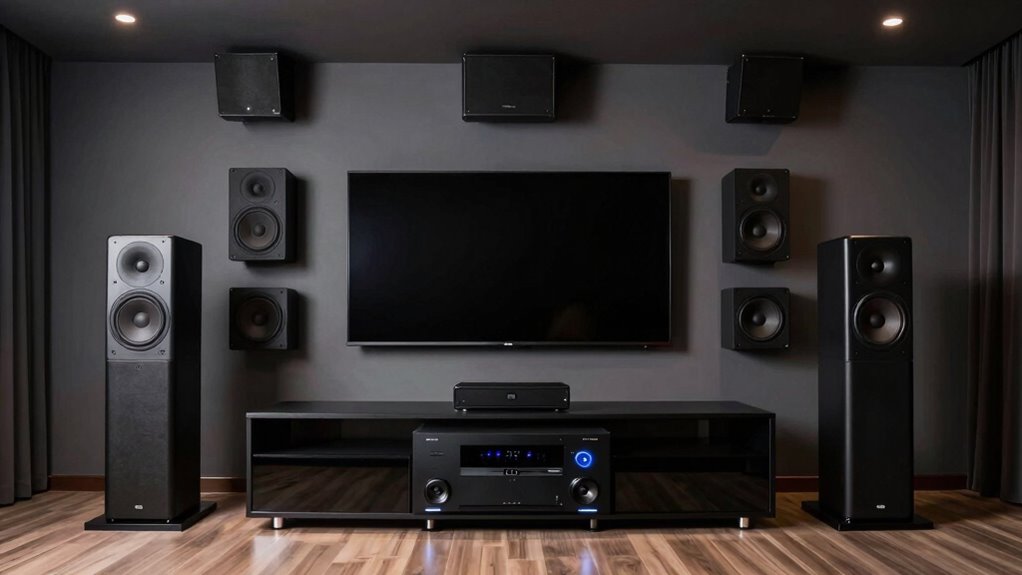
When you see numbers like 5.1, 7.1, or 9.2 on an AV receiver, they tell you how many speakers and subwoofers it supports. The first number shows the total speakers, while the second indicates the subwoofers included. For example, 5.1 uses five speakers and one subwoofer, while 7.1 adds two more speakers. If you want to understand how these setups create immersive sound, you’ll find more details below.

Get the latest gadgets delivered free with Prime
- Fast, free delivery on millions of items
- Prime Video, Amazon Music and more included
- Member-only deals all year
Key Takeaways
- The first number indicates total speakers supported, while the second shows the number of subwoofers included.
- 5.1 systems have five speakers and one subwoofer; 7.1 adds two more surround speakers.
- Formats like Dolby Atmos require additional height channels, often reflected in configurations like 7.1.4.
- Channel numbers directly influence sound immersion and proper speaker placement enhances audio quality.
- Calibration ensures balanced sound across all channels, optimizing your home theater experience.

Have you ever wondered what all those channels on an AV receiver are for? When you look at the back of your receiver, you’ll see a series of numbered ports or labels like 5.1, 7.1, or even 9.2. These numbers aren’t just random; they tell you how many speakers and subwoofers your system can support. Understanding what these channels mean helps you set up your home theater for peak sound quality. For example, a 5.1 system uses five speakers and one subwoofer, ideal for standard surround sound. A 7.1 adds two more speakers, usually placed behind or beside you, creating a more immersive experience. When you see a 9.2, it indicates nine speakers, two subwoofers, and two dedicated amplifiers, offering even richer soundscapes.
Your AV receiver’s channel configuration directly impacts your listening experience, but it’s only part of the story. To truly maximize sound, you need to focus on speaker calibration. This process involves using a microphone to automatically measure speaker placement, distance, and volume levels. Most modern receivers include calibration tools that analyze your room’s acoustics and adjust settings for balanced, clear audio. Proper calibration ensures that each speaker produces the right sound level, preventing some channels from overpowering others and creating a harmonious soundstage. Without calibration, you might find dialogue muffled or certain effects lost amidst the noise.
Another critical aspect is understanding the audio formats your receiver can handle. These formats—like Dolby Atmos, DTS:X, or Dolby TrueHD—bring different levels of complexity and immersion. For example, Dolby Atmos adds height channels, which are essential for a 7.1.4 or 9.2 setup that includes overhead speakers. These formats require specific channel configurations to deliver their full potential. When you select compatible audio formats, your receiver can decode multi-dimensional sound to give you a more dynamic, theater-like experience. Knowing what your receiver supports ensures you get the most out of your media, whether streaming movies, playing games, or listening to music.
In essence, understanding AV receiver channels, speaker calibration, and supported audio formats empowers you to craft a home theater that sounds as good as it looks. It’s not just about the number of channels but how you set them up and optimize their performance. When you take the time to calibrate your speakers and select the right audio formats, you create an environment where sound surrounds you, pulling you deeper into your entertainment. So, next time you see those channel labels, you’ll know they’re guiding you toward a richer, more immersive listening experience. Additionally, exploring speaker placement tips can further improve your sound quality.
As an affiliate, we earn on qualifying purchases.
Frequently Asked Questions
How Do I Choose the Right Number of Channels for My Room?
You should choose the number of channels based on your room size and desired speaker configuration. For smaller rooms, a 5.1 setup works well, providing clear sound without overwhelming the space. If your room is larger or you want immersive sound, opt for 7.1 or even 9.2. systems. Consider how much space you have and whether you want additional speakers for surround or height effects.
Can I Upgrade My Current AV Receiver to Add More Channels Later?
Thinking about upgrading your AV receiver later? Can you add more channels? It depends on the model’s future expandability and upgrading options. Some receivers support additional speakers through separate amps or via firmware updates, but many don’t. Before buying, check if your current receiver permits for expansion or if you’ll need a new unit down the line. Planning ahead helps ensure your home theater grows with your needs.
What Is the Difference Between Dolby Atmos and DTS:X?
Dolby Atmos and DTS:X both deliver immersive sound through object-based audio, but they differ in how they handle sound objects. Atmos uses a ceiling-mounted speaker or upward-firing speakers to create a more realistic overhead experience, while DTS:X adapts to your room and speaker setup. You’ll notice Atmos often feels more three-dimensional, enhancing the sense of height and surround, making your audio experience more dynamic and engaging.
Are More Channels Always Better for Home Theater?
More channels aren’t always better for your home theater—they can turn your setup into a tangled mess. While extra channels improve sound quality and power distribution, too many can overwhelm your space and complicate setup. Focus on a balanced system that suits your room size and preferences. With the right number of channels, you’ll get immersive sound without sacrificing clarity or ease of use. Less can sometimes be more.
How Does Speaker Placement Impact Channel Performance?
Your speaker placement directly impacts channel performance by ensuring ideal sound distribution. Proper speaker arrangement creates a balanced soundstage, so position your speakers at ear level and form an appropriate triangle with your listening spot. Acoustic treatment helps control reflections and echoes, enhancing clarity. When you carefully plan speaker placement and add acoustic treatment, you’ll experience clearer dialogue, richer sound, and a more immersive home theater experience.
Conclusion
Understanding AV receiver channels is like revealing a secret language for your home theater. Whether you’re aiming for a simple 5.1 setup or a full 9.2.4 system, knowing what each channel means helps you craft your perfect soundscape. Think of it as tuning an instrument—you get closer to harmony with every detail. So, choose wisely, and let your home theater sing in a symphony tailored just for you.
Fall Picks
fall essentials
As an affiliate, we earn on qualifying purchases.