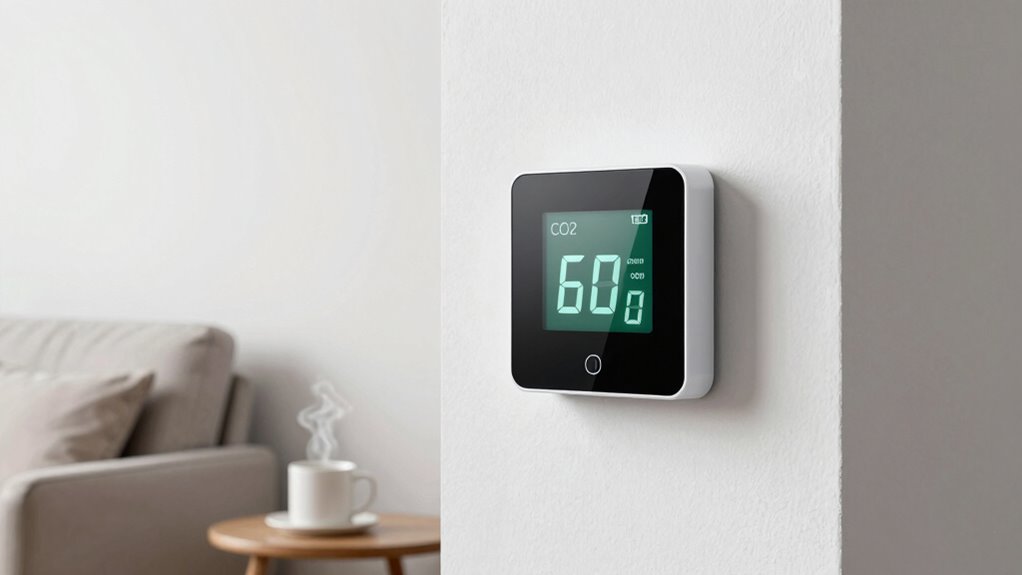

Monitoring your home’s CO2 levels tells you how well your indoor air circulates. When levels rise above 800 ppm, it can lead to drowsiness, headaches, and difficulty concentrating, which affect your brain and sleep quality. High readings suggest poor ventilation and can impair your focus and rest. Keeping CO2 levels lower supports clearer thinking and better sleep. Want to learn how to interpret your sensor numbers more accurately? Keep exploring for helpful tips.
Key Takeaways
- Elevated indoor CO2 levels (above 800 ppm) can cause drowsiness, headaches, and reduced focus, impacting brain function and alertness.
- Consistently high CO2 readings (over 1,000 ppm) may disrupt sleep quality and contribute to fatigue.
- Monitoring real-time CO2 data helps identify poor ventilation, which is crucial for maintaining optimal brain health and restful sleep.
- Properly calibrated sensors ensure accurate readings, enabling effective actions like opening windows to improve sleep and cognitive performance.
- Maintaining indoor CO2 levels within recommended ranges supports better sleep quality and enhances overall mental clarity during the day.
Are you aware of how indoor carbon dioxide levels can impact your health and comfort? Many people overlook the importance of maintaining good indoor air quality, especially when it comes to CO2 levels. High concentrations of CO2 can lead to feelings of drowsiness, headaches, and reduced focus, all of which can interfere with your daily activities and sleep quality. This is where CO2 sensors at home come into play, providing real-time data that helps you understand and manage your indoor environment more effectively.
When you install a CO2 sensor, you’re taking a vital step toward improving indoor air quality. These devices measure the concentration of carbon dioxide present in your home air, offering insights that were once only available through costly professional assessments. However, simply having a sensor isn’t enough—its accuracy depends heavily on proper sensor calibration. Over time, sensors can drift from their original calibration, leading to inaccurate readings. If your sensor isn’t calibrated correctly, you might think your indoor air is safe when it’s actually compromised, or vice versa. Regular sensor calibration is essential to guarantee the data you receive is trustworthy and meaningful.
Understanding the numbers your CO2 sensor displays is key. Typically, indoor CO2 levels are measured in parts per million (ppm). For most homes, a baseline of around 400-600 ppm is normal, reflecting outdoor air levels. When levels rise above 800 ppm, it indicates poor ventilation, and you may start feeling the effects of stale air, such as fatigue or difficulty concentrating. Levels exceeding 1,000 ppm are a red flag, often correlating with headaches and sleep disturbances. By keeping an eye on these numbers, you can take immediate action—opening windows, increasing ventilation, or adjusting your HVAC system—to restore healthier air quality. Additionally, understanding indoor air quality standards can help you set appropriate targets for a healthier living environment.
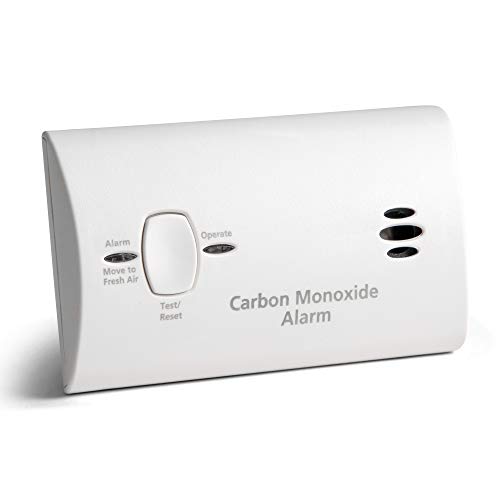
Kidde Carbon Monoxide Detector, AA Battery Powered, Portable for Travel or Home, 85 dB Alarm, LED Status Indicators, 3rd Edition
Electrochemical sensor technology detects CO gas
As an affiliate, we earn on qualifying purchases.
As an affiliate, we earn on qualifying purchases.
Frequently Asked Questions
Can CO2 Levels Directly Cause Sleep Disorders?
High CO2 levels can directly cause sleep disorders by leading to breathing difficulty, which may result in fragmented sleep. Elevated CO2 can also contribute to cognitive impairment, making it harder for you to fall asleep and stay asleep. When your brain struggles to get enough oxygen, it disrupts your sleep cycles, causing fatigue and other issues. Monitoring your CO2 levels helps you identify and address these problems before they worsen.
How Often Should I Calibrate My Home CO2 Sensor?
You should calibrate your home CO2 sensor at least once every six months to ensure measurement accuracy. While some might worry calibration is complicated, regular calibration keeps your sensor reliable, giving you precise readings. Proper sensor calibration is essential because it maintains the accuracy needed to assess your indoor air quality effectively. Remember, accurate measurements help you make informed decisions to optimize your sleep environment and overall health.
Are There Health Risks From Low CO2 Levels Indoors?
Low indoor CO2 levels generally pose no health risks and can actually indicate good indoor air quality. However, extremely low CO2 might suggest over-ventilation, which isn’t harmful but could be inefficient. Your CO2 health is mainly affected by high levels, so maintaining balanced ventilation is key. Keep an eye on your indoor air quality to make sure it stays within a healthy range, supporting your brain function and sleep quality.
Do CO2 Sensors Also Measure Other Indoor Air Pollutants?
Think of a CO2 sensor as a detective focusing on one clue, but it doesn’t catch all the suspects. While many sensors mainly measure CO2, some advanced models also track other indoor air pollutants like VOCs and particulate matter, giving you a broader view of air quality. However, sensor accuracy varies, so check if your device includes multi-pollutant detection to truly understand your indoor environment’s health.
What Is the Ideal CO2 Concentration for Optimal Sleep?
For ideal sleep, aim for indoor CO2 concentrations below 800 ppm. Maintaining good ventilation strategies helps guarantee fresh air in your sleep environment, reducing CO2 buildup that can disrupt rest. Use your CO2 sensor to monitor levels and adjust ventilation as needed—like opening windows or using air purifiers—to keep air quality high. Keeping CO2 levels in check promotes better sleep quality and supports your overall health.
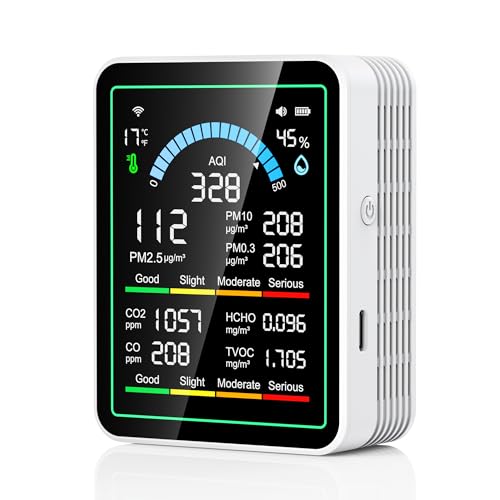
Air Quality Monitor Indoor, 10 in 1 Portable Smartair Quality Tester for CO2 | CO | TVOC | HCHO | Temp | AQI | PM0.3-1 Detection Suitable for Home, Cars, Plants, Pets and Hotels
【10-in-1 Smart Air Quality Monitor: Your All-Round Environmental Guardian】 This portable intelligent air quality tester delivers ultra-precise multi-gas…
As an affiliate, we earn on qualifying purchases.
As an affiliate, we earn on qualifying purchases.
Conclusion
Don’t overlook your home’s CO2 levels—they directly impact your sleep and brain health. Some might think monitoring CO2 is unnecessary or too complicated, but the truth is, simple sensors give you peace of mind and better sleep quality. By paying attention to those numbers, you can make smarter choices for your environment. It’s a small step that can considerably boost your well-being, so don’t dismiss it—your brain and sleep deserve that extra care.

Temtop CO2 Monitor Indoor air Quality Monitor Portable CO2 Meter, CO2, Temperature, Humidity Home, Office or School
Multifunctional Indoor Thermometer & CO2 Monitor: This all-in-one device continuously measures CO2 (400–5000 PPM), acts as a precise…
As an affiliate, we earn on qualifying purchases.
As an affiliate, we earn on qualifying purchases.

INKBIRDPLUS Portable CO2 Detector, Mini Indoor CO2 Monitor, NDIR Sensor with Full Color LCD, for Home, Office, Travel (PTH-10C)
High-Quality CO2 Detector: This portable CO2 meter uses an advanced NDIR sensor to detect carbon dioxide through infrared…
As an affiliate, we earn on qualifying purchases.
As an affiliate, we earn on qualifying purchases.