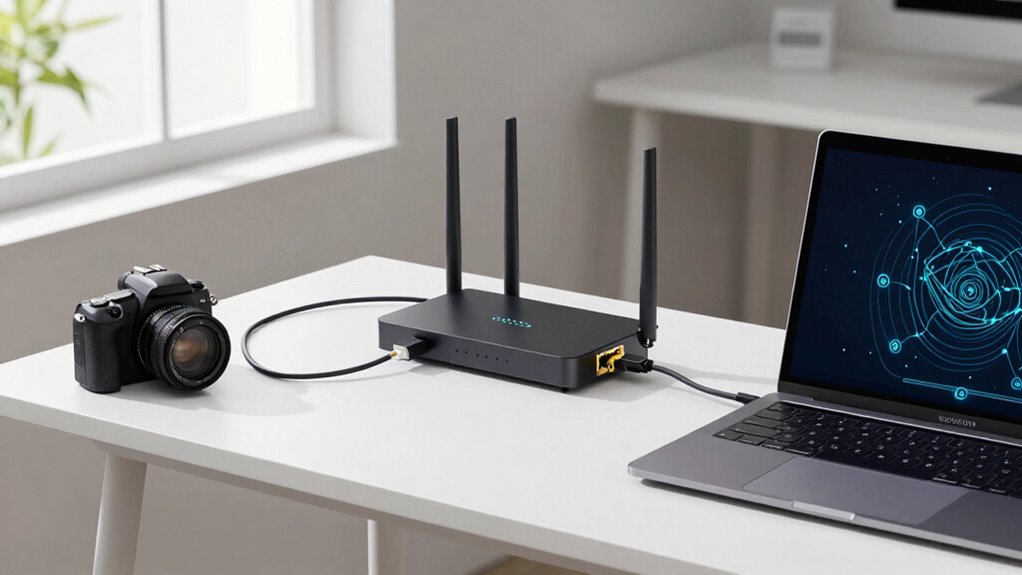

Ethernet backhaul is a game-changer for mesh Wi-Fi systems, providing a reliable, high-speed wired connection between your devices and the network core. It minimizes wireless interference, ensuring steady, fast internet even in busy or congested areas. By creating a dedicated pathway, Ethernet backhaul improves stability, reduces latency, and supports demanding applications like streaming and gaming. Keep exploring to discover how this upgrade can transform your home or business Wi-Fi experience.
Key Takeaways
- Ethernet backhaul provides a stable, high-speed wired connection that significantly enhances mesh Wi-Fi network speed and performance.
- It reduces wireless interference, ensuring consistent, low-latency internet delivery even in dense or congested environments.
- Ethernet backhaul enables seamless network expansion, supporting faster speeds as your mesh system grows.
- Wired backhauls improve network reliability and reduce latency, delivering the speed needed for demanding applications like streaming and gaming.
- Integrating Ethernet backhaul with mesh Wi-Fi upgrades ensures a future-proof, high-performance network that actually delivers on speed.
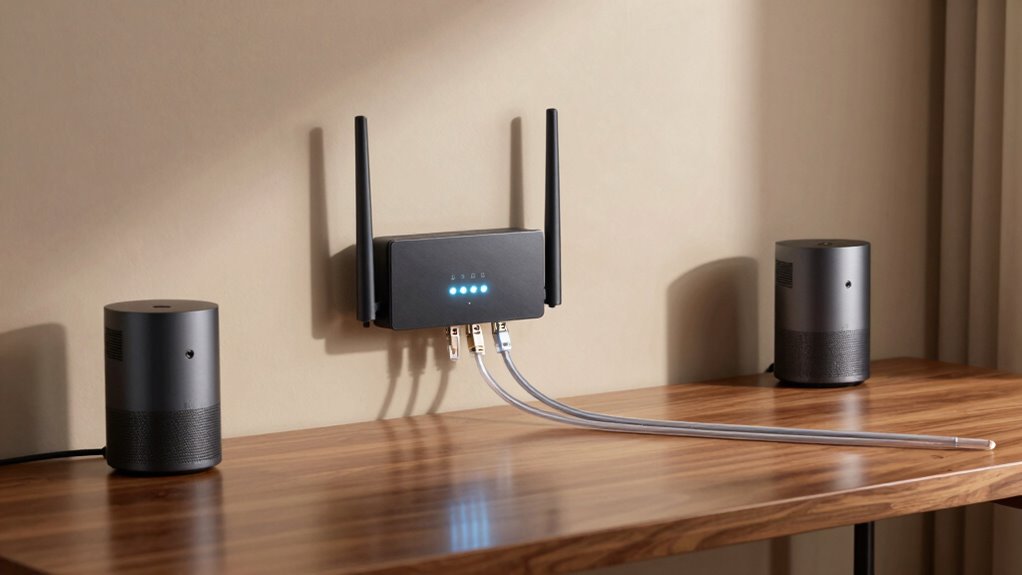
Ethernet backhaul plays an essential role in modern network infrastructure by providing reliable and high-speed connections between cell towers, small cells, and core networks. Unlike traditional wireless links, Ethernet backhaul offers a stable, wired connection that minimizes latency and maximizes data throughput, which is critical for delivering fast, consistent internet speeds. When deploying Ethernet backhaul, you greatly reduce the risk of wireless interference—a common issue in densely populated areas where multiple networks compete for the same airwaves. Wireless interference can cause fluctuations in speed and connectivity, frustrating users and degrading overall network performance. By physically connecting network nodes through Ethernet cables, you create a dedicated, interference-free pathway that guarantees your network remains resilient even in crowded environments.
Another key advantage of Ethernet backhaul is its ability to facilitate network segmentation. This means you can divide your network into smaller, isolated segments, each optimized for specific tasks or user groups. Network segmentation helps prevent congestion and enhances security by limiting access within certain parts of your system. For example, sensitive business data can be kept confined within a secured segment, reducing the risk of breaches. It also allows you to prioritize traffic for critical applications, ensuring that essential services like VoIP or streaming always have sufficient bandwidth. This level of control and customization improves overall network efficiency and user experience. Additionally, Ethernet backhaul supports network scalability****, enabling your infrastructure to grow seamlessly as your needs evolve.
Implementing Ethernet backhaul isn’t just about connecting devices; it’s about creating a robust infrastructure that supports future growth and high-demand applications. With wired connections, you avoid the pitfalls of wireless links, such as signal degradation over distance or obstacles that can block signals. Plus, Ethernet cables are less susceptible to environmental factors like weather, providing stability regardless of external conditions. This reliability is especially important for networks that require continuous operation, such as enterprise environments, smart cities, or large-scale public Wi-Fi deployments.
Furthermore, Ethernet backhaul simplifies network management. You can easily monitor and troubleshoot connected links, quickly pinpointing issues before they impact end-users. This proactive approach minimizes downtime and maintains high performance across your entire network. As your network expands, adding more Ethernet connections is straightforward, enabling seamless scalability. Whether you’re upgrading an existing infrastructure or building a new one, Ethernet backhaul offers a clear path to delivering the speed, stability, and security your users demand. In today’s fast-paced digital landscape, reliable Ethernet backhaul isn’t just an upgrade—it’s the backbone of a future-proof network.

TP-Link Deco X55 AX3000 WiFi 6 Mesh System – Covers up to 6500 Sq.Ft, Replaces Wireless Router and Extender, 3 Gigabit Ports per Unit, Supports Ethernet Backhaul, Deco X55(3-Pack)
- Wi-Fi 6 Mesh Technology: AX3000 speeds for seamless connectivity
- Wide Coverage: Up to 6500 sq. ft. of coverage
- Supports Multiple Devices: Connects up to 150 devices
As an affiliate, we earn on qualifying purchases.
As an affiliate, we earn on qualifying purchases.
Frequently Asked Questions
Can Ethernet Backhaul Improve Wi-Fi Coverage in Large Homes?
Yes, Ethernet backhaul can improve Wi-Fi coverage in large homes. By connecting mesh nodes via Ethernet, you reduce wireless interference and guarantee more reliable signals. This setup provides signal redundancy, so if one node encounters issues, others can step in seamlessly. As a result, your entire home benefits from faster, more stable Wi-Fi, eliminating dead zones and delivering consistent coverage wherever you need it.
Is Ethernet Backhaul Compatible With All Mesh Wi-Fi Systems?
Think of Ethernet backhaul as a universal connector in your Wi-Fi world. Not all mesh systems are compatible with it, but many modern ones embrace this wired option, offering a reliable backbone. If you’re exploring wireless alternatives or upgrading your setup, check your mesh system’s compatibility first. By doing so, you guarantee seamless integration and enjoy faster, more stable internet across your entire home.
What Are the Cost Implications of Upgrading to Ethernet Backhaul?
Upgrading to Ethernet backhaul involves some cost considerations. You’ll need to invest in Ethernet cables, switches, and possibly new routers, which impacts your budget considerations. Conduct a cost analysis beforehand to determine if the improved speed and stability justify the expense. While initial costs can add up, the long-term benefits of a more reliable network often outweigh the upfront investment, especially if you prioritize seamless connectivity in your home.
How Does Ethernet Backhaul Affect Network Latency and Gaming?
Ethernet backhaul reduces network latency like a clear highway, ensuring data moves swiftly. This results in smoother gaming performance, with less lag and buffering. You’ll notice faster response times, making multiplayer games more responsive and enjoyable. By connecting mesh nodes via Ethernet, you minimize delays caused by wireless interference, providing a more stable connection. Overall, Ethernet backhaul markedly enhances your gaming experience with lower latency and improved network stability.
Can Ethernet Backhaul Be Used With Existing Wired Infrastructure?
Yes, Ethernet backhaul can be used with your existing wired infrastructure. It’s compatible with most wired setups, making it easy to upgrade without needing major infrastructure changes. You might just need to verify your current wired compatibility and possibly perform some infrastructure upgrades, like connecting your mesh nodes with Ethernet cables. This setup improves network stability and speeds, especially for high-demand activities like gaming or streaming.
Conclusion
Investing in Ethernet backhaul for your mesh Wi-Fi system truly pays off by delivering faster, more reliable speeds. It’s the upgrade that keeps your network running smoothly, even during peak times. Remember, a chain is only as strong as its weakest link—so don’t settle for less. By choosing Ethernet backhaul, you’re building a future-proof connection that won’t let you down, proving that sometimes, the simplest solutions are the most effective.