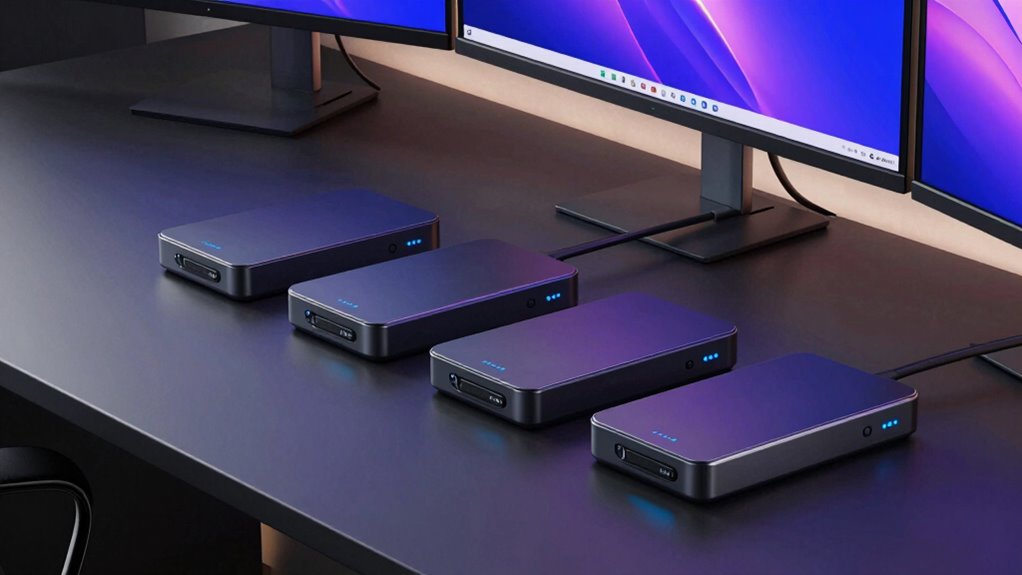
Choosing the right docking station with a UHS II SD card reader can significantly streamline your workflow, whether you’re a photographer, videographer, or digital creator. Among the top contenders, the ProMaster USB-C Card Reader & Hub stands out for its high-speed data transfer and versatile connectivity. The MOKiN Docking Station offers impressive multi-display support and extensive ports, making it ideal for expanding laptop setups. Meanwhile, the ProGrade Digital SDXC and microSDXC Card Reader excels in portability and ultra-fast transfers. Each of these options highlights different strengths, but they also have tradeoffs related to size, compatibility, and features that are important to consider.

Get the latest gadgets delivered free — and shop member deals
- Fast, free delivery on millions of items
- Access to Prime Big Deal Days deals on October 6–7
- Prime Video, Amazon Music and more included
Complete the kit



Key Takeaways
- High-speed transfer speeds up to 625MB/s are available in portable card readers, ideal for quick data offloading.
- Docking stations with multi-display support generally require more power and specific device compatibility, especially for multi-monitor setups.
- Portability favors smaller, rugged designs, but these may sacrifice some features like multiple card slots or extensive port options.
- Compatibility with the host device’s USB standards and power delivery capabilities is essential for seamless operation.
- Price and feature set often reflect the primary use case—professional data transfer versus multi-function laptop expansion.
| ProMaster USB-C Card Reader & Hub for Two SD Cards |  | Best Overall — High-Speed Dual SD UHS II Card Reader with Versatile Connectivity | Bus interface: UHS-II | Maximum transfer speed: 380MB/s | Connection type: USB-C SuperSpeed (10Gbps) | VIEW ON AMAZON | See Our Full Breakdown |
| MOKiN Laptop Docking Station Dual Monitor 4K HDMI USB C Hub for Dell/HP/Mac |  | Best for Multi-Display and Expandability — Versatile Dock with Extensive Ports | Hardware interface: HDMI, USB Type C | Additional features: Plug and Play, Powered, Fast Charging | Compatible devices: Laptops | VIEW ON AMAZON | See Our Full Breakdown |
| ProGrade Digital SDXC and microSDXC Dual-Slot USB-C Card Reader 3.2 Gen 2 |  | Best for Speed and Portability — Ultra-Fast Card Reader for Creators | Transfer speed: up to 625MB/s | Supported cards: SDXC, microSDXC UHS-II | Connectivity: USB-C 3.2 Gen 2 | VIEW ON AMAZON | See Our Full Breakdown |
| Lexar Dual-Slot SD/Micro SD Card Reader, USB-C, Up to 312MB/s |  | Best Budget — Reliable UHS-I Card Reader with Decent Speeds | Read speed: up to 312MB/s | Supported cards: SD and microSD UHS-I | Interface: USB 3.2 Gen1 Type-C | VIEW ON AMAZON | See Our Full Breakdown |
| SABRENT USB-C Card Reader, Dual-Slot UHS-II SD & microSD (CR-CSDM) |  | Best Dual Slot UHS II — High-Speed for Professional Use | Media type: SD, SDXC, microSD, microSDXC | Connectivity: USB Type C | Data transfer rate: up to 312MBps | VIEW ON AMAZON | See Our Full Breakdown |
More Details on Our Top Picks
ProMaster USB-C Card Reader & Hub for Two SD Cards
This compact hub excels in combining high-speed data transfer—up to 380MB/s—with multiple connectivity options, including HDMI and USB ports. Its UHS-II support makes it a standout for photographers and content creators who need quick data offloading. Compared with larger docks, it sacrifices extensive ports for portability but makes up for it with plug-and-play ease across various operating systems. However, the limited to two SD card slots and its small size could reduce durability for heavy travel or demanding environments.
Pros:- High-speed transfer up to 380MB/s
- Multiple connectivity including HDMI and USB
- Plug-and-play compatibility across OS
Cons:- Limited to two SD card slots
- No additional features like Ethernet or charging
- Small size may impact durability
Best for: Photographers and videographers needing fast, reliable SD card transfers on the go
Not ideal for: Users seeking multi-monitor setups or extensive port options
- Bus interface:UHS-II
- Maximum transfer speed:380MB/s
- Connection type:USB-C SuperSpeed (10Gbps)
- Output ports:2 USB-A 4.0, 1 USB-C 100W PD, 1 HDMI-A
- Card slots:2 SDXC
- Dimensions:1.9” x 3.75” x 0.5”
- Weight:59.5g
Our verdict“Best for portable, high-speed SD card transfers in a compact design.”
MOKiN Laptop Docking Station Dual Monitor 4K HDMI USB C Hub for Dell/HP/Mac
The MOKiN dock supports dual 4K monitors and offers a comprehensive suite of ports, including Ethernet, SD/microSD, and multiple USB connections. Its support for fast data transfer and 100W power delivery makes it ideal for users looking to turn a laptop into a full workstation. Compared to simpler hubs, it provides exceptional multi-monitor support, but this added functionality depends heavily on device compatibility—particularly for Mac users. Additionally, the need for a separate power supply and specific device support can complicate setup for some users.
Pros:- Supports dual 4K monitors
- Multiple ports including Ethernet and SD/microSD
- Power delivery up to 100W
Cons:- Requires specific MacBook Thunderbolt support
- Charger not included
- Limited display options on some macOS devices
Best for: Professionals needing multi-display setups and extensive connectivity
Not ideal for: Light users or those with limited space or power sources
- Hardware interface:HDMI, USB Type C
- Additional features:Plug and Play, Powered, Fast Charging
- Compatible devices:Laptops
- Total USB ports:5
- Data transfer rate:5 Gbps
- Number of ports:14
- Minimum OS:Windows 10
- Color:Silver
- Weight:0.1 kg
Our verdict“Best for expanding a laptop into a multi-display workstation with extensive port needs.”
ProGrade Digital SDXC and microSDXC Dual-Slot USB-C Card Reader 3.2 Gen 2
This portable card reader supports UHS-II SDXC and microSDXC cards with speeds up to 625MB/s. Designed for on-the-move professionals, it is built to withstand tough conditions and includes a 2-year warranty. While its speed outpaces many competitors, it is limited to USB-C devices and lacks additional ports or features. This makes it ideal for those prioritizing rapid data transfers over expandability or multi-functionality.
Pros:- Supports UHS-II SDXC/microSDXC cards
- Transfer speeds up to 625MB/s
- Rugged, travel-ready design
Cons:- Limited to USB-C devices
- No included cables or adapters
- No multi-port or multi-function features
Best for: Photographers and digital creators needing fast, portable data transfer
Not ideal for: Users requiring multiple ports or device compatibility beyond USB-C
- Transfer speed:up to 625MB/s
- Supported cards:SDXC, microSDXC UHS-II
- Connectivity:USB-C 3.2 Gen 2
- Warranty:2 years
Our verdict“Ideal for fast, on-the-go SD card data transfers with rugged portability.”
Lexar Dual-Slot SD/Micro SD Card Reader, USB-C, Up to 312MB/s
The Lexar card reader supports SD and microSD UHS-I cards with read speeds up to 312MB/s. It offers a simple, reliable option for users who need decent transfer speeds without breaking the bank. Its backward compatibility with older USB ports and UHS-I cards makes it versatile for various setups. However, it falls short of the UHS II speeds that more demanding professionals require, and its slower transfer rate might be a bottleneck for large data files.
Pros:- Supports UHS-I cards with up to 312MB/s
- Backward compatible with older ports
- Affordable and reliable
Cons:- Limited to UHS-I speeds
- No mention of included cables
- No microSDXC support beyond UHS-I
Best for: Casual users or those with UHS-I cards seeking reliable performance
Not ideal for: Professionals demanding ultra-fast transfers or UHS-II support
- Read speed:up to 312MB/s
- Supported cards:SD and microSD UHS-I
- Interface:USB 3.2 Gen1 Type-C
- Warranty:2 years
Our verdict“Best budget-friendly option for reliable SD transfer speeds with older cards.”
SABRENT USB-C Card Reader, Dual-Slot UHS-II SD & microSD (CR-CSDM)
Supporting UHS-II SDXC and microSDXC cards with speeds up to 312MBps, the SABRENT dual-slot reader offers professional-level data transfer in a sturdy package. Its plug-and-play operation makes it straightforward for users who need quick, reliable access to their cards. While not matching the top speeds of some models, its dual-slot design and ease of use make it a popular choice for professionals working with high-capacity cards. A limitation is that speed depends on the card and host device compatibility, which can vary.
Pros:- Supports UHS-II SDXC and microSDXC
- High-speed transfer up to 312MBps
- Durable, plug-and-play design
Cons:- Limited to USB-C compatible devices
- Speeds depend on card and device compatibility
- No included power supply
Best for: Professionals needing simultaneous UHS II SD and microSDXC card support
Not ideal for: Casual users or those requiring extremely high transfer speeds
- Media type:SD, SDXC, microSD, microSDXC
- Connectivity:USB Type C
- Data transfer rate:up to 312MBps
- Slots:2
- Dimensions:1.97″L x 1.38″W x 0.51″H
Our verdict“Best dual-slot UHS II card reader for professional workflows requiring simultaneous card access.”

How We Picked
Our selection process focused on products that combine UHS II SD card reader capabilities with docking station features, prioritizing high data transfer speeds, compatibility, and user versatility. We considered both portable card readers and full-featured docks to cover various user needs. Each product was evaluated against criteria such as speed, number of ports, build quality, and user reviews, ensuring that they meet modern demands for professional and casual use. Tradeoffs like size, compatibility restrictions, and feature limitations were factored into the rankings, aiming to provide a balanced view of each option’s strengths and weaknesses.
Factors to Consider When Choosing Docking Station With Sd Card Reader Uhs Ii
When selecting a docking station with a UHS II SD card reader, it’s essential to balance speed, port variety, portability, and compatibility. Your primary use case—whether professional photo editing, video production, or casual data transfer—will influence which features matter most. Consider the device’s connectivity options, power delivery support, and physical size to match your workflow and environment. Understanding these factors helps ensure you choose a solution that enhances productivity without overpaying for unnecessary features.
Speed and Card Compatibility
For fast data transfers, prioritize devices supporting UHS II standards, with transfer speeds exceeding 300MB/s. Make sure your cards match the supported speeds and formats—SDXC, microSDXC, UHS-II—and that your host device can handle these speeds. For professional workflows involving large files, speed is non-negotiable, but casual users can opt for more affordable UHS-I options with adequate performance.
Connectivity and Ports
Assess the number of USB ports, video outputs, Ethernet, and charging capabilities. Docking stations with multiple USB-A and USB-C ports provide flexibility, but may require higher power inputs. If multi-monitor setups are a priority, look for HDMI and DisplayPort support, along with power delivery for charging your laptop. For portability, a compact design minimizes space but may limit port options.
Portability vs. Expandability
If you work on the go, a lightweight, rugged card reader or compact hub makes sense. However, if your setup involves multiple devices and peripherals, a larger docking station with extensive ports and multi-display support will better serve your needs. Weigh your mobility needs against the desire for a fully equipped workstation to find the perfect match.
Compatibility and Power
Ensure the device supports your laptop’s connection standards—USB-C, Thunderbolt 3/4—and provides sufficient power delivery if charging is needed. Compatibility with your operating system, whether Windows or macOS, is also vital. In some cases, specific device features require particular OS versions or hardware support, so verify these before purchasing.
Frequently Asked Questions
What is UHS II, and why does it matter for SD card readers?
UHS II (Ultra High Speed II) is a standard for SD cards that enables faster data transfer rates, up to 312MB/s in most cases. For SD card readers, supporting UHS II means significantly quicker offloading of large files like high-resolution photos and 4K videos, reducing wait times and improving workflow efficiency. Devices without UHS II support will operate at UHS I speeds, which are much slower.
Can I use these docking stations with any laptop?
Most of these docking stations are designed for USB-C or Thunderbolt 3/4 ports found on modern laptops from brands like Dell, MacBook, HP, and others. Compatibility depends on the specific device’s port type and supported features like power delivery and video output. Always check the manufacturer’s specifications to ensure your laptop supports the docking station’s connection standards and power requirements.
Are portable SD card readers better than docking stations?
Portables like the ProGrade Digital reader are excellent for quick, high-speed transfers and are ideal for on-the-go use. They typically support UHS II speeds but lack the expandability of docking stations. Docking stations provide additional ports and multi-display support but tend to be bulkier and less portable. The best choice depends on whether mobility or expandability is your priority.
Do I need a special power supply for these docking stations?
Many full-featured docking stations support power delivery (PD), allowing you to charge your laptop while connected, but they often require a separate power adapter—sometimes a high wattage one. Portable SD card readers generally do not need external power. Always check the power specifications to match your device’s needs, especially if you plan to run multiple peripherals or multi-monitor setups.
Will these devices work with older USB standards?
Most UHS II SD card readers and docks are backward compatible with older USB standards like USB 3.0 and USB 2.0, but transfer speeds will be limited to the maximum supported by the host port. For optimal performance, connecting these devices to the latest USB-C or USB 3.2 ports is recommended. Compatibility with older ports may be useful if your setup includes legacy hardware.
Conclusion
If you prioritize ultra-fast SD card transfers and portability, the ProGrade Digital SDXC and microSDXC Card Reader offers the best speed and rugged design for on-the-move professionals. Those needing a comprehensive setup with multi-monitor support and extensive ports should lean toward the MOKiN Docking Station, especially if your device supports Thunderbolt 3/4. Budget-conscious users who require reliable UHS I speeds can consider the Lexar UHS-I Card Reader, while professionals needing simultaneous UHS II card support with easy portability might find the SABRENT Dual-Slot Card Reader ideal. Carefully matching your use case—speed, expandability, portability—will guide you toward the best fit for 2026.
As an affiliate, we earn on qualifying purchases.Fall Picks
fall essentials