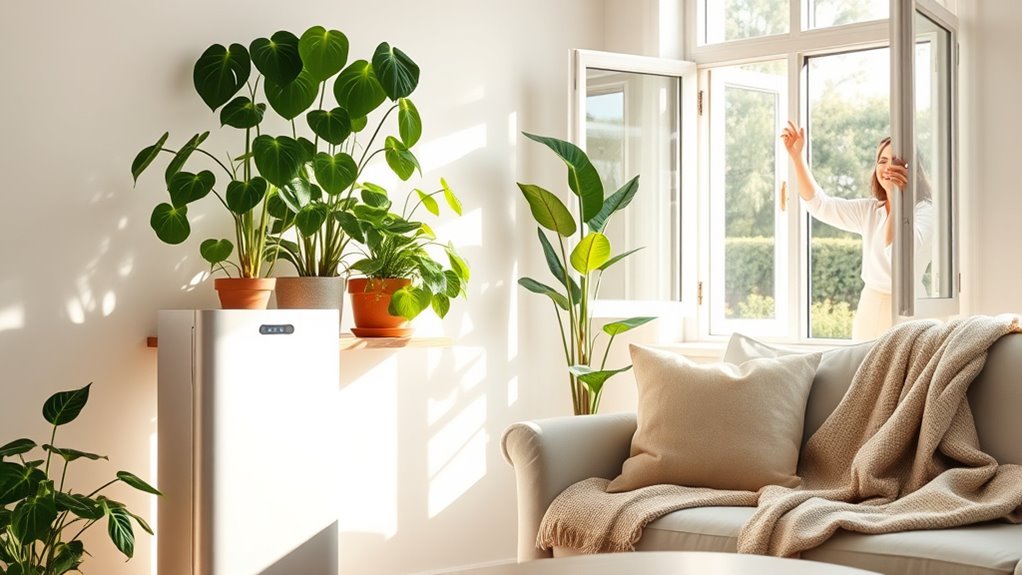

To improve your home’s air quality, use high-quality HEPA filters in your HVAC system and air purifiers to trap dust, allergens, and pollutants. Add houseplants like snake plants and peace lilies to naturally absorb toxins and boost humidity. Develop habits such as opening windows when outdoor air is clean, avoiding indoor smoking, and maintaining proper humidity levels. These simple steps make your home healthier—keep going to discover more ways to breathe easier every day.

Get the latest gadgets delivered free with Prime
- Fast, free delivery on millions of items
- Prime Video, Amazon Music and more included
- Member-only deals all year
Key Takeaways
- Use HEPA air purifiers and regularly replace filters to effectively remove airborne pollutants.
- Incorporate toxin-absorbing houseplants like snake plants and peace lilies for natural air filtration.
- Maintain proper indoor humidity (30-50%) and ensure good ventilation to prevent mold and dust buildup.
- Avoid indoor smoking, use VOC-free products, and keep surfaces clean to reduce indoor pollutants.
- Establish routines such as opening windows when outdoor air quality is good and regular filter maintenance for ongoing air quality.
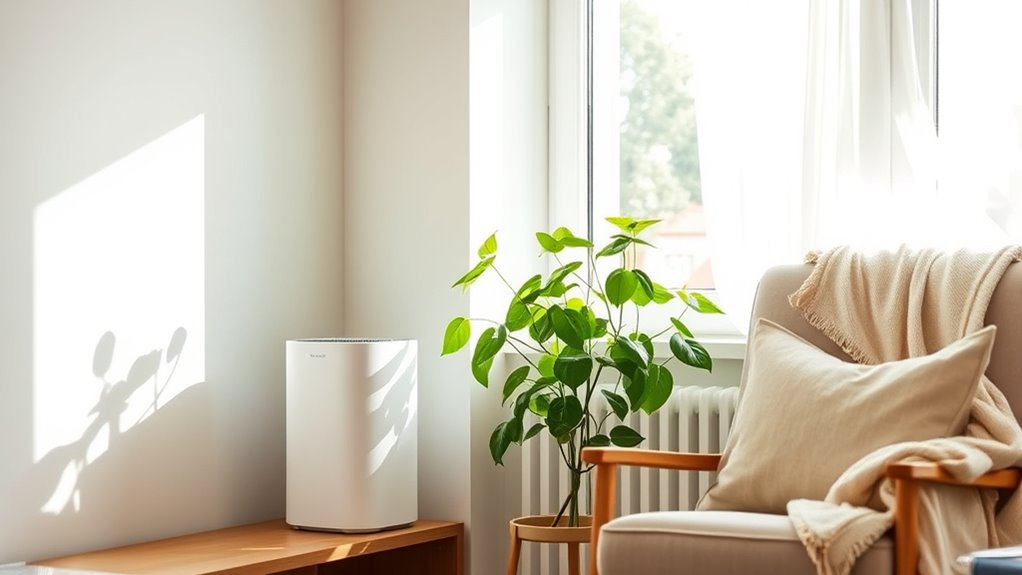
Have you ever wondered how much indoor air quality affects your health and comfort? It’s more considerable than you might realize. The air you breathe inside your home can be filled with pollutants, allergens, and even toxins that compromise your well-being. Thankfully, modern air purifier technology offers a practical way to improve indoor air quality. These devices use advanced filters, such as HEPA filters, to trap airborne particles like dust, pet dander, mold spores, and bacteria. When you turn on an air purifier, you’re actively reducing contaminants that can cause allergies, respiratory issues, or worsen conditions like asthma. With consistent use, you’ll notice clearer air, fewer allergy symptoms, and a more comfortable living environment.
Indoor air quality greatly impacts your health; using HEPA filters and purifiers reduces pollutants and promotes a healthier home environment.
But an air purifier isn’t the only solution. Incorporating houseplants into your space can also boost indoor air quality naturally. Certain plants, like snake plants, peace lilies, and Boston ferns, absorb toxins through their leaves and roots, effectively filtering the air. They also add a calming aesthetic and improve humidity levels, which makes your home feel fresher and more inviting. Just remember, plants aren’t a complete substitute for an air purifier, but they complement each other well. When combined, they create a healthier indoor environment, especially in rooms prone to mold or pollution.
Your habits also play a crucial role in maintaining clean air at home. Regularly opening windows, when outdoor air quality permits, helps circulate fresh air and reduce indoor pollutant buildup. Avoiding smoking indoors, using VOC-free paints, and keeping household products like cleaning supplies and aerosols sealed tightly can noticeably cut down on indoor pollutants. It’s also wise to vacuum with a HEPA-filtered vacuum cleaner and dust surfaces frequently to minimize dust and allergens. Be mindful of humidity levels, too—keeping them around 30-50% prevents mold growth and dust mite proliferation. Understanding industry trends can help you stay informed about new solutions and best practices for improving indoor air quality.
Creating a routine that includes changing filters in your HVAC system, cleaning air purifiers, and monitoring indoor humidity ensures your efforts are sustained. These habits, coupled with using effective air purifier technology and adding air-purifying plants, can transform your home into a sanctuary of clean, healthy air. The result is not just better air quality but also a noticeable boost in your overall health, energy levels, and comfort. You have the power to make your indoor environment safer and more pleasant—start today, and breathe easier tomorrow.
As an affiliate, we earn on qualifying purchases.
Frequently Asked Questions
How Often Should I Replace My Air Filters?
You should replace your air filter every 1 to 3 months, depending on filter maintenance needs. For different air filter types, such as fiberglass or HEPA filters, check manufacturer recommendations. Regularly changing filters guarantees peak airflow and air quality. If you notice dust buildup or reduced HVAC efficiency, it’s time to swap your filter. Staying on top of filter maintenance keeps your home’s air clean and healthy.
Do Air Purifying Plants Remove All Indoor Pollutants?
Air purifying plants can’t remove all indoor pollutants due to limited plant efficacy. They are effective against certain VOCs, formaldehyde, and some airborne microbes, but they won’t eliminate pollutants like tobacco smoke or heavy dust. For exhaustive air quality, combine plants with proper ventilation and air filters. Relying solely on plants won’t keep your home completely pollutant-free, but they do support a healthier environment when used alongside other methods.
Can Cleaning Habits Reduce Airborne Allergens Effectively?
Your cleaning habits can drastically reduce airborne allergens, almost like banishing them from your home. Regular dust mitigation through vacuuming, dusting, and laundering minimizes allergens that trigger allergies. By consistently practicing allergy management, you prevent buildup and keep allergens at bay. This relentless effort creates a cleaner, healthier environment, making it feel like you’ve wielded a mighty shield against indoor allergens, substantially improving your indoor air quality.
Are There Specific Ventilation Strategies for Better Indoor Air Quality?
Yes, you can improve indoor air quality with effective ventilation strategies. Use ventilation techniques like exhaust fans in bathrooms and kitchens to remove moisture and pollutants. Open windows regularly for airflow optimization, especially when outdoor air quality is good. Consider installing an HVAC system with proper filters or an air exchange system. These steps help reduce airborne allergens and pollutants, creating a healthier environment inside your home.
What Are the Signs of Poor Indoor Air Quality?
Imagine you’re living in the roaring 20s, but indoor air feels heavy. Signs of poor air quality include persistent odors, frequent headaches, sneezing, or fatigue. You might notice condensation or mold, which point to indoor pollutant sources. Pay attention to air quality indicators like dust buildup, musty smells, or respiratory discomfort. If these signs persist, your indoor air isn’t clean, and it’s time to improve ventilation or add air purifiers.
Conclusion
Keeping the air at home clean is easier than you think. Using air filters, adding houseplants, and adopting simple habits can make a big difference. Did you know that indoor air can be 2 to 5 times more polluted than outdoor air? By taking these steps, you’ll breathe easier and create a healthier environment for yourself and your loved ones. Start today—your lungs will thank you for it!
Halloween Picks
halloween
As an affiliate, we earn on qualifying purchases.