

If you’re looking to boost your speed skills in 2025, I recommend starting with beginner-friendly guides like “Speed Reading for Beginners” and “Proven Speed Reading Techniques Guide,” which offer clear methods and practice exercises. The First Little Readers packs are great for early learners, while titles like “The Speed Reading Book” show practical strategies. To find the best fit for you, consider content quality and your goals—keep reading to uncover more helpful tips.
Key Takeaways
- Focus on beginner-friendly guides like “Speed Reading For Beginners” and “Proven Speed Reading Techniques Guide” for practical, easy-to-apply methods.
- Prioritize books with clear layouts, step-by-step instructions, and minimal errors to ensure effective learning.
- Consider resources that include exercises, progress tracking, and real-world strategies to build speed and comprehension.
- Select materials suited for both early literacy development and adult learners seeking quick reading improvements.
- Balance affordability, accessibility, and content quality, including formats like e-books or audiobooks for flexible learning.

First Little Readers Parent Pack: Guided Reading Level A: 25 Irresistible Books That Are Just the Right Level for Beginning Readers
As an affiliate, we earn on qualifying purchases.
First Little Readers Parent Pack: Guided Reading Level A
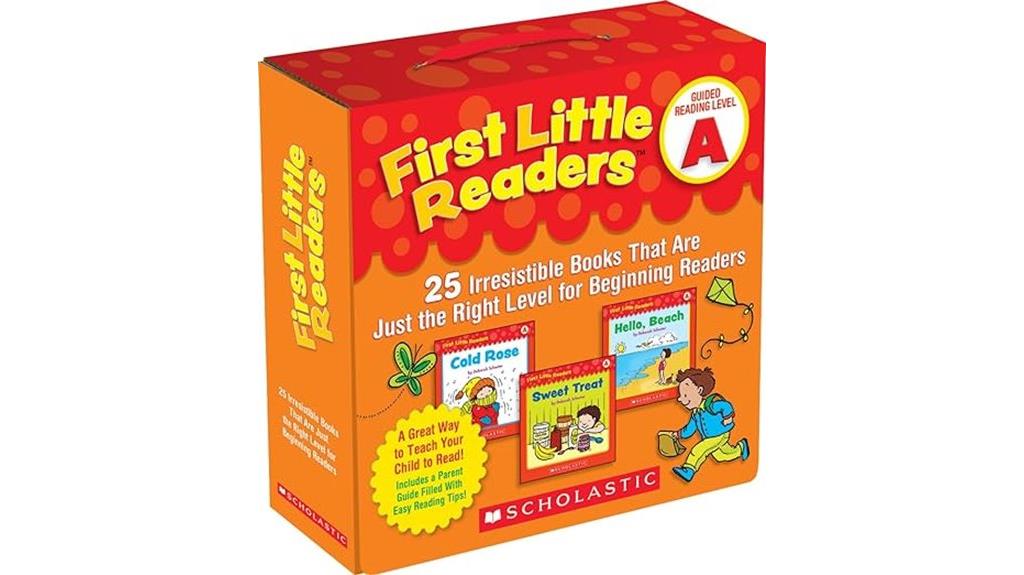
Are you looking for a gentle introduction to early reading that builds confidence and interest? The First Little Readers Parent Pack: Guided Reading Level A is perfect for that. These colorful, simple stories feature repetitive sentences that help young children recognize words and develop fluency. Each book introduces a few new words gradually, with short sentences suitable for early readers with basic phonics skills. They’re engaging and realistic, with illustrations that support understanding. Designed for kids progressing from beginner to more confident readers, these books foster enjoyment and independence, making them an excellent addition to any early literacy toolkit.
Best For: parents and teachers seeking a gentle, engaging introduction to early reading that builds confidence and interest in young children with basic phonics skills.
Pros:
- Colorful, engaging stories with repetitive sentences that support word recognition and fluency.
- Gradual introduction of new words and simple sentence structures ideal for early readers.
- Includes a variety of stories and illustrations that foster enjoyment, independence, and foundational literacy skills.
Cons:
- Limited difficulty progression across sets, with similar sentence complexity in most books.
- Some titles, like “Almost Spring,” may contain more complex vocabulary or structures that can challenge early readers.
- The books are simple and may not be highly stimulating for children ready for more advanced reading material.
Music Speed Reading for Beginners

If you’re just starting out with music reading, “Music Speed Reading for Beginners” is an excellent resource designed specifically for newcomers. It teaches you to recognize note groupings or phrases, similar to reading text in chunks. The book emphasizes developing quick recognition and understanding of note patterns, starting with larger notes like whole or half notes before progressing to smaller groupings. This method improves your ability to read music fluently, boosting your confidence on your instrument. By practicing phrase-based reading, you’ll enhance your hand-eye coordination and overall proficiency, making complex passages feel more manageable over time.
Best For: Beginners and novice musicians looking to quickly develop sight reading skills and improve their confidence in reading music.
Pros:
- Focuses on recognizing note groupings and phrases to enhance reading fluency
- Uses a step-by-step approach starting with larger notes to build foundational skills
- Helps improve hand-eye coordination and overall musical proficiency
Cons:
- May require consistent practice to see significant improvement over time
- The approach might be less effective for advanced musicians seeking complex reading techniques
- Some learners might find the phrase-based method less engaging compared to other strategies
Speed Reading For Beginners: Start Reading at a Shocking Pace Now

Anyone new to speed reading who wants to boost their reading pace quickly will find “Speed Reading For Beginners” an appealing starting point. This book emphasizes beginning with a rapid reading pace, aiming to *considerably* increase your speed early on. Many users, including non-native English speakers, report notable improvements, showing the method’s accessibility. While consistent practice can lead to faster reading without losing comprehension, some critiques mention poor editing and low-quality content. Still, the core techniques encourage beginners to start practicing immediately, helping you read more efficiently and expand your reading capacity—making it a worthwhile, if imperfect, resource to kickstart your speed-reading journey.
Best For: beginners eager to quickly boost their reading speed and improve overall reading efficiency, even if they face challenges with material quality.
Pros:
- Emphasizes starting with a rapid reading pace to increase speed early on
- Suitable for non-native English speakers, demonstrating accessibility across diverse learners
- Encourages immediate practice to enhance reading capacity and productivity
Cons:
- Criticized for poor editing and low-quality content that may hinder learning
- Content quality varies, which could impact comprehension and motivation
- Some reviews suggest the material is poorly written, resembling a high school essay
Proven Speed Reading Techniques Guide for Beginners
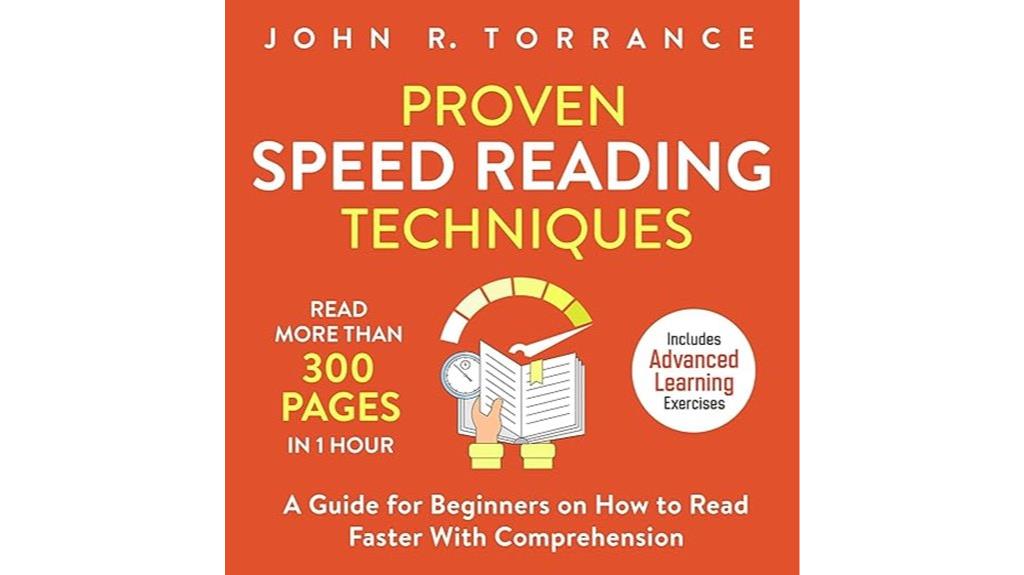
For beginners enthusiastic to improve their reading speed without wading through lengthy, complicated instructions, this guide offers straightforward and practical techniques. It focuses on proven methods like scanning, skimming, and quick phrase jumps to help process information efficiently. While some chapters are brief and may seem superficial, they deliver concise tips that are easy to understand and apply. The book emphasizes understanding when and why to use specific strategies, including exercises to reduce regression and boost focus. Overall, it’s a solid starting point for committed learners who want actionable advice, though it may lack depth for those seeking thorough instruction.
Best For: beginners eager to quickly enhance their reading speed with straightforward, actionable techniques without delving into complex or lengthy instructions.
Pros:
- Clear, concise, and easy-to-understand tips suitable for beginners
- Focuses on proven methods like scanning, skimming, and phrase jumps
- Practical exercises help improve focus and reduce regression
Cons:
- Some chapters are brief and may lack depth or detailed guidance
- Content can feel superficial and may not provide comprehensive instruction
- Less suitable for those seeking an in-depth, thorough manual on speed reading
First Little Readers Parent Pack: Guided Reading Level C
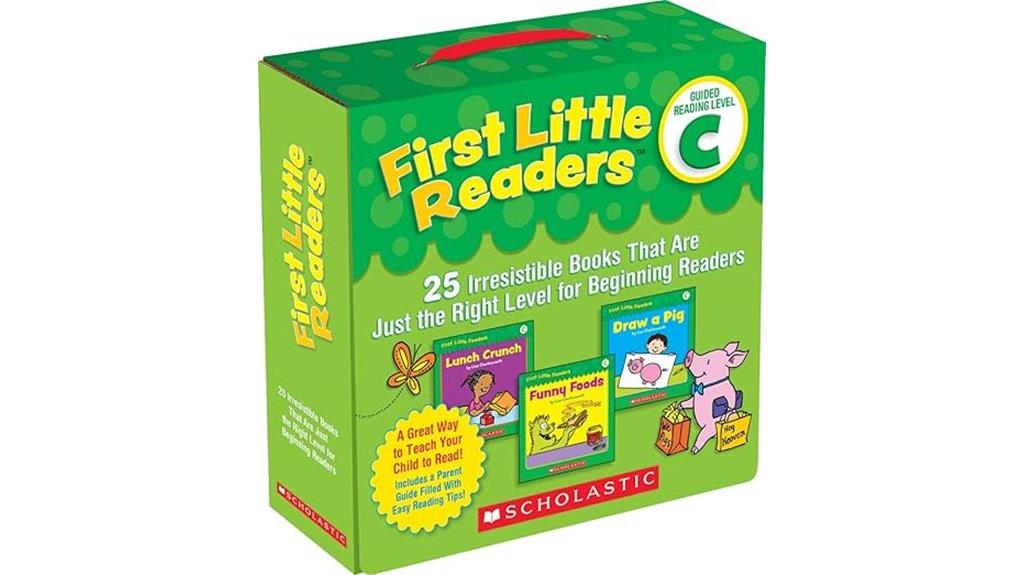
The First Little Readers Parent Pack: Guided Reading Level C is an excellent choice for parents and educators looking to support children who are confidently shifting into more complex early readers. This collection of 25 engaging storybooks covers a variety of themes, from whimsical adventures to factual topics, designed for children in PreK-2. Each book features repetitive text, simple sentences, and visual aids that help kids build decoding skills and confidence. With a gradual progression from Level A to C, these books prepare children for more advanced reading while fostering a love of books. Many users praise their quality, variety, and the positive impact on early literacy.
Best For: parents, teachers, and caregivers seeking to support early readers in grades PreK-2 with engaging, leveled books that build confidence and literacy skills.
Pros:
- Supports gradual progression through reading levels A to C, fostering confidence and skills.
- Includes a variety of engaging themes and simple, repetitive texts that enhance decoding and fluency.
- Comes with a helpful parent guide with tips for supporting early literacy development.
Cons:
- Books are limited to Guided Reading Level C, which may not suit children at earlier or more advanced levels.
- Some users note that the collection may arrive without duplicates but could benefit from more diverse themes within the same level.
- The set is primarily designed for early elementary, so older or more advanced readers may find it less challenging.
100 Words Kids Need to Read by 1st Grade
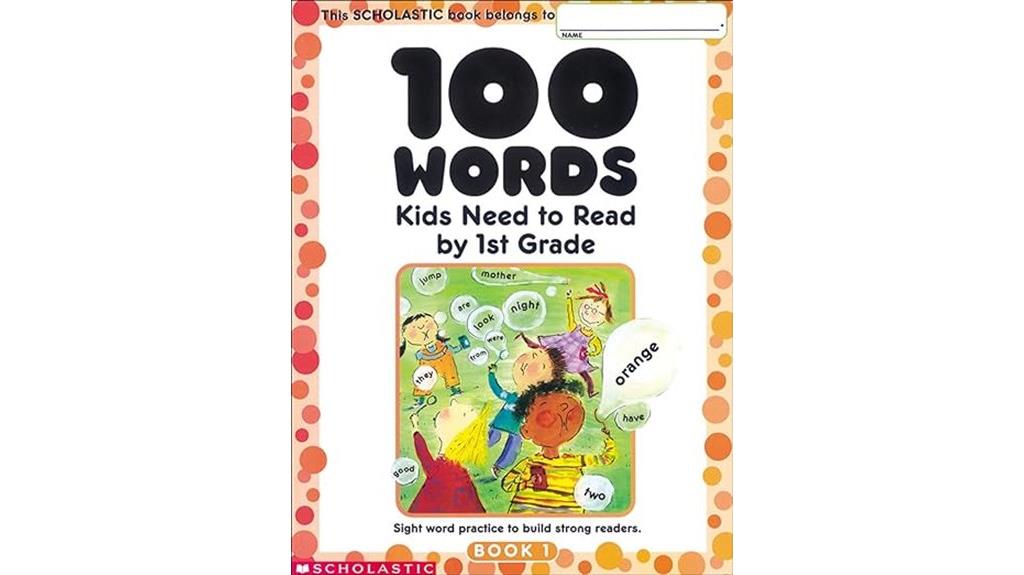
Children who are just starting to learn to read will find the Beginner Speed-Reading Books especially helpful. These books focus on essential sight words kids need to master by first grade, boosting their confidence and reading skills quickly. Many parents see notable progress after just a few weeks, with children moving from recognizing around 20-25% of words to reading paragraphs independently. The fun activities—like coloring, writing, and word mazes—make learning engaging and effective. This resource suits different learning styles, especially for reluctant or struggling readers, helping them build a solid foundation for more advanced literacy skills.
Best For: young children beginning to learn to read, especially those who need engaging, confidence-building activities to master essential sight words.
Pros:
- Effective in improving early reading skills and sight word recognition.
- Includes fun, engaging activities like coloring and word mazes that motivate children.
- Suitable for various learning styles and helps reluctant or struggling readers gain confidence.
Cons:
- Activities may sometimes be perceived as limited in variety.
- Some children may need additional resources for comprehensive literacy development.
- Not specifically designed for advanced readers, primarily focusing on foundational skills.
Piano Note Reading Exercises Student Workbook
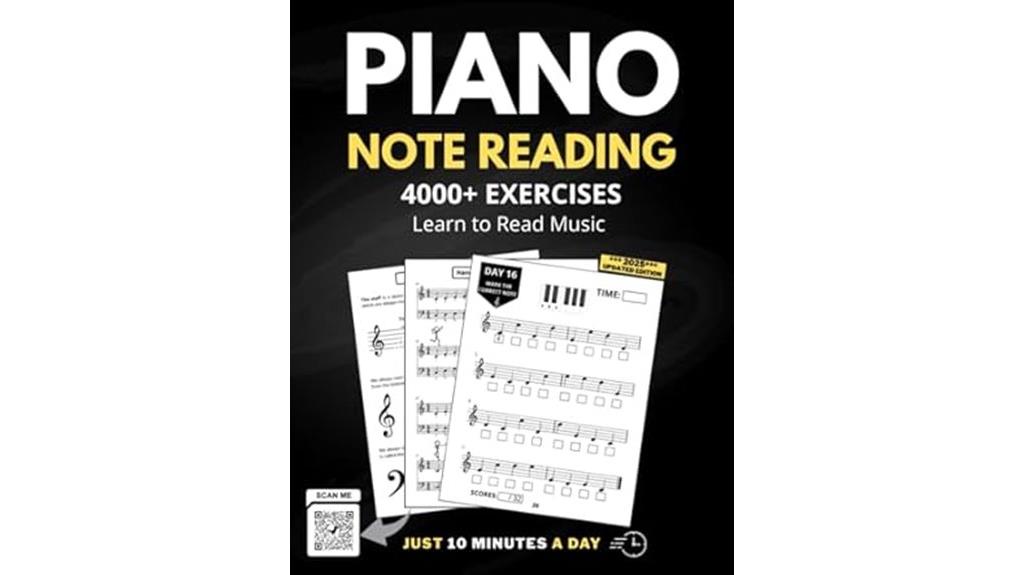
If you’re just starting to learn piano or looking to strengthen your note-reading skills, the Piano Note Reading Exercises Student Workbook is an excellent choice. I found it highly effective for beginners and those re-learning. The workbook offers thorough exercises, with clear diagrams and large print, making practice straightforward. It covers identifying notes on staff and keyboard for both treble and bass clefs, which helps build confidence. Many users praise its organized, step-by-step approach and how it reinforces music theory and memorization. Despite minor typos, I recommend it as a practical, accessible tool for anyone enthusiastic to improve their sight-reading and note recognition skills.
Best For: beginners, re-learning pianists, and students seeking a structured, easy-to-follow note reading practice workbook.
Pros:
- Clear diagrams and large print enhance readability and practice efficiency
- Well-organized, step-by-step approach supports progressive learning of notes and music theory
- Suitable for all ages, making it a versatile tool for beginners and advanced beginners alike
Cons:
- Contains minor typos and errors that can cause some confusion during exercises
- Some pages ask to mark notes not visible in the provided keyboard sections, leading to frustration
- Repetitive exercises may be considered less engaging by some users and the price might be seen as high for similar free resources
Speed Reading Techniques and Hacks Book
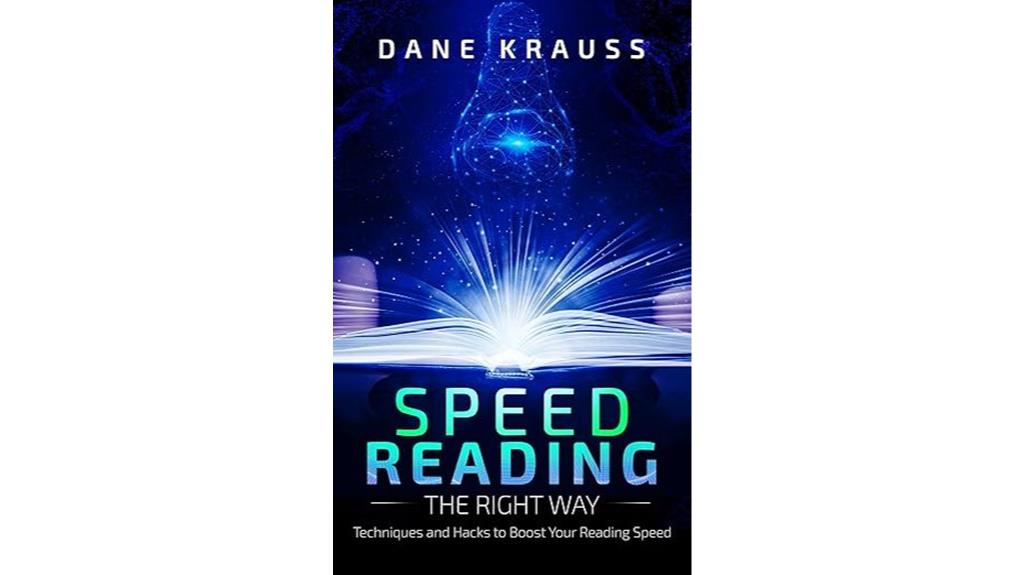
For beginners curious about speed reading, the “Speed Reading Techniques and Hacks Book” offers a straightforward introduction that covers the basics of reading improvement. While some find it helpful for increasing reading speed and gaining useful insights, others feel it lacks concrete techniques and relies too much on repetition. Critics mention poor organization, typos, and minimal actionable hacks, making it seem more like a summary than a practical guide. Despite mixed reviews, some readers with different backgrounds, including those with PTSD, report small improvements. Overall, I’d suggest approaching this book with tempered expectations, especially if you’re seeking specific, proven speed reading methods.
Best For: beginners interested in a basic overview of speed reading concepts and historical insights, without expecting detailed or proven techniques.
Pros:
- Provides a straightforward introduction to reading improvement concepts.
- Offers some historical and conceptual context about reading.
- Suitable for readers with diverse backgrounds, including those with PTSD, seeking small improvements.
Cons:
- Lacks concrete, actionable speed reading techniques.
- Contains repetitive content and minimal practical hacks.
- Criticized for poor organization, typos, and grammatical errors, making it feel more like a summary than a useful guide.
The Speed Reading Book: Read More, Learn More, Achieve More
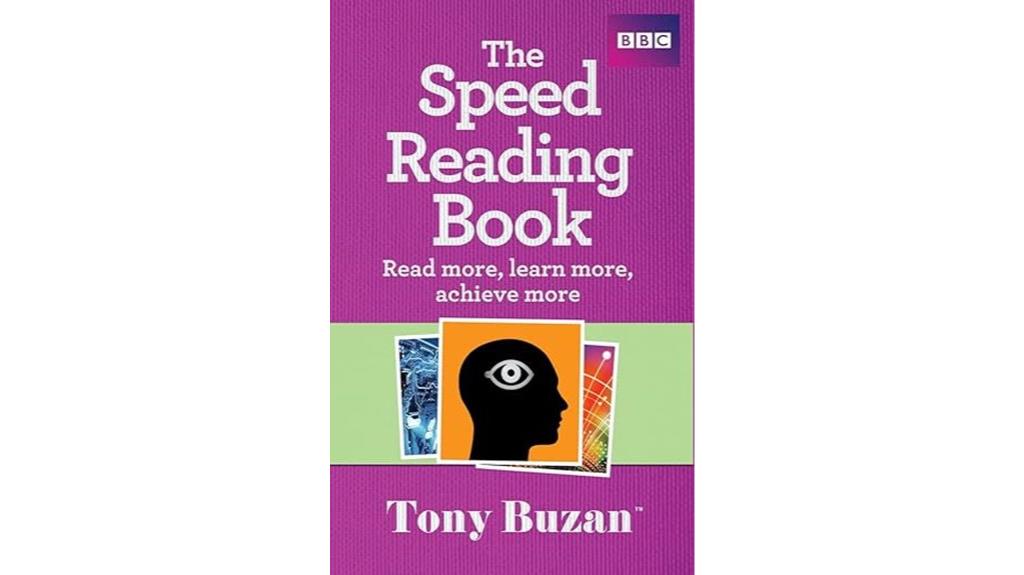
The Speed Reading Book: Read More, Learn More, Achieve More stands out as an excellent choice for beginners enthusiastic to boost their reading speed and comprehension. Despite some concerns about its quality, with reports of small, hard-to-read print and inconsistent formatting, many find its techniques practical and easy to implement. The book offers progress tracking and interactive challenges that help build skills gradually. While some may find the tests boring or overwhelming, overall, it provides a useful coaching experience. Many recommend it as a starting point, especially for those keen to develop better reading habits, even if the format isn’t perfect.
Best For: beginners and students eager to improve their reading speed and comprehension through practical techniques and interactive challenges.
Pros:
- Offers practical, easy-to-apply speed reading techniques suitable for beginners.
- Includes progress tracking and interactive exercises to monitor improvement.
- Recommended by many users as a valuable starting point for developing better reading habits.
Cons:
- Reports of poor quality formatting, small and hard-to-read print, and inconsistent layout.
- Some users find the tests and challenges repetitive or overwhelming.
- The physical quality of the book may resemble a photocopy or PDF rather than a professional edition.
Factors to Consider When Choosing Beginner Speed‑Reading Books
When choosing a beginner speed-reading book, I focus on whether it matches my skill level and learning style. I also consider the quality of the content, how practical it is, and if it’s affordable and easy to access. These factors help guarantee I pick a book that truly supports my progress.
Skill Level Alignment
Choosing a beginner speed-reading book starts with matching the material to your current skill level. You want a book that’s suited for beginners, so it’s not too advanced or too simple. Look for options that offer a gradual progression, starting with basic techniques like skimming, scanning, and minimizing regression, then moving to more advanced strategies. Clear explanations and practical exercises aligned with your skill level are essential—they help you learn effectively without feeling overwhelmed. Check reviews or descriptions to ascertain it’s designed for beginners or novice readers. This way, you won’t waste time on material that’s too complex or too basic. Matching your skill level ensures steady progress and helps keep you motivated as you develop your speed-reading abilities.
Book Quality & Layout
Selecting a beginner speed-reading book involves more than just matching the content to your skill level; the quality of its layout plays a pivotal role in your learning experience. A well-designed layout with clear, readable fonts and organized chapters makes it easier to follow along and reduces eye strain. High-quality printing with minimal typos and errors builds trust and helps you stay focused on practicing techniques. Books that feature logical progression and well-structured exercises allow you to grasp concepts gradually without feeling overwhelmed. Visually engaging elements like diagrams, charts, and highlighted tips reinforce learning and make the material more accessible. Conversely, cluttered or poorly formatted pages can hinder concentration and motivation, making layout quality an essential factor when choosing your beginner speed-reading book.
Content Practicality
The practicality of a speed-reading book is essential to ensuring you can apply the techniques effectively. I look for books that offer clear, actionable strategies I can practice regularly, rather than vague advice. Practical exercises and real-world applications help reinforce what I learn, making skills like scanning, skimming, and phrase recognition easier to master. I prefer step-by-step guidance that breaks down each technique, so I don’t feel overwhelmed or confused. It’s also important that the content is tailored for beginners—no assumptions of prior knowledge or advanced skills. A pragmatic book makes all the difference, giving me confidence and tangible results as I develop my speed-reading abilities. Ultimately, practicality ensures I can turn learning into consistent, effective practice.
Learning Style Fit
When I look for beginner speed-reading books, I realize it’s important to contemplate how well the teaching methods match my learning style. I ask myself if the book caters to visual, auditory, or kinesthetic learners, ensuring I can grasp concepts effectively. I look for books that offer varied exercises and activities that suit my approach—whether through reading, writing, or interactive practice. I also consider if the book provides step-by-step instructions or visual aids that match my preference for structured guidance or independent exploration. Choosing materials that emphasize techniques I find engaging, like quick tips, real-life examples, or interactive drills, helps me stay motivated. Finally, I prefer books that include extra resources or tips for adapting techniques to my individual style, making my learning personalized and effective.
Price & Accessibility
Have you considered how much a speed-reading book costs and how easily you can access it? Prices vary widely—some affordable options are under $10, while others may be over $30. Accessibility is just as important; many books are available as e-books or audiobooks, which are convenient for learning on the go. Luckily, plenty of budget-friendly titles offer exhaustive guides for beginners, making quality education accessible without breaking the bank. Additionally, free resources like online articles or public domain books can serve as useful alternatives. Availability in multiple formats and languages also enhances accessibility, ensuring that diverse learners can find options suited to their preferences and needs. Balancing cost and ease of access helps you pick a book that fits your lifestyle and budget.
Frequently Asked Questions
How Long Does It Typically Take to See Progress With Beginner Speed-Reading Books?
You can usually start noticing progress within a few weeks of consistent practice. I saw improvements in my reading speed and comprehension after just two to three weeks of daily exercises. The key is to stay dedicated and practice regularly. Everyone’s different, but with steady effort, you’ll likely see noticeable changes in a month or so. Keep at it, and you’ll be surprised how quickly your skills improve!
Are There Specific Books Recommended for Visual or Auditory Learners?
I know it’s frustrating when you don’t find a book that suits your learning style, but yes, there are great options. For visual learners, I recommend “Breakthrough Rapid Reading” with its visual techniques, and for auditory learners, “Speed Reading for Dummies” offers audio components to reinforce skills. Finding the right fit can truly accelerate your progress, and I promise, it’s worth the effort to tailor your learning tools.
Can Speed-Reading Techniques Be Effectively Applied to Digital or Audio Content?
Yes, I’ve found speed-reading techniques can be quite effective with digital and audio content. When I read online or listen to podcasts, I use skimming and chunking to grasp main ideas quickly. For audio, I adjust playback speed and focus on key points, which helps me consume content faster without losing comprehension. Practice makes perfect, and I believe these methods work well across different formats.
What Are Common Mistakes Beginners Make When Starting Speed Reading?
Many beginners make the mistake of trying to read too fast right away, which actually hinders comprehension. Studies show that reading speed drops by up to 50% when we rush. I’ve found that focusing on understanding rather than just speed helps tremendously. Instead of forcing quick reading, I suggest practicing gradual improvement and avoiding skipping words or lines. Patience and steady practice really make a difference.
How Do I Maintain Comprehension While Increasing Reading Speed?
To maintain comprehension while increasing my reading speed, I focus on active engagement with the material. I preview texts to understand main ideas, use a pointer or guide to stay focused, and avoid subvocalization. I also pause periodically to summarize what I’ve read, ensuring I grasp key points. Practicing regularly helps me find the right balance between speed and understanding, making my reading more efficient without losing clarity.
Conclusion
If you’re enthusiastic to elevate your reading speed and enthusiasm, these beginner books are your best bet. By blending bold strategies with basic building blocks, you’ll boost your brainpower and break barriers. Don’t delay—dive into these dynamic, delightful resources and discover the joy of faster, fuller reading. Remember, the key is consistency—so stay committed, stay curious, and watch your reading reach new heights!