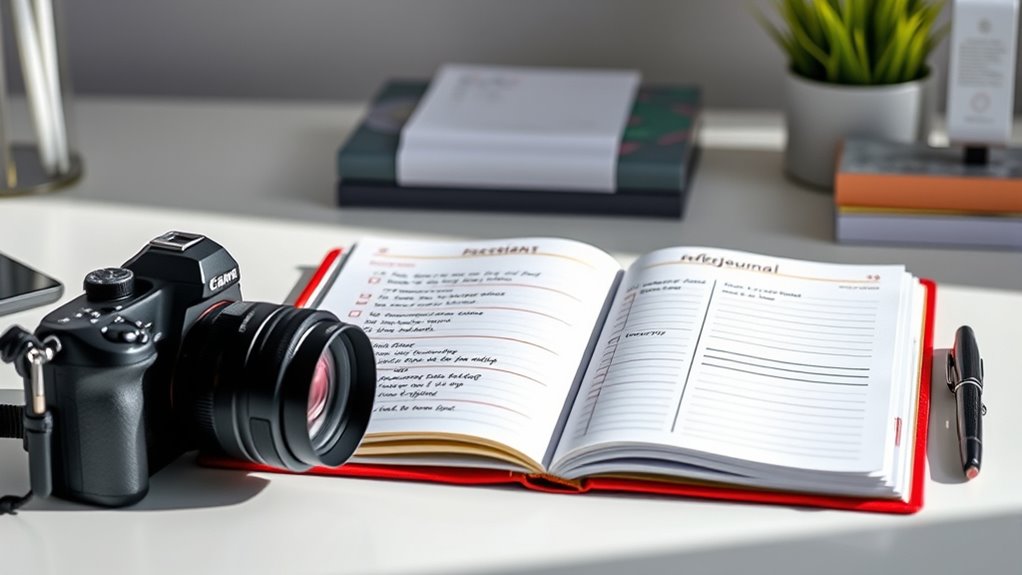

Decisionjournal templates are designed to help you structure and improve your decision-making process. The best templates simplify complex choices, promote clarity, and foster consistent habits. The Next Right Thing Guided Journal stands out as the overall top pick for its guided approach, while the Decision Making Journal: Gain Clarity, Weigh Your Options offers a versatile format for various decision types. However, choosing the right template involves tradeoffs between depth, usability, and specialization. Continue reading for a detailed breakdown of the top options and what makes each unique.

Get the latest gadgets delivered free — and shop member deals
- Fast, free delivery on millions of items
- Access to Prime Big Deal Days deals on October 6–7
- Prime Video, Amazon Music and more included
Complete the kit



Key Takeaways
- Templates with guided prompts tend to support better decision clarity for beginners.
- Versatile formats that accommodate different decision types rank higher for broad usability.
- Specialized templates, like those for professionals, often include systematic frameworks for consistency.
- Tradeoffs between simplicity and depth affect which template is best for quick vs. complex decisions.
- Higher-priced options typically offer more detailed structures and ongoing support features.
| The Next Right Thing Guided Journal: A Decision-Making Companion |  | Best for Personal Growth and Mindfulness | Format: Guided journal | Size: Not specified | Pages: Not specified | VIEW ON AMAZON | See Our Full Breakdown |
| Decision Making Journal: Gain Clarity, Weigh Your Options, and Move Forward with Confidence |  | Best for Building Decision-Making Skills | Format: Not specified | Size: Not specified | Pages: Not specified | VIEW ON AMAZON | See Our Full Breakdown |
| Decision Making Journal: Weighing Options Notebook, 6 x 9 in., 100 Pages |  | Best Portable Decision Organizer | Size: 6 x 9 inches | Pages: 100 | Format: Blank journal | VIEW ON AMAZON | See Our Full Breakdown |
| The Decision Making Journal |  | Best for Tough, Complex Decisions | Format: Not specified | Pages: Not specified | Prompts: Yes | VIEW ON AMAZON | See Our Full Breakdown |
| Decision Notebook: Help You Make the Right Decision |  | Best for Organized, Informed Choices | Format: Notebook | Size: Not specified | Pages: Not specified | VIEW ON AMAZON | See Our Full Breakdown |
| How to Make Decisions: 100 Templates of the Most Effective Methods |  | Best for Comprehensive Decision Frameworks | Number of Templates: 100 | Format: Printed book | Intended Audience: General, professional, and personal decision-makers | VIEW ON AMAZON | See Our Full Breakdown |
| Decision Journal for Professionals: Decision Clarity OS — A System for Clear Decisions and Consistent Follow-Through |  | Best for Professional Decision-Making and Accountability | Format: Structured journal | Intended Users: Professionals and managers | Duration: Ongoing, with regular use | VIEW ON AMAZON | See Our Full Breakdown |
| Decision-Making Journal |  | Best for Guided Personal Development | Format: Printed journal | Intended Use: Personal development and goal setting | Prompts: Yes | VIEW ON AMAZON | See Our Full Breakdown |
| Decision Journal: A Notebook for Mindful Decision-Making |  | Best for Mindful, Reflective Decision-Makers | Format: Notebook | Focus: Mindfulness and deliberate decision-making | Prompts: No | VIEW ON AMAZON | See Our Full Breakdown |
| Decision Making Journal/Workbook: Your Guide to Informed Choices |  | Best for Guided Decision Practice | Format: Guided workbook | Pages: Unknown | Focus: Reflection and skill-building | VIEW ON AMAZON | See Our Full Breakdown |
| decisionjournal template | Format | Pages | Prompts |
|---|---|---|---|
| The Next Right Thing Guided Jo | Guided journal | Not specified | Yes |
| Decision Making Journal: Gain | Not specified | Not specified | Yes |
| Decision Making Journal: Weigh | Blank journal | 100 | — |
| The Decision Making Journal | Not specified | Not specified | Yes |
| Decision Notebook: Help You Ma | Notebook | Not specified | Yes |
| How to Make Decisions: 100 Tem | Printed book | — | — |
| Decision Journal for Professio | Structured journal | — | — |
| Decision-Making Journal | Printed journal | — | Yes |
| Decision Journal: A Notebook f | Notebook | — | No |
| Decision Making Journal/Workbo | Guided workbook | Unknown | — |
More Details on Our Top Picks
The Next Right Thing Guided Journal: A Decision-Making Companion
This journal excels at helping individuals develop a mindful approach to decision-making, making it ideal for those seeking personal growth alongside clarity. Unlike more structured options like the Decision Making Journal, it emphasizes reflection and intuition through prompts that foster self-awareness. Its compact size makes it easy to carry, encouraging daily use. However, it lacks detailed content descriptions and does not feature specific exercises or digital tools, which might limit its appeal for users wanting more comprehensive guidance. This pick is perfect for someone looking for a gentle, introspective decision aid rather than an in-depth decision system.
Pros:- Provides structured prompts for decision-making
- Supports personal growth and mindfulness
- Compact and portable design
Cons:- Lacks detailed content description
- No customer reviews or ratings available
Best for: Individuals interested in combining decision-making with mindfulness and personal growth
Not ideal for: Users seeking a detailed, feature-rich decision system or digital integration
- Format:Guided journal
- Size:Not specified
- Pages:Not specified
- Prompts:Yes
Our verdict“This journal is best suited for those who value reflective, mindful decision processes over detailed instructions.”
Decision Making Journal: Gain Clarity, Weigh Your Options, and Move Forward with Confidence
Compared with the Decision Making Journal: Weighing Options Notebook, this journal aims to boost decision confidence through structured prompts that help clarify thoughts and evaluate options systematically. It’s designed for users who want to improve their decision-making process over time, making it suitable for those seeking skill development. Its lack of detailed specifications or format information might be a drawback for users who prefer clear technical details upfront. This journal makes the most sense for learners and those who want a guided approach to making better choices, rather than quick or casual decisions.
Pros:- Helps improve decision-making skills
- Structured prompts facilitate clarity
- Encourages confident choices
Cons:- No detailed specifications provided
- Limited information on format or size
Best for: People eager to develop their decision-making abilities through structured exercises
Not ideal for: Those needing a detailed content overview or digital features, as info is limited
- Format:Not specified
- Size:Not specified
- Pages:Not specified
- Prompts:Yes
Our verdict“This journal is ideal for individuals committed to honing their decision skills with guided prompts, despite limited product details.”
Decision Making Journal: Weighing Options Notebook, 6 x 9 in., 100 Pages
This 6 x 9-inch journal offers a straightforward space for weighing options and recording thoughts, making it perfect for on-the-go decision tracking. Unlike the more comprehensive Decision Making Journal, it lacks prompts or guided exercises, relying solely on writing. Its compact size supports quick note-taking but might limit extensive reflection. For users who prefer a simple, portable tool for recording decisions without structured guidance, this is an effective choice. However, those seeking deeper decision frameworks or digital integration may find it too basic.
Pros:- Helps organize decision-making process
- Portable size for on-the-go use
- Encourages thoughtful reflection
Cons:- No additional features or prompts included
- Limited to writing, no digital options
Best for: Busy professionals or students who want a portable place to jot down decision thoughts quickly
Not ideal for: People wanting guided prompts or in-depth decision frameworks, as it offers only blank pages
- Size:6 x 9 inches
- Pages:100
- Format:Blank journal
- Weight:Light and portable
Our verdict“This notebook works well for those who prefer a simple, portable space to record decisions without structured prompts.”
The Decision Making Journal
This journal aims to guide users through difficult decision processes with structured prompts, making it suitable for complex or high-stakes choices. Compared to the Next Right Thing Guided Journal, it emphasizes clarity and confidence in challenging scenarios. Its lack of detailed specifications and absence of reviews might be a concern for some buyers, but it offers focused exercises designed to help organize thoughts amidst tough decisions. It’s ideal for those who want a dedicated space to untangle complex choices and build decision confidence, even if it doesn’t include digital features or extensive content details.
Pros:- Helps organize thoughts for difficult decisions
- Provides structured prompts and exercises
- Encourages clarity and confidence
Cons:- Lacks detailed product features or specifications
- No customer reviews or ratings available
Best for: Individuals facing complex, high-stakes decisions who need structured guidance
Not ideal for: Casual decision-makers or those seeking detailed product features and reviews, as info is limited
- Format:Not specified
- Pages:Not specified
- Prompts:Yes
- Intended Use:Tough decisions
Our verdict“This journal is best suited for those navigating complex decisions who want a focused, structured approach to clarity.”
Decision Notebook: Help You Make the Right Decision
Designed to guide users through making informed choices, this notebook emphasizes organization and clarity with structured prompts. It shares similarities with the Decision Making Journal: Weighing Options Notebook but offers a slightly broader focus on making the right decision rather than just weighing options. Its lack of detailed features or content description limits its appeal for users wanting comprehensive guidance. This product suits those who prefer a straightforward, organized approach to decision-making without frills or digital elements. It’s less suitable for users seeking in-depth exercises or digital tools.
Pros:- Helps organize decision-making process
- Provides structured prompts for clarity
- Simple and straightforward
Cons:- Lacks detailed features or content description
- No customer reviews or ratings available
Best for: Professionals or students who want a simple, organized way to evaluate options before deciding
Not ideal for: Those seeking detailed content, prompts, or digital integration, as details are sparse
- Format:Notebook
- Size:Not specified
- Pages:Not specified
- Prompts:Yes
Our verdict“This notebook is ideal for users who want a clean, organized method to make informed decisions without extra complexity.”
How to Make Decisions: 100 Templates of the Most Effective Methods
This book offers a wide-ranging collection of 100 decision-making templates, making it a valuable resource for anyone looking to diversify their approach. Unlike the more structured Decision Journal for Professionals, which emphasizes clarity and follow-through, this volume emphasizes variety and practicality across different scenarios. However, the lack of detailed examples for some templates could hinder beginners, and there’s no indication of the target audience’s skill level. Still, for those wanting a broad toolkit, it provides practical strategies that can be adapted to many situations.
Pros:- Extensive collection covering diverse decision scenarios
- Practical templates easily adaptable to daily life
- Helps improve overall decision-making skills
Cons:- Lacks detailed, context-rich examples for some templates
- No guidance on the appropriate skill level for users
Best for: Readers seeking an extensive, versatile set of decision-making tools for daily or professional use
Not ideal for: Beginners or those wanting step-by-step guidance with detailed examples, as the book offers limited illustrations
- Number of Templates:100
- Format:Printed book
- Intended Audience:General, professional, and personal decision-makers
- Language:English
Our verdict“This book suits those who want a broad collection of decision templates but may fall short for beginners seeking detailed guidance.”
Decision Journal for Professionals: Decision Clarity OS — A System for Clear Decisions and Consistent Follow-Through
This journal provides a structured approach designed specifically for professionals aiming to improve clarity and accountability in their decisions. Unlike the 90-Day Decision Journal, which emphasizes personal growth over a set period, this system focuses on establishing a consistent decision process. Its structured format encourages follow-through, but the limited details on the actual content and features leave some uncertainty about how comprehensive or adaptable it is. It’s best suited for those who value systematic decision processes and accountability in a work environment.
Pros:- Supports clearer, more confident decisions
- Promotes consistent follow-through with structured prompts
- Designed specifically for professional contexts
Cons:- Limited information on the content and features
- No customer reviews to gauge effectiveness
Best for: Professionals seeking a disciplined system to enhance decision clarity and follow-through
Not ideal for: Individuals looking for a casual or personal decision journal, as the focus is on professional use and structure
- Format:Structured journal
- Intended Users:Professionals and managers
- Duration:Ongoing, with regular use
- Language:English
Our verdict“This journal is ideal for busy professionals who want a disciplined system to improve decision clarity and accountability.”
Decision-Making Journal
This journal is designed to enhance decision-making skills through guided prompts and exercises, making it suitable for those focused on personal development. Unlike the Decision Journal: A Notebook for Mindful Decision-Making, which emphasizes mindfulness and reflection, this journal leans more toward structured reflection for goal setting. Its main limitation is the sparse information about its features and whether it includes additional resources like exercises or prompts. It’s best for users who want straightforward guidance without extensive extras.
Pros:- Guided prompts facilitate decision reflection
- Supports goal setting and personal growth
- Simple to use and focused on improvement
Cons:- Limited details about the specific features or exercises
- Unclear if additional resources or tools are included
Best for: Individuals seeking a guided journal for personal growth and decision improvement
Not ideal for: Readers expecting a detailed or resource-rich journal, as features are not clearly outlined
- Format:Printed journal
- Intended Use:Personal development and goal setting
- Prompts:Yes
- Language:English
Our verdict“Ideal for those who prefer straightforward, guided decision reflection but want clarity on feature set before purchase.”
Decision Journal: A Notebook for Mindful Decision-Making
This journal encourages mindful decision-making by guiding users to record and reflect on their thought process. It is more focused on fostering awareness and deliberate choices than the Decision-Making Journal, which offers broader prompts for personal growth. A key limitation is the absence of additional features or prompts, which may make it less appealing to those seeking a comprehensive guide. This makes it better suited for users who want a simple, reflective tool rather than detailed decision frameworks.
Pros:- Promotes mindful reflection on decisions
- Simple, structured format for clarity
- Encourages deliberate decision-making habits
Cons:- No additional features or prompts included
- May not satisfy those seeking detailed guidance or exercises
Best for: People interested in developing mindfulness and deliberate decision habits without extra guidance or prompts
Not ideal for: Users seeking detailed decision frameworks or structured exercises, as the journal offers minimal guidance
- Format:Notebook
- Focus:Mindfulness and deliberate decision-making
- Prompts:No
- Language:English
Our verdict“This journal is best for mindful decision-makers who prioritize reflection over structured guidance or extensive features.”
Decision Making Journal/Workbook: Your Guide to Informed Choices
This journal stands out for its focus on structured exercises that actively develop decision-making skills, making it ideal for those who prefer a guided approach. Unlike the more comprehensive Decision Journal for Professionals, which offers a systematic system for clarity, this workbook emphasizes reflection and learning through prompts. The lack of detailed specifications or reviews means it might be less appealing to those seeking in-depth technical tools or proven track records. However, its simple format encourages thoughtful engagement, which can lead to more confident choices over time. The main tradeoff is that it doesn’t provide advanced frameworks or extensive content, making it better suited for beginners or casual users rather than serious decision professionals.
Pros:- Provides clear, structured exercises to improve decision-making skills
- Encourages deep reflection for more thoughtful choices
- Simple format makes it accessible for beginners
Cons:- Lacks detailed features or advanced decision frameworks
- No customer reviews or ratings to validate effectiveness
- Limited content scope may reduce long-term usefulness
Best for: Individuals new to decision journaling seeking a straightforward, guided approach to build their skills
Not ideal for: Experienced decision-makers who want in-depth templates or systematic decision systems with proven methodologies
- Format:Guided workbook
- Pages:Unknown
- Focus:Reflection and skill-building
- Intended Users:Beginners and casual decision-makers
- Content Type:Exercises and prompts
- Availability:Online and print
Our verdict“This journal makes sense for newcomers looking for a guided way to practice decision-making without complex features.”

How We Picked
To evaluate these decisionjournal templates, I focused on several key criteria: clarity of structure, flexibility across decision types, ease of use, and the depth of guidance offered. I also considered user-friendliness for different experience levels and the overall value for the price. Rankings reflect a balance between comprehensive support and practical usability, ensuring each option serves a distinct decision-making need. Products were compared based on features, customer feedback, and how well they facilitate consistent decision practices.Factors to Consider When Choosing Decisionjournal Templates
Choosing the right decisionjournal template depends on your specific decision-making style, goals, and experience. Consider whether you need a simple tool for quick decisions or a detailed system for complex choices. The following factors can help you identify what works best for you and avoid common pitfalls like overcomplication or insufficient guidance.Usability and Simplicity
Opt for templates that match your comfort level with structured decision-making. Beginners benefit from guided prompts that walk through each step, while experienced decision-makers may prefer more flexible frameworks. Beware of templates that are too complex or too simplistic for your typical decision scope, as this can lead to frustration or superficial analysis.
Depth of Guidance
Some templates offer detailed checklists and systematic approaches, ideal for high-stakes or recurring decisions. Others focus on quick reflections. Evaluate whether you need a comprehensive system or a lightweight tool. Overly detailed templates can become burdensome, while shallow ones may miss important nuances.
Customization and Flexibility
Look for templates that allow some degree of customization to fit your decision style. Rigid formats may not adapt well to different scenarios, limiting their usefulness. Conversely, highly customizable templates require more effort to set up but can serve a wider range of decisions effectively.
Cost and Value
Decide how much you’re willing to invest in a decisionjournal. Free or low-cost templates might suffice for casual use, but premium options often include additional features such as ongoing support, digital integrations, or guided coaching. Balance cost with the value of features that genuinely improve your decision process.
Purpose and Specific Needs
Identify whether you want a template for daily decisions, professional choices, or long-term planning. Specialized templates for professionals or life coaches tend to include more systematic approaches, while general templates suit everyday decision-making. Matching the template to your specific needs helps ensure it actually supports your goals.
Frequently Asked Questions
Can decisionjournal templates help me make better decisions?
Yes, a well-designed decisionjournal template guides you through critical thinking steps, helping you clarify options, weigh pros and cons, and recognize biases. This structured approach reduces impulsive choices and enhances your confidence in key decisions. Over time, using these templates can develop your decision-making skills by instilling consistent habits of reflection and analysis.
Should I choose a simple or detailed decisionjournal template?
The choice depends on your decision complexity and experience level. Simple templates work well for quick, everyday decisions and beginners, providing clarity without overwhelming. More detailed options suit complex or high-stakes decisions, where thorough analysis reduces risks. Consider your typical decision scope and comfort with structured reflection when choosing between the two.
Are decisionjournal templates suitable for professional use?
Many templates are designed specifically for professional contexts, offering systematic frameworks for consistency and accountability. These often include features like follow-up tracking and priority setting. If you need a decision system that integrates into work routines, look for templates crafted for professional decision-making, which can help improve accountability and results.
Can I customize decisionjournal templates to fit my style?
Most templates offer varying degrees of customization, allowing you to adapt prompts, sections, and formats to your preferences. Customization helps ensure the tool aligns with your decision types and thought process. However, overly flexible templates might require more effort to set up and maintain, so balance flexibility with ease of use based on your needs.
Is it worth investing in a premium decisionjournal template?
Premium templates often include additional features like guided exercises, digital integrations, or ongoing support, which can deepen your decision process. If you regularly face complex choices or want a structured routine, paying more can provide valuable benefits. For casual or infrequent decision-making, a basic or free template might suffice, saving you money without sacrificing effectiveness.
Conclusion
For casual decision-makers or those new to structured reflection, a straightforward, guided template like the Next Right Thing Guided Journal offers a gentle start. Professionals seeking systematic frameworks should consider options like the Decision Journal for Professionals for consistent results. Budget-conscious users will find good value in versatile, less expensive templates, while those aiming for a comprehensive system might prefer premium offerings with extended features. Ultimately, your choice should align with your decision complexity, experience, and how deeply you want to engage with your decision process.
Fall Picks
fall essentials
As an affiliate, we earn on qualifying purchases.