If you’re looking for the best Mac Studio models for machine learning in 2025, I recommend considering the Mac mini with the M4 chip, the M4 Pro version, and the latest 2024 model with upgraded specs. These offer powerful CPUs, ample GPU cores, and unified memory, perfect for AI workflows. They’re compact, efficient, and seamlessly fit into a modern setup. Stick around to see how each model’s features can enhance your machine learning projects.
Key Takeaways
- The Mac mini with M4 Pro offers the highest processing power and GPU capabilities for demanding ML workloads.
- All models feature unified memory up to 24GB, supporting large datasets and efficient multitasking.
- Multiple Thunderbolt ports and high-speed connectivity enable seamless integration with external GPUs and storage.
- Compact, space-efficient design with advanced cooling ensures stable, long-term performance during intensive ML tasks.
- Compatibility with popular ML frameworks like TensorFlow and PyTorch maximizes hardware utilization in 2025.
Apple 2024 Mac mini Desktop Computer with M4 Chip
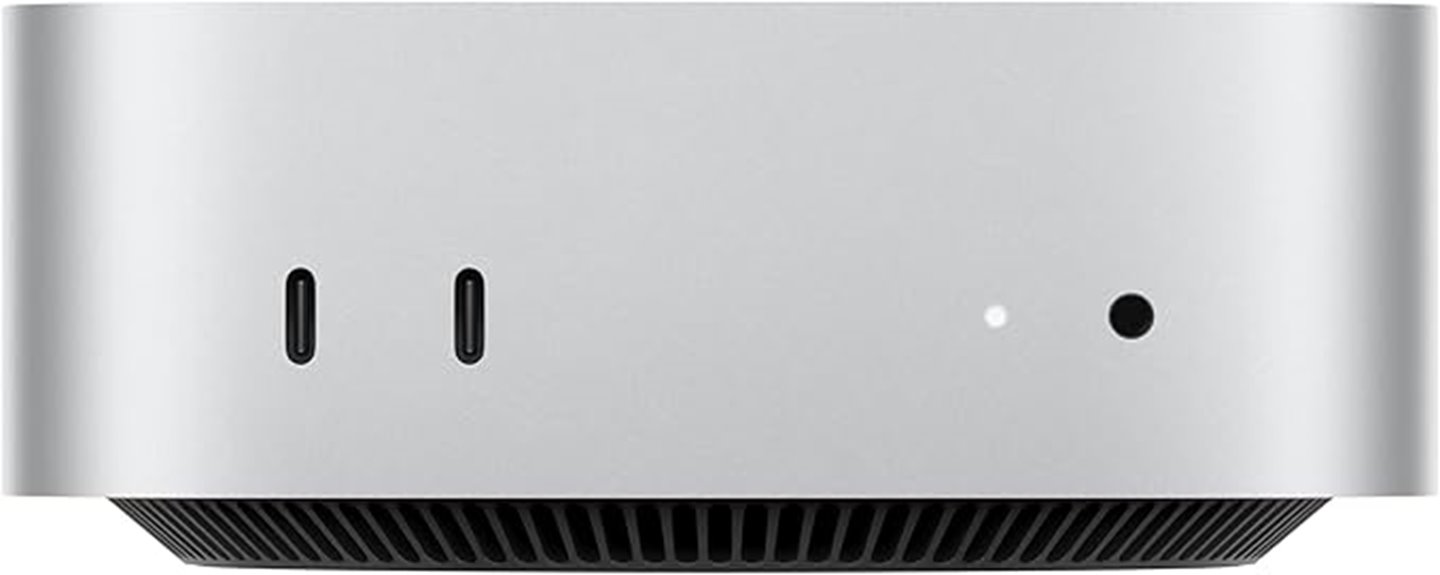
If you’re looking for a compact yet powerful desktop for machine learning tasks, the Apple 2024 Mac mini with M4 chip is an excellent choice. Despite measuring just five inches square, it delivers performance that rivals larger desktops, thanks to its 10-core CPU, 10-core GPU, and 16-core Neural Engine. With 16GB of unified memory (expandable to 24GB or 32GB) and fast SSD storage, it handles data processing and model training efficiently. Its support for multiple high-resolution displays and extensive connectivity options, including Thunderbolt 4 and Wi-Fi 6E, make it versatile. Quiet, cool, and space-saving, the Mac mini fits seamlessly into any workspace while providing serious processing power.
Best For: users seeking a compact, high-performance desktop ideal for machine learning, data processing, and creative workflows in space-constrained environments.
Pros:
- Powerful 10-core CPU, GPU, and Neural Engine deliver excellent processing and AI capabilities
- Compact size (5×5 inches) fits easily into any workspace without sacrificing performance
- Extensive connectivity options, including Thunderbolt 4, Wi-Fi 6E, and multiple display support
Cons:
- Limited internal storage options may require external drives for large datasets
- Upgradable memory is limited to 24GB or 32GB, which may not suffice for very large models or datasets
- Slightly higher price point compared to similar performance mini PCs or desktops
Apple 2024 Mac mini Desktop Computer with M4 Chip
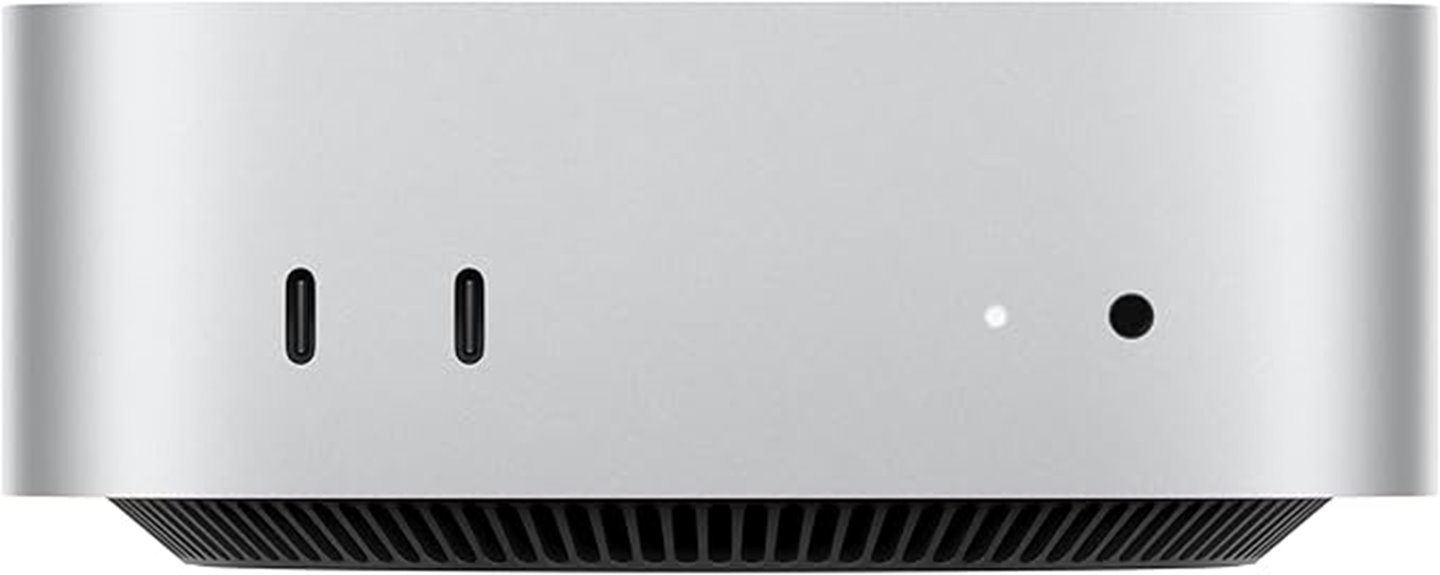
The Apple 2024 Mac mini with M4 chip is an excellent choice for those seeking a compact yet powerful machine learning workstation. Its 10-core CPU and GPU, combined with 16GB of unified memory, deliver outstanding performance in a small form factor. At just five by five inches, it easily fits next to monitors or on crowded desks. The redesigned Apple silicon hardware guarantees smooth, responsive operation, supporting demanding applications like Adobe Creative Cloud and Microsoft 365. With multiple ports—including Thunderbolt, HDMI, Gigabit Ethernet, USB-C, and a headphone jack—it offers versatile connectivity. Seamless integration with other Apple devices makes it ideal for a streamlined, privacy-focused workflow.
Best For: creative professionals and power users seeking a compact, high-performance desktop that seamlessly integrates with the Apple ecosystem.
Pros:
- Compact size fits easily on any desk or next to monitors.
- Powerful 10-core CPU and GPU with 16GB unified memory for demanding tasks.
- Multiple connectivity options including Thunderbolt, HDMI, and Gigabit Ethernet for versatile use.
Cons:
- Limited storage options beyond 512GB SSD may not suit heavy data users.
- May require additional peripherals for complete setup, increasing overall cost.
- Higher price point compared to traditional desktops of similar specs.
Apple Mac mini 2024 Desktop with M4 Pro Chip
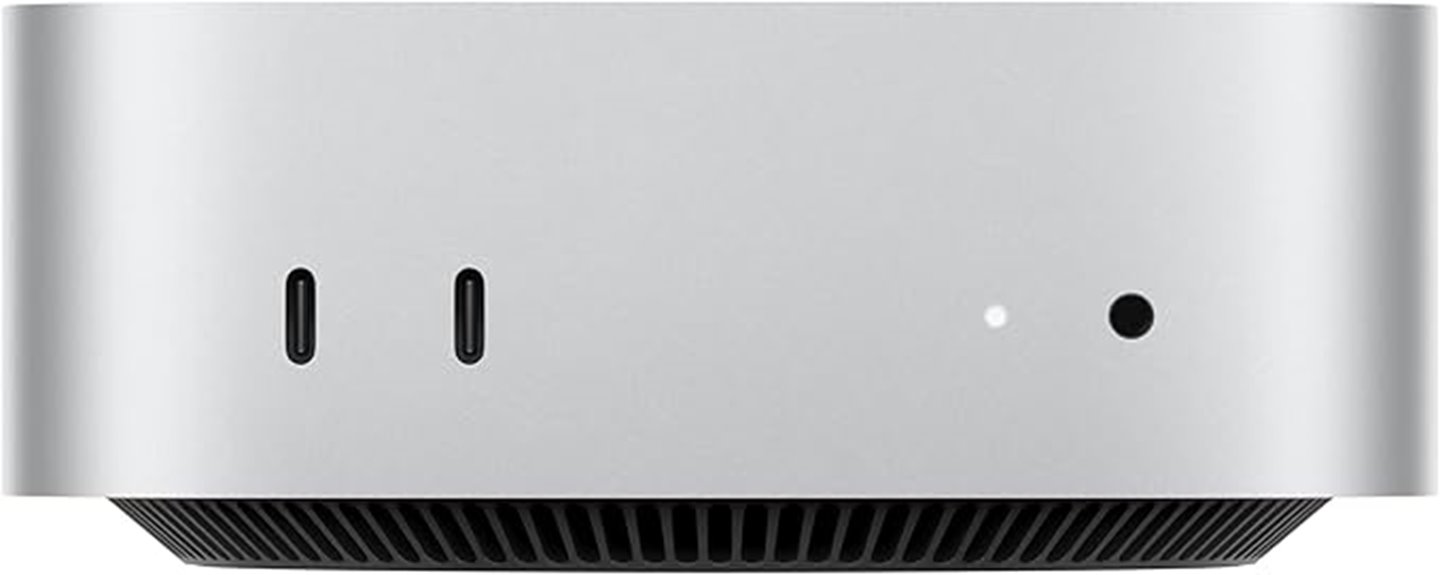
With its compact size and powerhouse M4 Pro chip, the Apple Mac mini 2024 Desktop is an ideal choice for those seeking high-performance machine learning on a small form factor. Its 12-core CPU (8 performance, 4 efficiency cores), combined with a 16-core GPU and hardware-accelerated ray tracing, delivers impressive speed and efficiency. The 16-core Neural Engine and 24GB of unified memory optimize AI workloads. With up to 8TB SSD storage and extensive connectivity options—including Thunderbolt 5, HDMI, and Gigabit Ethernet—it supports multiple high-resolution displays and fast data transfer. Perfect for a compact yet powerful machine learning setup, it seamlessly integrates into the Apple ecosystem.
Best For: power users and developers seeking a compact, high-performance Mac for machine learning, creative workflows, and multi-display setups.
Pros:
- Compact design with powerful M4 Pro chip delivering impressive performance in a small footprint
- Supports multiple high-resolution displays with extensive connectivity options including Thunderbolt 5 and HDMI
- Up to 8TB SSD storage and 24GB unified memory ideal for demanding workloads and large data files
Cons:
- Premium price point may be a barrier for some users
- Limited upgradeability post-purchase due to integrated components
- Only available starting October 29, 2024, which may delay immediate deployment
Apple 2024 Mac mini Desktop Computer with M4 Chip
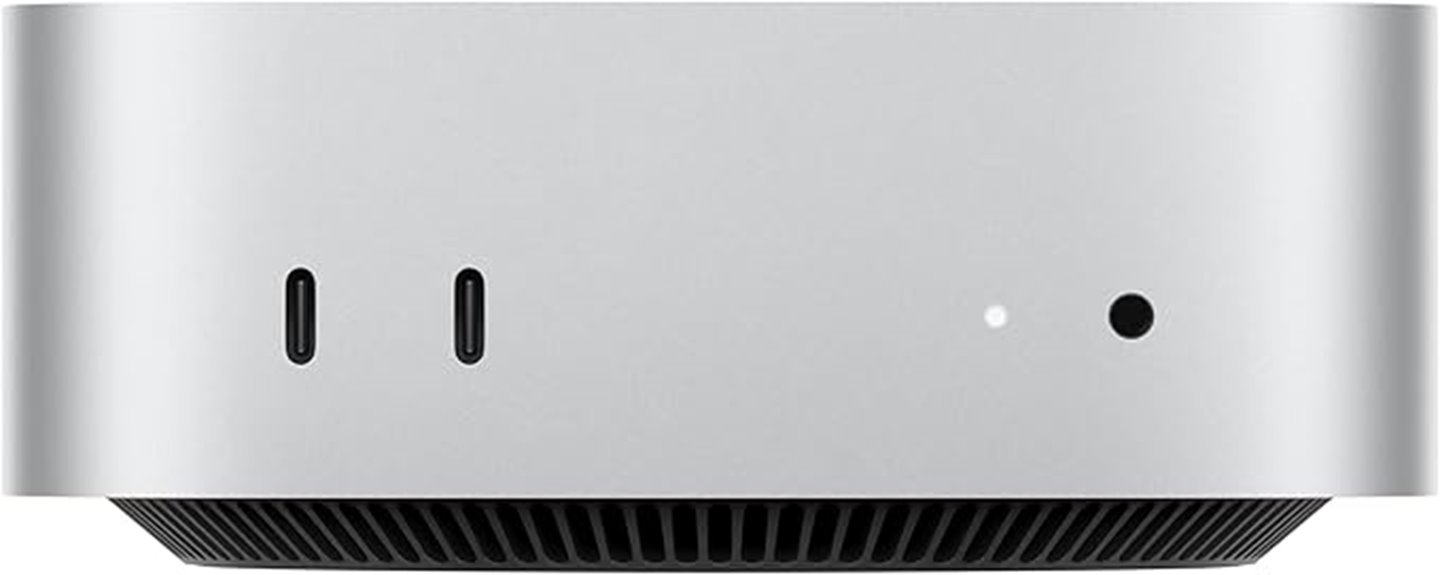
For those seeking a compact yet powerful desktop capable of handling demanding machine learning tasks, the Apple 2024 Mac mini with M4 chip stands out. Its small five-by-five-inch design fits easily beside monitors or in tight spaces, yet it packs serious hardware. The M4 chip features a 10-core CPU and GPU, delivering exceptional speed and fluidity. With 24GB of unified memory and a 512GB SSD, multitasking and data access are seamless. Connectivity options include Thunderbolt, HDMI, Gigabit Ethernet, front USB-C, and a headphone jack, ensuring versatile integration. Overall, this Mac mini offers impressive performance and ecosystem harmony in a tiny, efficient package.
Best For: individuals and professionals seeking a compact yet powerful desktop that excels in multitasking, creative work, and demanding machine learning tasks within the Apple ecosystem.
Pros:
- Small footprint with a sleek design fits easily in any workspace
- Powered by the advanced M4 chip with high-performance CPU and GPU for smooth operation
- Seamless integration with other Apple devices enhances productivity and user experience
Cons:
- Limited internal storage options may require external drives for extensive data needs
- May be less suitable for users who require high-end graphics or gaming capabilities
- Compact size could pose challenges for future upgrades or hardware modifications
Factors to Consider When Choosing a Mac Studio for Machine Learning
When selecting a Mac Studio for machine learning, I focus on key factors like processing power, GPU performance, and memory options to guarantee smooth workflows. It’s also important to check compatibility with your preferred ML frameworks and consider cooling and noise levels for long-term use. These points help me make an informed choice that meets both my performance needs and workspace requirements.
Processing Power Requirements
Choosing a Mac Studio for machine learning hinges on its processing power, as this directly impacts training speed and efficiency. For large datasets and complex models, a multi-core CPU with 12 or more cores is vital to cut down training times. High core counts enable parallel processing of intensive algorithms, boosting performance. Equally important are GPUs with higher core counts and specialized architectures, which speed up neural network computations. Adequate memory bandwidth and larger RAM are critical to prevent bottlenecks when handling sizable models and datasets. Additionally, features like powerful media engines and hardware acceleration can expedite data preprocessing and inference tasks. Overall, selecting a Mac Studio with robust processing capabilities ensures smoother, faster machine learning workflows, saving time and enhancing productivity.
GPU Performance Capabilities
A high GPU core count is essential because it directly enhances a Mac Studio’s ability to perform parallel processing, which is critical for training complex machine learning models. More cores mean better handling of large datasets and faster training times. Hardware-accelerated ray tracing can improve rendering and simulation tasks, boosting AI model development. Support for advanced video decoding and encoding formats enables efficient processing of multimedia datasets, which is crucial for multimedia-centric applications. Additionally, the GPU’s memory bandwidth and VRAM size determine how well large neural networks and datasets are managed without bottlenecks. Compatibility with high-performance GPU architectures, like those supporting AV1 decode and HDR, further increases training efficiency, especially in multimedia-heavy machine learning projects. These capabilities are fundamental when selecting a Mac Studio for advanced machine learning workflows.
Memory and Storage Options
Ideal memory and storage options considerably impact a Mac Studio’s ability to handle demanding machine learning tasks. Higher memory configurations, like 64GB of RAM, allow me to process larger datasets and run complex models more efficiently, reducing bottlenecks. Ample storage, such as 2TB or 8TB SSDs, ensures I have enough space for extensive datasets, pre-trained models, and training logs without compromise. The unified memory architecture in Mac Studio enables rapid data transfer between CPU, GPU, and Neural Engine, speeding up training and inference. Additionally, expanding storage with external SSDs offers flexibility for handling extensive datasets and backups, maintaining internal performance. Overall, choosing a Mac Studio with generous memory and storage options guarantees smoother multitasking and faster data access, essential for resource-intensive machine learning workflows.
Compatibility With ML Frameworks
To make certain my Mac Studio handles machine learning frameworks effectively, I need to verify that it supports the specific tools I rely on, such as TensorFlow, PyTorch, or Core ML. I check if the GPU, like the M4 Pro or higher, offers sufficient Metal support for efficient model training and inference. Compatibility with hardware-accelerated features, including neural engines or ray tracing, is also essential. I ensure the macOS version is up-to-date and compatible with the latest ML frameworks and dependencies I plan to use. Additionally, I consider community support and available documentation for ML development on Mac hardware. This helps me troubleshoot issues quickly and optimize workflows, ensuring my Mac Studio delivers seamless performance across my preferred ML frameworks.
Cooling and Noise Levels
When selecting a Mac Studio for machine learning, understanding its cooling capabilities and noise levels becomes a key consideration. Effective cooling is vital to keep the system running at peak performance during intensive tasks, preventing thermal throttling and hardware damage. Good airflow and ventilation help dissipate heat efficiently, especially when running GPUs or multiple high-power processors for extended periods. Noise levels can vary depending on cooling demands; quieter operation often results from advanced thermal design and smarter fan control. Balancing noise and cooling performance is essential—optimal designs manage heat output while minimizing operational sound. A robust cooling system ensures long-term stability, allowing you to focus on your work without distraction or performance dips caused by overheating.
Expansion and Connectivity
Choosing the right Mac Studio for machine learning means paying close attention to its expansion and connectivity options. I look for enough Thunderbolt 4 and USB-C ports to connect multiple external GPUs, storage devices, and peripherals essential for my workflows. Fast data transfer is vital, so I check for Ethernet options like 10Gb Ethernet or Wi-Fi 6E to guarantee swift cloud access and data sharing. Multiple high-resolution display outputs help me visualize and monitor models seamlessly. Expandability is also key—configurable RAM up to 64GB and SSD options up to 8TB allow handling large datasets and complex models efficiently. Finally, I verify port compatibility with my existing hardware to ensure smooth integration, avoiding bottlenecks that could slow down my machine learning tasks.
Software Optimization Features
Software optimization features play a essential role in maximizing the performance of a Mac Studio for machine learning. Support for Apple’s Metal API allows direct GPU access, speeding up workloads considerably. macOS is finely tuned for Apple Silicon, ensuring efficient resource management and smoother ML application operation. Compatibility with frameworks like TensorFlow and PyTorch is enhanced through native support and optimized libraries, making deployment easier. The M4 chip’s hardware-accelerated video decoding and encoding boost data preprocessing and model training speeds. Additionally, Neural Engine integration enables faster AI computations and more efficient model deployment. These software features work together to leverage the full potential of the hardware, ensuring that your Mac Studio handles complex machine learning tasks seamlessly and efficiently—crucial for anyone serious about ML performance in 2025.
Budget and Value
Considering your budget is essential when selecting a Mac Studio for machine learning, as it directly influences the hardware options and overall value you’ll receive. It’s important to weigh the total cost, including potential upgrades like more GPU cores, RAM, or storage, against your workload needs. Higher specifications can speed up training times and improve efficiency, but they also come with a higher price tag. Evaluate whether the hardware’s compatibility with your preferred machine learning frameworks justifies the investment. Additionally, consider if you’ll need external storage or peripherals to maximize your setup’s performance. Balancing initial costs with long-term benefits is key—investing in a slightly pricier model might save you time and resources down the line, making it a smarter overall choice.
Frequently Asked Questions
How Does Thermal Management Impact Long-Term Machine Learning Tasks on Mac Studio?
Thermal management plays a vital role in maintaining consistent performance during long-term machine learning tasks on my Mac Studio. When temperatures rise, the system throttles performance to prevent overheating, which can slow down training processes. Good thermal design keeps the hardware cool, ensuring sustained power and efficiency. Proper cooling means I can run intensive tasks longer without risking thermal throttling or hardware damage, making my work smoother and more reliable.
Are External GPUS Compatible With Mac Studio for Enhanced ML Performance?
Yes, external GPUs are compatible with Mac Studio, especially if you use Thunderbolt 3 or 4. I’ve found that connecting an eGPU can boost machine learning performance by providing additional GPU power, which is particularly useful for demanding models. Just make sure the eGPU enclosure supports macOS and the GPU is compatible. This setup can markedly speed up training times and handle larger datasets effectively.
What Are the Best Storage Options for Handling Large ML Datasets on Mac Studio?
Imagine a vast digital library—your data. I’d recommend fast SSDs like the Samsung T7 or internal Apple SSD options for handling large ML datasets. External Thunderbolt 3 or 4 drives also work well, providing high-speed access and ample storage. I personally prefer a combination: an internal SSD for active projects and an external drive for backups, ensuring seamless data management and quick access during intensive ML tasks.
How Does Macos Optimize Hardware for Machine Learning Workflows in 2025?
macOS optimizes hardware for machine learning workflows in 2025 by leveraging advanced Metal API features for GPU acceleration, ensuring smoother data processing. It intelligently manages resources, prioritizing ML tasks for faster computations without draining system performance. I notice seamless integration with Apple’s Neural Engine, boosting AI workloads. Additionally, optimized memory management and support for high-speed storage devices help me handle large datasets efficiently, making my ML projects more productive.
Can Mac Studio Support Multi-Gpu Configurations for Advanced ML Projects?
Did you know that only 2% of Macs support multi-GPU configurations? Unfortunately, Mac Studio doesn’t support multi-GPU setups for advanced machine learning projects. I’ve looked into it, and Apple’s ecosystem emphasizes optimized single-GPU performance rather than multi-GPU scalability. So, if you need multi-GPU power, you might want to contemplate other workstations designed specifically for that purpose.
Conclusion
So, whether you’re eyeing the sleek Mac mini with M4 chips or dreaming of a future Mac Studio, remember to pick one that matches your machine learning needs. Think of it like choosing a trusty steed for a quest—power and seamless integration matter. As I say, even in a world of flying cars and robots, a solid Mac remains your best sidekick. Happy coding, and may your models run swift as Mercury!