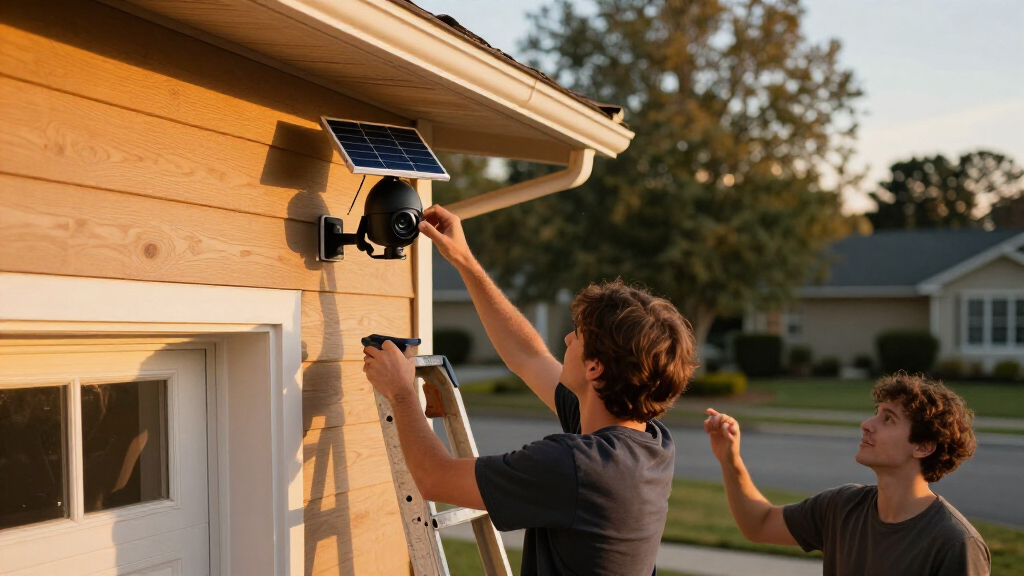

The best solar security cameras solve the most annoying problem in home surveillance: dead batteries and constant recharging. My top overall pick is the eufy SoloCam S340, thanks to its dual-lens 3K optics, solar panel built into the mount, and no mandatory subscription for recordings. For whole-property coverage on a budget, the ANSQUE 4-camera solar kit covers four angles for less than many single premium cameras, while the Tapo C660 is the standout if you want 4K detail and pan/tilt tracking. The main tradeoff you’ll face in this category is image quality and smart features versus ecosystem lock-in — eufy and Tapo demand more setup effort but deliver polished apps, while budget kits trade refinement for coverage. Battery size, panel placement, and local versus cloud storage also separate these models more than resolution numbers suggest. Keep reading for the full breakdown of all 15 cameras and which one fits your property.

Get the latest gadgets delivered free with Prime
- Fast, free delivery on millions of items
- Prime Video, Amazon Music and more included
- Member-only deals all year
Complete the kit



Key Takeaways
- Solar panels on these cameras maintain battery levels rather than eliminating batteries — models with larger built-in cells like the eufy SoloCam S340 and aosu D1 Classic survive weeks of cloudy weather, while budget 2-packs like the Fazoxo can drain in days without sun.
- Multi-camera kits (ANSQUE, aosu D1, eufy E42, the generic 4MP and 2K 4-packs) win on per-camera value, but their hubs tie you into proprietary storage — only eufy‘s kits offer a credible no-subscription local storage path.
- Pan/tilt models with smart tracking (aosu 3K 5MP PTZ, Tapo C660, Tapo C645D) cover areas that would need two or three fixed cameras, but the motorized heads add weatherproofing risk over time.
- TP-Link’s Tapo lineup offered the most consistent app experience and Wi-Fi handling in this comparison, which matters more than raw resolution if family members will use the cameras daily.
- The unbranded 4-camera kits (the 4MP and 2K 4-packs) delivered acceptable daytime footage but showed weak night performance and clunky apps — fine for detached garages and driveways, risky as your only front-door camera.
| eufy Security eufyCam C37 Wireless Solar Outdoor Camera, 2K |  | Best for Flexible Single-Camera Coverage | Resolution: 2K | Effective still resolution: 3 MP | Field of view: 360° pan and tilt | VIEW LATEST PRICE | See Our Full Breakdown |
| ANSQUE Home Security Camera System, Wireless Outdoor, Solar Powered, 4-Cam Kit |  | Best for Whole-Home Coverage | Camera count: 4 | Resolution: 2K HD | Storage: 32 GB built in, expandable to 512 GB | VIEW LATEST PRICE | See Our Full Breakdown |
| aosu D1 Classic 4-Camera Wireless Outdoor Security System | 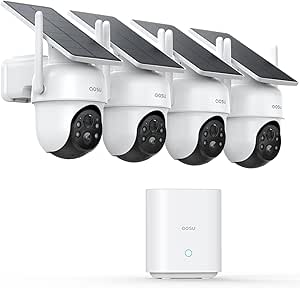 | Best for Smart-Home Compatibility | Camera count: 4 | Resolution: 2K (3 MP) | Storage: 32 GB local storage via aosuBase | VIEW LATEST PRICE | See Our Full Breakdown |
| eufy Security SoloCam E42 4-Camera Kit, 4K Solar Security Cameras | 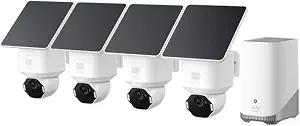 | Best for High-Detail Recording | Camera count: 4 | Resolution: 4K UHD | Solar charging: SolarPlus 2.0; 2 hours of direct sunlight daily keeps the camera charged | VIEW LATEST PRICE | See Our Full Breakdown |
| 4MP Solar-Powered Wireless Outdoor Security Camera System, 4-Camera Kit |  | Best for Long-Range Color Night Vision | Camera count: 4 | Camera resolution: 4 MP | Local storage: 128 GB encrypted | VIEW LATEST PRICE | See Our Full Breakdown |
| Fazoxo 2K Wireless Outdoor Security Camera (2-Pack), Solar-Powered with Night Vision, Motion Detection, and Two-Way Audio |  | Best Value for Two Entry Points | Resolution: 2K UHD | Power: Solar panel with 59-inch cable and rechargeable battery | Wi-Fi: 2.4GHz only | VIEW LATEST PRICE | See Our Full Breakdown |
| Tapo SolarCam C402 KIT 1080p Outdoor Wireless Security Camera |  | Best for Beginners | Resolution: 1080p | Power: Solar panel and built-in rechargeable battery | Battery life: Up to 180 days under stated test conditions | VIEW LATEST PRICE | See Our Full Breakdown |
| aosu 3K 5MP Solar Security Camera Wireless Outdoor PTZ 360° Smart Tracking |  | Best for Wide-Area Tracking | Resolution: 3K (5MP) | Power: Solar powered | Field of view: 360-degree pan/tilt | VIEW LATEST PRICE | See Our Full Breakdown |
| Tapo C645D KIT 2K Dual-Lens Pan/Tilt Outdoor Security Camera with Solar Panel |  | Best for Monitoring Two Areas at Once | Resolution: Dual 2K lenses | Fixed lens field of view: 165 degrees | Pan/tilt view: 360 degrees horizontal | VIEW LATEST PRICE | See Our Full Breakdown |
| 2K Solar-Powered Wireless Security Camera System, 4-Pack |  | Best for Four-Camera Coverage | Camera count: 4 | Resolution: 2K | Power: Solar panels with backup batteries | VIEW LATEST PRICE | See Our Full Breakdown |
| SEHMUA 2K Solar-Powered Outdoor Security Camera, 2-Pack |  | Best Two-Camera Value | Camera quantity: 2 | Video resolution: 2K | Power: Solar-powered with removable solar panels | VIEW LATEST PRICE | See Our Full Breakdown |
| Tapo C660 KIT 4K Outdoor Pan/Tilt Security Camera with Solar Panel |  | Best for Detail and Detection | Resolution: 4K Ultra HD | Pan range: 326° mechanical; up to 360° coverage | Tilt range: 53° mechanical; up to 98° coverage | VIEW LATEST PRICE | See Our Full Breakdown |
| eufy Security SoloCam S340 3K Dual-Lens Solar Security Camera |  | Best for Zoom and Fee-Free Storage | Resolution: 3K | Camera type: Dual-lens | Zoom: 8× | VIEW LATEST PRICE | See Our Full Breakdown |
| AOSU Solar-Powered Outdoor Wireless Security Camera with Fixed Solar Panel |  | Best for Automatic Human Tracking | Resolution: 2K | Coverage: 360-degree panoramic pan and tilt | Tracking: Automatic human tracking | VIEW LATEST PRICE | See Our Full Breakdown |
| ARCCTV Solar-Powered Wireless Outdoor Security Cameras, 2-Pack |  | Best Dual-Band Two-Camera Pick | Resolution: 2560×1440 (4MP) | Camera count: 2 | Pan: 355° | VIEW LATEST PRICE | See Our Full Breakdown |
| solar security camera | Resolution | Power | Wi-Fi |
|---|---|---|---|
| eufy Security eufyCam C37 Wire | 2K | — | — |
| ANSQUE Home Security Camera Sy | 2K HD | Solar panel with battery; listed runtime up to 365 days | Dual-band 2.4 GHz and 5 GHz |
| aosu D1 Classic 4-Camera Wirel | 2K (3 MP) | Solar powered | — |
| eufy Security SoloCam E42 4-Ca | 4K UHD | — | — |
| 4MP Solar-Powered Wireless Out | — | Solar panel with 8000 mAh battery | 2.4 GHz and 5 GHz |
| Fazoxo 2K Wireless Outdoor Sec | 2K UHD | Solar panel with 59-inch cable and rechargeable battery | 2.4GHz only |
| Tapo SolarCam C402 KIT 1080p O | 1080p | Solar panel and built-in rechargeable battery | — |
| aosu 3K 5MP Solar Security Cam | 3K (5MP) | Solar powered | 2.4GHz |
| Tapo C645D KIT 2K Dual-Lens Pa | Dual 2K lenses | Solar panel and rechargeable battery | 2.4GHz and 5GHz |
| 2K Solar-Powered Wireless Secu | 2K | Solar panels with backup batteries | — |
| SEHMUA 2K Solar-Powered Outdoo | — | Solar-powered with removable solar panels | 2.4 GHz; 5 GHz not supported |
| Tapo C660 KIT 4K Outdoor Pan/T | 4K Ultra HD | — | Dual-band 2.4 GHz and 5 GHz |
| eufy Security SoloCam S340 3K | 3K | Solar-powered with removable solar panel | — |
| AOSU Solar-Powered Outdoor Wir | 2K | Solar-powered with rechargeable battery | 2.4 GHz only |
| ARCCTV Solar-Powered Wireless | 2560×1440 (4MP) | Solar panel | 2.4 GHz and 5 GHz |
More Details on Our Top Picks
eufy Security eufyCam C37 Wireless Solar Outdoor Camera, 2K
The eufyCam C37 suits buyers who want one camera to watch a broad area rather than a fixed view. Its 360° pan-and-tilt tracking can follow detected people, vehicles, and pets, while 2K color night vision and a spotlight help capture useful detail after dark. The detachable 3 W solar panel gives more choice about where to place the panel than the aosu D1 Classic, which is sold as a four-camera system. Local microSD or compatible HomeBase storage also avoids a required cloud plan, though the microSD card is sold separately and cloud storage is unavailable. This is a focused option for a property with one key monitoring spot; buyers covering several sides of a home may get more value from a multi-camera kit. It also requires 2.4 GHz Wi-Fi and a recent eufy app version.
Pros:- 360° pan-and-tilt AI tracking follows activity across a wide area
- 2K color night vision pairs with a built-in spotlight
- Detachable solar panel allows more flexible panel placement
- Local storage options do not require a cloud subscription
Cons:- microSD card is sold separately
- Works only with 2.4 GHz Wi-Fi
- Cloud storage is not supported, and some HomeBase models are incompatible
Best for: Homeowners who want a solar-powered, pan-and-tilt camera for one driveway, yard, or entry area and prefer local recording
Not ideal for: Buyers who need several cameras in one purchase, cloud recording, or a camera that connects to 5 GHz Wi-Fi
- Resolution:2K
- Effective still resolution:3 MP
- Field of view:360° pan and tilt
- Solar panel:Detachable, 3 W
- Storage:microSD up to 256 GB or compatible HomeBase
- Connectivity:2.4 GHz Wi-Fi (802.11 b/g/n)
- Mounting:Wall or ceiling
- Dimensions:2 × 6 × 4 inches
Our verdict“Choose the eufyCam C37 for flexible solar placement and broad tracking at one location, but pick a multi-camera kit if you need coverage around the whole house.”
ANSQUE Home Security Camera System, Wireless Outdoor, Solar Powered, 4-Cam Kit
The ANSQUE four-camera kit is aimed at buyers who want several outdoor viewpoints managed through one hub. It combines 2K cameras with a PTZ camera offering 360° coverage and AI person tracking, so it can cover more ground than the single-camera eufyCam C37 without buying cameras separately. Its base starts with 32 GB of local storage and supports expansion to 512 GB, avoiding a required subscription; loop recording can overwrite older clips, so it is less suited to keeping an event archive indefinitely. Dual-band Wi-Fi offers more network flexibility than the 2.4 GHz-only C37. The listed solar runtime of up to 365 days is an estimate rather than a guarantee, since the product data also notes that charging may vary in low light. Choose it for broad coverage and local control, while factoring in sunlight and storage habits.
Pros:- Four-camera kit combines multiple viewpoints with a 360° PTZ camera
- 32 GB local storage is expandable to 512 GB without a required subscription
- Dual-band 2.4 GHz and 5 GHz Wi-Fi
- AI person tracking, custom detection zones, and cross-camera linking
Cons:- Loop recording can overwrite older footage
- Solar charging can vary in consistently low-light conditions
Best for: Homeowners who want a four-camera outdoor setup, local hub storage, and coverage across multiple sides of a property
Not ideal for: Buyers who need long-term preservation of every recording or live in a consistently shaded location
- Camera count:4
- Resolution:2K HD
- Storage:32 GB built in, expandable to 512 GB
- Recording:Up to 120 days of event-triggered loop recording
- Night vision range:Up to 40 ft (12 m)
- Zoom:8× digital
- Wi-Fi:Dual-band 2.4 GHz and 5 GHz
- Power:Solar panel with battery; listed runtime up to 365 days
Our verdict“Pick ANSQUE for multi-area coverage and expandable local storage, provided your installation gets enough light and loop recording suits your retention needs.”
aosu D1 Classic 4-Camera Wireless Outdoor Security System
The aosu D1 Classic makes sense for buyers who want four solar cameras and already use a mix of smart-home platforms. Its Alexa, Google Assistant, and SmartThings support gives it a wider stated integration list than the ANSQUE system, while its aosuBase stores recordings locally without a monthly subscription. Four 2K cameras with pan-and-tilt coverage and automatic tracking can follow activity across separate zones, rather than relying on one camera to cover a large area as the eufyCam C37 does. The tradeoff is that aosu lists Wi-Fi without specifying band support, and the system needs adequate daily sunlight for battery performance. Its 6× zoom is digital, so enlarging a distant subject may cost image detail. This kit favors connected households that value local recording and shared event tracking over detailed zoom or flexibility around shade.
Pros:- Four 2K cameras provide pan-and-tilt coverage with automatic tracking
- 32 GB aosuBase storage avoids a required monthly subscription
- Cross-camera event tracking helps connect activity across viewpoints
- Lists Alexa, Google Assistant, and SmartThings compatibility
Cons:- Adequate daily sunlight is needed for best battery performance
- 6× digital zoom can reduce image quality when enlarging distant subjects
Best for: Smart-home households using Alexa, Google Assistant, or SmartThings that want four locally recording solar cameras
Not ideal for: Buyers who need optical zoom detail or have camera locations with limited daily sunlight
- Camera count:4
- Resolution:2K (3 MP)
- Storage:32 GB local storage via aosuBase
- Power:Solar powered
- Field of view:360°
- Zoom:6× digital
- Night vision:Color, with 4 LED lights
- Smart-home integration:Alexa, Google Assistant, SmartThings
Our verdict“Choose the aosu D1 Classic if broad coverage and compatibility with several smart-home platforms matter more than zoom clarity or low-light flexibility.”
eufy Security SoloCam E42 4-Camera Kit, 4K Solar Security Cameras
For buyers prioritizing identification detail across several camera positions, the eufy SoloCam E42 kit stands out with 4K UHD recording and license plate recognition listed up to 33 feet. That gives it a clearer detail-focused role than the 2K ANSQUE and aosu kits, which may be enough for general motion awareness but do not list the same resolution. Four cameras, AI detection and tracking, plus a HomeBase 3 with 16 GB built in make it a substantial system without a monthly fee. HomeBase storage can expand to 16 TB, a much larger ceiling than ANSQUE’s 512 GB. The catch is that expansion media is not included, and the stated SolarPlus charging depends on direct sun. This system fits buyers willing to plan for storage and panel exposure in exchange for sharper footage and a larger hub capacity.
Pros:- 4K UHD recording offers more detail than the 2K ANSQUE and aosu kits
- License plate recognition is listed up to 33 ft
- HomeBase 3 storage expands from 16 GB up to 16 TB
- AI detection and tracking with no monthly fee
Cons:- microSD card is not included
- Solar charging depends on direct sunlight
- High-capacity storage expansion requires additional media
Best for: Property owners who need four high-resolution viewpoints and want the option to expand local storage substantially
Not ideal for: Buyers whose camera locations receive little direct sunlight or who want a kit that includes all storage expansion media
- Camera count:4
- Resolution:4K UHD
- Solar charging:SolarPlus 2.0; 2 hours of direct sunlight daily keeps the camera charged
- License plate recognition distance:Up to 33 ft (10 m)
- Included hub:HomeBase 3
- Built-in storage:16 GB
- Expandable storage:Up to 16 TB; microSD cards up to 128 GB supported
- Subscription:No monthly fee
Our verdict“Choose the SoloCam E42 kit when detailed 4K footage and expandable hub storage justify planning for direct sun and separate storage media.”
4MP Solar-Powered Wireless Outdoor Security Camera System, 4-Camera Kit
This four-camera kit is a practical pick for buyers who want color night vision listed up to 65 feet alongside two-way audio. That range gives it a different emphasis from the aosu D1 Classic, whose description specifies color night vision but no distance, and from the eufy E42, which puts more weight on 4K resolution and expandable HomeBase storage. Here, the system pairs 4 MP cameras with 355° pan-and-tilt coverage, AI human detection, and a hub holding 128 GB of encrypted local storage. Dual-band Wi-Fi adds flexibility, while Alexa control and two-way audio can help manage routine activity remotely. The tradeoffs are that tracking is off by default and must be enabled in the app, and solar operation depends on daily sunlight. Its stated viewing angle is 355°, so buyers should not read it as full 360° coverage.
Pros:- Color night vision is listed up to 65 ft
- Four 4 MP cameras include 355° pan-and-tilt coverage and AI human detection
- 128 GB encrypted local storage is included
- Two-way audio, Alexa control, and dual-band Wi-Fi
Cons:- Auto-tracking must be enabled in the app
- Solar operation requires daily sunlight
- 355° viewing angle falls short of full 360° coverage
Best for: Households seeking several solar cameras with long-range color night vision, two-way audio, and included local storage
Not ideal for: Buyers who need 4K recording, true 360° coverage, or dependable solar operation in shaded locations
- Camera count:4
- Camera resolution:4 MP
- Local storage:128 GB encrypted
- Power:Solar panel with 8000 mAh battery
- Solar panel output:5 W
- Wi-Fi:2.4 GHz and 5 GHz
- Night vision:Color, up to 65 ft
- Viewing angle:355°
- Audio:Two-way audio
Our verdict“Pick this kit for included encrypted storage and long-range color night vision, but look elsewhere if you need 4K detail or full 360° movement.”
Fazoxo 2K Wireless Outdoor Security Camera (2-Pack), Solar-Powered with Night Vision, Motion Detection, and Two-Way Audio
The Fazoxo 2-pack suits buyers who want to cover two spots without running power cables to either camera. Its solar panels and rechargeable batteries reduce routine charging, while 2K video and AI human detection give it a sharper, more focused setup than the 1080p Tapo SolarCam C402 KIT. It also offers local microSD recording, so basic detection does not depend on a cloud plan. The tradeoffs show up at night and during setup: standard infrared footage is black and white, color mode needs the spotlight, and the cameras only connect to 2.4GHz Wi-Fi. You will also need to supply a microSD card for local storage. This pick makes sense for two separate outdoor zones where flexible placement matters more than broad network compatibility.
Pros:- Two cameras cover separate outdoor areas from one kit
- Solar panels and rechargeable batteries reduce manual charging
- 2K resolution and AI human detection support more targeted monitoring
- Supports local microSD storage as well as cloud storage
Cons:- Works only with 2.4GHz Wi-Fi
- MicroSD card is not included and extended cloud storage requires a subscription
- Infrared night vision is black and white unless the spotlight is used
Best for: Homeowners who want solar-powered 2K coverage at two doors, gates, or outbuildings using a 2.4GHz network
Not ideal for: Households with only 5GHz Wi-Fi or buyers who need color night footage without using a spotlight
- Resolution:2K UHD
- Power:Solar panel with 59-inch cable and rechargeable battery
- Wi-Fi:2.4GHz only
- Night vision range:Up to 33 feet
- Storage:Cloud or microSD up to 128GB; card not included
- Detection:Motion detection and AI human detection
- Weather resistance:IP65
- Audio:Two-way audio
Our verdict“Choose the Fazoxo pair for two solar-powered 2K viewpoints if your network supports 2.4GHz and you can provide local storage.”
Tapo SolarCam C402 KIT 1080p Outdoor Wireless Security Camera
The Tapo SolarCam C402 KIT is a straightforward fit for a first solar camera: it pairs free person and motion detection with two-way audio, local recording, and familiar Alexa and Google Assistant display support. Its 13-foot panel cable gives more freedom to place the camera in shade while positioning the panel in better sun. Compared with the Fazoxo 2-pack, this model records at 1080p rather than 2K, but it adds full-color night vision and supports microSD cards up to 512GB. That makes it appealing when easy everyday monitoring matters more than extra image detail. Its limits are practical: solar charging is specified only above 32°F, cards and cloud service are separate, and it lacks RTSP and ONVIF support for buyers building a more flexible camera system.
Pros:- Free person and motion detection
- Full-color night vision reaches up to 30 feet
- 13-foot cable helps place the panel in a sunnier position
- Supports microSD cards up to 512GB and Alexa or Google Assistant displays
Cons:- 1080p resolution provides less detail than the Fazoxo and other 2K picks
- Solar charging requires temperatures above 32°F
- MicroSD card is sold separately, cloud recording requires a subscription, and RTSP/ONVIF are unsupported
Best for: First-time solar-camera buyers who want person alerts, local recording, and smart-display viewing without a complex setup
Not ideal for: Buyers who need 2K detail, below-freezing solar charging, or RTSP/ONVIF integration with a broader camera system
- Resolution:1080p
- Power:Solar panel and built-in rechargeable battery
- Battery life:Up to 180 days under stated test conditions
- Night vision:Full color, up to 30 feet
- Storage:microSD up to 512GB or Tapo Care cloud
- Cable length:13 feet
- Weather resistance:IP65
- Smart home compatibility:Amazon Alexa and Google Assistant displays
Our verdict“Pick the C402 KIT for approachable solar monitoring and color night vision if 1080p detail and limited system integration meet your needs.”
aosu 3K 5MP Solar Security Camera Wireless Outdoor PTZ 360° Smart Tracking
For a yard or driveway where movement can cross several directions, the aosu 3K 5MP combines a 360-degree pan-and-tilt view with smart tracking, helping one camera follow activity beyond a fixed view. Its higher resolution also gives it more detail than the Tapo C402 KIT’s 1080p image, while full-color night vision, infrared, and an integrated alarm cover different nighttime needs. The tradeoff is that a moving lens is not the same as watching several angles at once: the Tapo C645D’s dual-lens design can monitor a fixed wide view and a second pan/tilt view simultaneously. Aosu also relies on 2.4GHz Wi-Fi, and its 8x zoom is digital, so distant details may soften as you zoom in. Choose it for tracked coverage, not simultaneous views.
Pros:- 3K (5MP) video offers more detail than the 1080p Tapo C402 KIT
- 360-degree pan/tilt coverage with smart motion tracking
- Solar-powered installation avoids a wired power connection
- Combines full-color and infrared night vision with a built-in alarm
Cons:- Connects only to 2.4GHz Wi-Fi
- 8x digital zoom can reduce image clarity at maximum magnification
- Plastic enclosure may feel less robust than a metal-bodied camera
Best for: Homeowners monitoring a broad yard or driveway who want one solar camera to follow movement across its viewing area
Not ideal for: Buyers who need simultaneous views of separate zones, 5GHz connectivity, or clear detail at maximum zoom
- Resolution:3K (5MP)
- Power:Solar powered
- Field of view:360-degree pan/tilt
- Zoom:8x digital
- Wi-Fi:2.4GHz
- Night vision:Full color, infrared, and LED
- Audio:Two-way talk with AI noise reduction
- Smart home compatibility:Alexa and Google Assistant
Our verdict“Choose the aosu for a single solar camera that tracks activity across a wide area, provided digital zoom and 2.4GHz Wi-Fi suit your setup.”
Tapo C645D KIT 2K Dual-Lens Pan/Tilt Outdoor Security Camera with Solar Panel
The Tapo C645D KIT stands apart through its two-camera views in one unit: a fixed 165-degree 2K lens keeps a wide area in frame while a second 2K lens pans and tilts to follow activity. That simultaneous coverage can be more useful at a driveway entrance than the aosu 3K PTZ, which moves its view to track activity. Detection for people, vehicles, and pets also helps tailor alerts to what is happening, and recording is available without a subscription. The 10,000mAh battery and solar panel support off-grid placement, though charging requires temperatures above 32°F. Buyers should also check their network: unlike the 2.4GHz-only Fazoxo and aosu cameras, this Tapo supports both 2.4GHz and 5GHz Wi-Fi.
Pros:- Fixed wide-angle and pan/tilt lenses monitor separate views simultaneously
- Both lenses provide 2K resolution
- AI detection identifies people, vehicles, and pets
- Recording is available without a subscription
Cons:- Solar charging requires temperatures above 32°F
- Dual-lens design may be more camera than needed for a single narrow entry point
Best for: Homeowners who need a fixed wide view and a separately moving view to watch a driveway, entrance, or busy yard
Not ideal for: Buyers who need solar charging in freezing temperatures or want a simpler single-view camera
- Resolution:Dual 2K lenses
- Fixed lens field of view:165 degrees
- Pan/tilt view:360 degrees horizontal
- Battery capacity:10,000mAh
- Power:Solar panel and rechargeable battery
- Wi-Fi:2.4GHz and 5GHz
- Weather resistance:IP65
- Night vision:Color spotlight or infrared
Our verdict“Choose the C645D KIT when simultaneous wide and tracked views matter more than keeping the camera setup simple.”
2K Solar-Powered Wireless Security Camera System, 4-Pack
Buyers covering several sides of a home or a larger property may prefer this four-camera 2K kit to assembling separate units. Each camera uses solar power with a backup battery, and the pan-and-tilt view adds flexibility when a fixed angle will not cover a whole area. Spotlight-assisted color night vision, AI human detection, and two-way audio offer a useful mix for checking activity and responding from the app. Compared with the Fazoxo 2-pack, this system doubles the camera count and supports both 2.4GHz and 5GHz Wi-Fi; the Tapo C645D, by contrast, uses two lenses in one camera to watch two views simultaneously. The listed 328-foot night-vision range is a stated spec, but the supplied data does not explain its conditions. Local microSD storage requires a separate card, and solar performance depends on sunlight.
Pros:- Four cameras provide coverage across multiple outdoor areas
- 2K video with pan/tilt viewing
- Solar panels and backup batteries support wire-free installation
- AI human detection, two-way audio, and optional local or cloud storage
Cons:- Solar charging performance depends on available sunlight
- MicroSD cards are not included, and cloud storage is optional
- The provided specifications do not state the conditions for the listed 328-foot night-vision range
Best for: Owners of larger homes or properties who want four solar-powered viewpoints and app-controlled coverage
Not ideal for: Buyers needing a single compact camera, simultaneous dual-lens coverage from one unit, or dependable solar charging in shaded locations
- Camera count:4
- Resolution:2K
- Power:Solar panels with backup batteries
- Connectivity:2.4GHz and 5GHz Wi-Fi
- Coverage:Pan/tilt
- Night vision:Color with motion-activated spotlight; listed range 328 feet
- Detection:PIR and AI human detection
- Weather resistance:IP65
- Storage:Optional microSD card or cloud storage
Our verdict“Choose this kit for multi-area solar coverage when four separately placed cameras suit your property and each location gets enough sunlight.”
SEHMUA 2K Solar-Powered Outdoor Security Camera, 2-Pack
The SEHMUA 2-pack suits buyers who want to cover two outdoor areas with solar-powered cameras and pan-and-tilt views. Its 2K video and color night vision with a spotlight give it more detail and nighttime context than a basic 1080p option such as the Tapo SolarCam C402 KIT. Two-way audio adds a way to speak through the camera, while local microSD recording avoids requiring a cloud plan. The tradeoff is that the card must be bought separately, and cloud storage is optional rather than included. It also works only on 2.4 GHz Wi-Fi, so households relying on a 5 GHz-only network should look at the dual-band ARCCTV 2-pack instead. This is a practical pick for wider coverage, with setup and storage details to plan around.
Pros:- Two cameras extend coverage to separate outdoor areas
- 2K video with color night vision, spotlight, and infrared LEDs
- Pan-and-tilt viewing and two-way audio
- Local microSD storage option avoids a required cloud plan
Cons:- Supports 2.4 GHz Wi-Fi only
- MicroSD card is not included
- Cloud storage is optional and may add an ongoing cost
Best for: Homeowners who want solar-powered monitoring at two entrances or outdoor zones, with local recording and pan-and-tilt views.
Not ideal for: Households with only 5 GHz Wi-Fi or buyers who want included cloud recording and a memory card.
- Camera quantity:2
- Video resolution:2K
- Power:Solar-powered with removable solar panels
- View:Pan and tilt
- Night vision:Color night vision with spotlight and infrared LEDs
- Wi-Fi:2.4 GHz; 5 GHz not supported
- Local storage:MicroSD card up to 128 GB; card not included
- Weather resistance:IP65
Our verdict“Choose the SEHMUA pair for two solar-powered, pan-and-tilt views with local storage, provided 2.4 GHz Wi-Fi suits your network.”
Tapo C660 KIT 4K Outdoor Pan/Tilt Security Camera with Solar Panel
The Tapo C660 KIT is the detail-first choice here: its 4K video, motion tracking, and person, vehicle, and pet detection help distinguish what is happening across a broad outdoor view. Unlike the SEHMUA 2-pack, it is a single camera, but its mechanical pan and tilt provide coverage up to 360 degrees. The included solar panel and 10,000 mAh battery support wire-free placement, and local storage accepts cards up to 512 GB. Detection does not require a subscription, though cloud storage does after its trial, and the microSD card is sold separately. Solar charging also depends on sunlight and temperature; the listed charging range starts at 32°F. It makes more sense for one high-detail monitoring point than for buyers who need several camera positions.
Pros:- 4K video with broad pan-and-tilt coverage
- Detects people, vehicles, and pets without a subscription
- Included solar panel and 10,000 mAh battery support wire-free installation
- Local microSD storage supports cards up to 512 GB and 24/7 time-lapse capture
Cons:- MicroSD card is not included
- Cloud storage requires a subscription after the free trial
- Solar charging depends on sunlight and charging is specified for 32°F to 113°F
Best for: Buyers who want one detailed outdoor view with subject detection, tracking, and substantial local storage.
Not ideal for: People needing multiple camera positions or dependable solar charging in shaded, cold locations.
- Resolution:4K Ultra HD
- Pan range:326° mechanical; up to 360° coverage
- Tilt range:53° mechanical; up to 98° coverage
- Battery capacity:10,000 mAh
- Solar charging:Included solar panel with 13 ft cable
- Wi-Fi:Dual-band 2.4 GHz and 5 GHz
- Local storage:MicroSD card up to 512 GB
- Weather resistance:IP65
Our verdict“Pick the Tapo C660 KIT if detailed 4K footage and subject detection matter more than covering several locations.”
eufy Security SoloCam S340 3K Dual-Lens Solar Security Camera
The SoloCam S340 combines a dual-lens design with 3K video and 8× zoom, giving buyers a way to inspect distant details while keeping a broad area in view. Its 360° pan-and-tilt coverage and removable solar panel make it more flexible to position than the AOSU camera with a fixed panel. Local storage also means there is no monthly fee, a useful distinction from cameras whose cloud recording depends on a subscription. The tradeoff is that full coverage requires vertical installation, which can constrain mounting choices. It is also a single camera, unlike the SEHMUA 2-pack, so covering separate entrances may take additional units. Choose it when zoom and local recording matter more than getting several camera locations covered at once.
Pros:- Dual-lens 3K video with 8× zoom
- 360° pan-and-tilt coverage
- Removable solar panel supports flexible placement
- Local storage with no monthly fee
Cons:- Full coverage requires vertical installation
- Single-camera setup may not suit homes needing several viewpoints
Best for: Homeowners monitoring one broad outdoor area who want zoom, flexible solar-panel placement, and local storage without a monthly fee.
Not ideal for: Buyers who cannot mount the camera vertically or need a multi-camera kit for separate areas.
- Resolution:3K
- Camera type:Dual-lens
- Zoom:8×
- Pan and tilt:360°
- Power:Solar-powered with removable solar panel
- Installation:Wire-free; advertised 7-minute setup
- Storage:Local storage
- Monthly fee:None
Our verdict“Choose the SoloCam S340 for a zoom-capable, locally stored solar camera if vertical mounting works for your location.”
AOSU Solar-Powered Outdoor Wireless Security Camera with Fixed Solar Panel
The AOSU camera is a straightforward fit for buyers who want a camera to follow detected people automatically across a 360-degree pan-and-tilt view. It records in 2K, matching the SEHMUA pair’s resolution, while its single-camera design keeps the choice focused on one monitoring point. Alexa and Google Assistant support add options for households using either ecosystem. Its fixed solar panel keeps the setup simple, but limits panel placement compared with the removable panel on the eufy SoloCam S340. The camera also relies on direct sunlight for continuous charging and supports only 2.4 GHz Wi-Fi. That makes it less suitable for shaded mounting spots or networks that depend on 5 GHz, even though IP65 weather resistance supports outdoor installation.
Pros:- Automatic human tracking across 360-degree pan-and-tilt coverage
- 2K video
- Solar power reduces routine battery changes
- Works with Alexa and Google Assistant
Cons:- Fixed solar panel requires direct sunlight for continuous charging
- Supports 2.4 GHz Wi-Fi only
Best for: Buyers with a sunny outdoor mounting location who want automatic person tracking and Alexa or Google Assistant compatibility.
Not ideal for: People with shaded camera locations, 5 GHz-only Wi-Fi, or a need to reposition the solar panel separately.
- Resolution:2K
- Coverage:360-degree panoramic pan and tilt
- Tracking:Automatic human tracking
- Power:Solar-powered with rechargeable battery
- Wi-Fi:2.4 GHz only
- Weather resistance:IP65
- Smart home compatibility:Alexa and Google Assistant
- Support:Lifetime technical support; 1-year replacement
Our verdict“Pick the AOSU for automatic person tracking at a sunny location if its fixed panel and 2.4 GHz Wi-Fi fit your setup.”
ARCCTV Solar-Powered Wireless Outdoor Security Cameras, 2-Pack
The ARCCTV 2-pack stands out for buyers who need two solar-powered viewpoints but also want dual-band Wi-Fi. Its 2560×1440 (4MP) video and app-controlled 355° pan and 90° tilt give each camera broad manual coverage. Compared with the SEHMUA 2-pack, ARCCTV supports both 2.4 and 5 GHz Wi-Fi, while SEHMUA adds color night vision and two-way audio. ARCCTV’s key limitation is its manual-only control: unlike the AOSU camera, it does not automatically track a moving subject. Local microSD recording avoids a required cloud plan, but cards are not included and cloud storage requires a subscription. This pair is a better fit when network flexibility and two camera positions matter more than automatic tracking.
Pros:- Two cameras cover separate outdoor areas
- 2560×1440 (4MP) video
- Supports both 2.4 GHz and 5 GHz Wi-Fi
- Local microSD storage can be used without monthly fees
Cons:- Does not automatically track subjects
- MicroSD cards are not included
- Cloud storage requires a subscription
Best for: Households that need two solar cameras, use dual-band Wi-Fi, and are comfortable steering views manually in the app.
Not ideal for: Buyers who want automatic subject tracking, included memory cards, or cloud recording without a subscription.
- Resolution:2560×1440 (4MP)
- Camera count:2
- Pan:355°
- Tilt:90°
- Wi-Fi:2.4 GHz and 5 GHz
- Power:Solar panel
- Local storage:MicroSD card up to 128 GB; card not included
- Tracking:Manual app control; no automatic tracking
Our verdict“Choose the ARCCTV pair for two solar viewpoints and dual-band Wi-Fi if manual pan-and-tilt control is enough.”

How We Picked
I evaluated each camera against what actually determines long-term satisfaction with solar security: solar charging reliability (panel wattage, battery capacity, and behavior during overcast stretches), footage quality day and night, storage flexibility and subscription pressure, app and alert usability, and weatherproofing and build. A camera that records beautiful 4K video but dies after three gray December days fails the core promise of solar, so charging resilience weighed heavily in the rankings.
I also factored in who each product is for. Multi-camera kits were judged on coverage value and hub storage, while single-camera picks were judged on optical quality and smart features. Models that locked recordings behind ongoing fees ranked below those offering local storage options. The ranking order reflects a simple hierarchy: dependable power and usable alerts first, image quality second, and convenience features third.
Factors to Consider When Choosing Best Solar Security Cameras
Before picking a specific model, it helps to understand the broader patterns in this category — because solar security cameras fail for reasons that have little to do with the spec sheet.Panel Size and Battery Capacity Matter More Than Resolution
The single most common mistake buyers make is assuming any solar camera will stay charged forever. In practice, small integrated panels only offset battery drain when the camera records a handful of clips per day; a camera facing a busy street can outdraw its panel even in full sun. Look for battery capacity measured in mAh and panel wattage together — a 5,000 mAh battery with a 2W panel handles shade far better than a 2,600 mAh battery with a 1W panel, regardless of the resolution advertised. Detached-panel designs (like the Tapo and AOSU fixed-panel models) let you position the panel in sun while mounting the camera in shade, which is often the deciding factor on north-facing walls. If your mount location gets less than four hours of direct sun daily, budget for a larger battery or a separate panel from the start.
Storage: Local, Cloud, and the Subscription Trap
Many budget solar cameras advertise low prices because the real cost is the subscription — without it, some models limit you to live viewing only. Before buying, check three things: does the camera support a microSD card, does a multi-camera kit include a hub with local storage, and what happens to recorded footage if you stop paying. eufy’s approach of bundling local storage with no ongoing fees contrasts sharply with brands that gate motion clips behind monthly plans. A useful rule: if a kit’s hub requires a subscription to review recordings, multiply that fee by two years and add it to the purchase price before comparing. Also verify whether the hub supports expandable storage, because a fixed 16GB chip fills quickly with four cameras recording.
Night Vision Type Determines What You’ll Actually See
Night footage is where cheap and premium solar cameras diverge most sharply, and spec sheets rarely explain why. Infrared night vision produces grayscale images that are fine for detecting a person but poor for identifying faces or reading plates. Color night vision uses a spotlight or larger sensor to keep footage in full color, which dramatically improves evidentiary value — the dual-lens eufy S340 and Tapo’s color night implementations are built around this. Spotlights have a tradeoff though: they’re visible to intruders and can trigger nuisance alerts from moths and passing headlights. If your goal is identifying who was on your property (versus simply knowing someone was there), prioritize a larger sensor and color night vision over a higher daytime resolution number.
Fixed Cameras Versus Pan/Tilt: Coverage Versus Reliability
A pan/tilt camera feels like getting three cameras in one, and for wide areas like backyards and driveways, models like the aosu 3K 5MP PTZ genuinely are more flexible. But there are two real costs. First, motorized mechanisms are moving parts exposed to rain, dust, and freezing temperatures — they’re the most common failure point as these cameras age. Second, a panning camera is only pointed where its software last aimed it; a fixed dual-lens setup like the eufy S340 never misses an event because it was looking the wrong way. My general guidance: use fixed cameras for entry points where you need guaranteed coverage, and reserve pan/tilt for open areas where one camera must cover what two or three fixed units would.
Wi-Fi Reach and App Ecosystem Reality Checks
Solar cameras go where wires don’t, which usually means the far corners of your property — exactly where Wi-Fi is weakest. Before buying, check whether a kit includes a hub that boosts range or whether each camera must reach your router independently. Multi-camera systems from aosu and ANSQUE use hub-based designs that can extend coverage; standalone cameras from Fazoxo and SEHMUA depend entirely on your existing network. On the software side, TP-Link’s Tapo app and eufy’s app are mature ecosystems with reliable push notifications, while lesser-known brands often suffer delayed alerts and apps riddled with upsell prompts. Since you’ll interact with the app every time something happens, a mediocre app can ruin an otherwise capable camera — read the app’s recent update history, not just the hardware specs.
Multi-Camera Kits: When Bundles Beat Singles
Buying a 4-camera kit costs far less per camera than buying four singles, but kits only make sense if you actually need uniform coverage. A common mistake is buying a full kit when only two positions matter — the SEHMUA and ARCCTV 2-packs exist precisely for this scenario. Kits also introduce a hub dependency: if the hub fails or is stolen, every camera goes down with it, so mount the hub indoors and out of reach. Check whether kit cameras can operate independently with microSD cards as a fallback. Finally, verify each camera in a kit has its own solar panel; some budget kits share panels or ship with undersized ones that only keep one or two cameras topped up under real-world conditions.
Frequently Asked Questions
Do solar security cameras work in winter or cloudy weather?
Yes, but with reduced charging capacity that depends heavily on the model. Solar panels still generate power on overcast days, typically at 10–25% of their peak output, which is enough to maintain a battery if the camera records only a few clips per day. The models with larger batteries — the eufy SoloCam S340 and the aosu D1 Classic kit — can bridge two to three weeks of poor sun without dying. Smaller cameras like the Fazoxo 2-pack have tighter margins and may need occasional USB top-ups in December and January at northern latitudes. If you live somewhere with long gray winters, prioritize battery capacity over panel size, and consider a detached-panel model like the Tapo C402 so you can angle the panel toward whatever light is available.
Can I use these cameras without a subscription?
It varies by brand, and this is the single most important question to answer before buying. eufy’s cameras in this lineup record locally to onboard storage or a hub with no monthly fee, which is a major reason they rank near the top. Tapo cameras support microSD cards for full local recording, with subscriptions only adding cloud backup and richer notification history. The unbranded 4-camera kits technically record to their hubs without fees, but some lock advanced features like person detection behind paid plans — read the fine print on each listing. If avoiding subscriptions is a hard requirement, filter your choice down to models with microSD slots or bundled local storage before comparing anything else.
How many cameras do I actually need for a typical home?
Most single-family homes are well covered by three to four cameras: front door, driveway or garage, and one to two blind-side or backyard positions. That’s why the 4-camera kits from ANSQUE, aosu D1, and eufy E42 dominate whole-home setups — they cover the standard positions in one purchase. If you only have one or two vulnerable access points, a 2-pack from SEHMUA or ARCCTV makes more financial sense than paying for cameras you won’t mount. Pan/tilt models like the aosu 3K 5MP or Tapo C660 can replace two fixed cameras over an open backyard, though remember they can only record what they’re currently pointed at. Map your property on paper before shopping: count entry points and blind spots, then match that number to a kit size rather than guessing.
Is 2K resolution enough, or should I pay more for 4K?
For most homes, 2K is sufficient because identification depends far more on sensor size, lens quality, and night vision than pixel count. A well-built 2K camera like the eufy SoloCam E42 kit or SEHMUA 2-pack will outperform a poorly implemented 4K camera at night, when most security incidents happen. 4K earns its premium in two situations: large properties where the camera sits far from the subject (long driveways, gates), and cases where you want to crop into footage and still read details like plate numbers. The Tapo C660 delivers genuine 4K benefits at distance, which is why it stands out despite its higher complexity. If your cameras will sit within 20 feet of the areas they monitor, save the money and spend it on a better-positioned mount instead.
Are multi-camera kits with a hub better than standalone solar cameras?
Hubs bring real advantages for multi-camera setups: centralized local storage, extended wireless range, and a single point of management for recordings. That’s why every whole-home recommendation in this roundup — the aosu D1, eufy E42, and ANSQUE kit — uses a hub design. The tradeoffs are a higher upfront cost and a single point of failure; if the hub loses power or gets stolen, all connected cameras lose their recorded history, so keep the hub indoors. Standalone cameras like the eufy SoloCam S340 or Fazoxo 2-pack work better for adding one or two coverage points to an existing setup, since each stores footage independently. A practical hybrid approach: run a hub kit for your perimeter and add a standalone camera later for a shed or detached garage without extending the hub system.
Conclusion
The right pick depends less on specs and more on what you’re protecting. For best overall, the eufy SoloCam S340 delivers the best balance of dual-lens image quality, subscription-free storage, and dependable solar charging — it’s the camera I’d point most homeowners toward first. The ANSQUE 4-camera kit takes best value for full-property coverage at a per-camera cost that’s hard to beat, while the Tapo C660 earns best premium with true 4K detail and pan/tilt flexibility for large properties. Beginners should start with the Tapo SolarCam C402 — its mature app and detached panel make first-time setup forgiving. For specific needs: the eufy SoloCam E42 kit suits households wanting 4K across multiple angles without subscriptions, the aosu 3K 5MP PTZ covers wide open yards with smart tracking, and the SEHMUA 2-pack is the smart add-on for a shed, garage, or side gate. Whatever you choose, match the camera to your sunlight conditions and storage preferences first — those two factors will shape your satisfaction long after resolution numbers fade from memory.
Halloween Picks
halloween
As an affiliate, we earn on qualifying purchases.